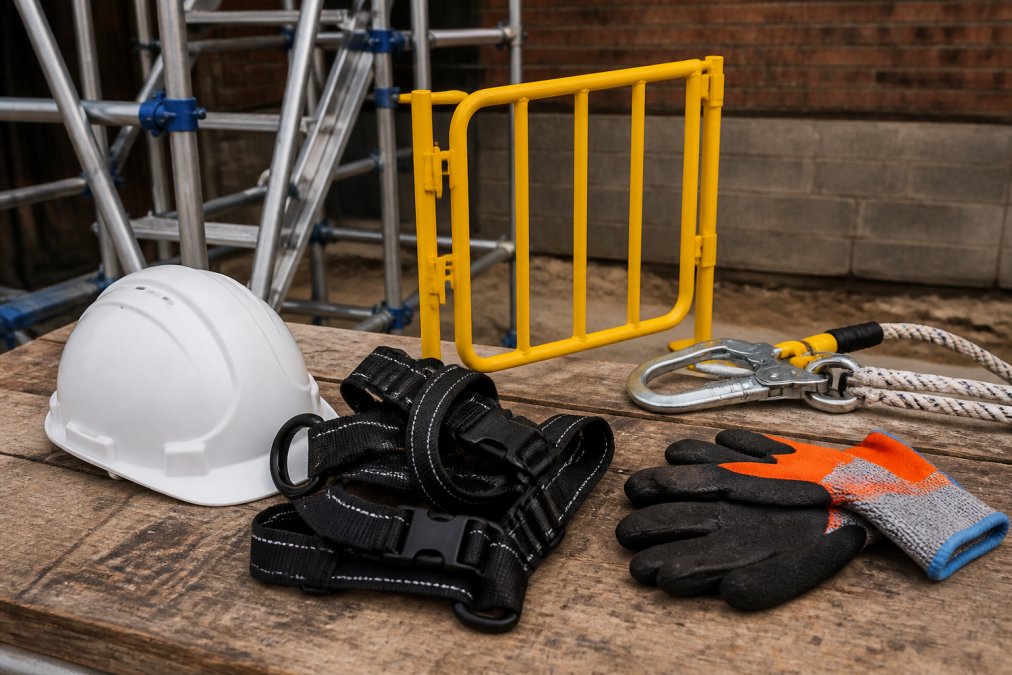
 blog
blog
5 Best Scaffold Tower Safety Accessories
Table of Contents
- Why the Right Safety Accessories Matter for Scaffold Towers
- The 5 Best Scaffold Tower Safety Accessories Compared
- How We Evaluated These Scaffold Tower Safety Accessories
- Scaffold Tower Inspection Checklist: What to Check Before Use
- Work at Height Regulations 2005 Compliance: Your Legal Duties
- Scaffold Tower Maintenance Tips 2026: Extending Equipment Life
- Conclusion: Build a Safer Scaffold Tower Setup Today
- Frequently Asked Questions
Last Updated: September 9, 2026
Why the Right Safety Accessories Matter for Scaffold Towers
Every year, tradespeople across the UK are injured falling from height, often because essential safety accessories were missing or fitted incorrectly. A scaffold tower is only as safe as its weakest component, and the difference between a compliant setup and a hazardous one usually comes down to a few specific pieces of equipment. In this guide from Leader Pro Scaffold Towers, we break down the five best scaffold tower safety accessories you should fit before anyone climbs.
The most important insight is this: the tower itself is just the frame. Scaffold tower safety depends on how you equip it for the specific conditions on your site, from uneven ground to gusty weather. Getting this right prevents falls, protects people below from falling objects, and keeps you compliant with the law.
Below, we will show you exactly which accessories matter most, what each one does, and how to evaluate them. We have organised the five essential scaffold tower safety accessories into a clear comparison so you can see at a glance what your setup needs.
The 5 Best Scaffold Tower Safety Accessories Compared
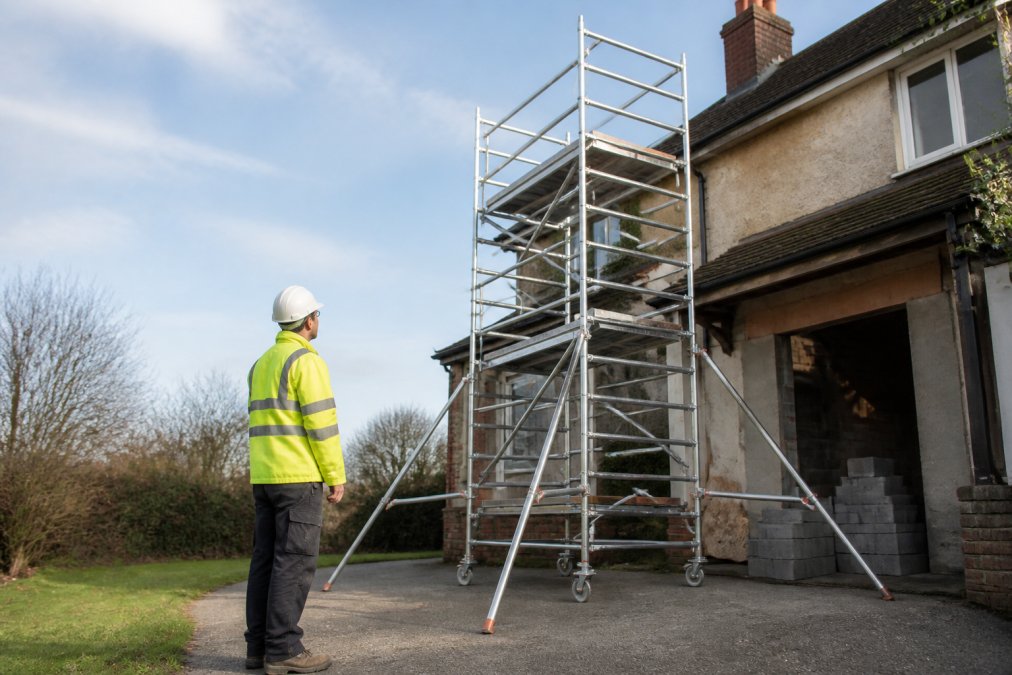
The five accessories below form the core of a safe working platform. Each addresses a specific risk, and together they cover the main hazards: collapse, falls from height, falling objects, instability, and uncontrolled movement.
| Accessory | Primary Function | Best For | Key Consideration |
|---|---|---|---|
| Stabilisers and Outriggers | Prevent toppling | Outdoor work, uneven ground | Must match tower height |
| Guardrail Systems | Prevent falls from height | All working platforms | Fit at correct height |
| Toe Boards | Stop tools and materials falling | Sites with people below | Required by regulation |
| Adjustable Base Plates | Ensure stability on slopes | Uneven surfaces | Check load rating |
| Wheel Brakes and Locking Castors | Secure the tower in place | Frequent repositioning | Brake all wheels before climbing |
1. Stabilisers and Outriggers: The Foundation of Tower Safety
Stabilisers and outriggers are the single most important scaffold tower safety accessory for outdoor work. They widen the tower's base, dramatically increasing its resistance to tipping, which is the leading cause of tower collapse.
For towers used at height or in exposed positions, stabilisers are not optional. Many manufacturers specify their use above certain platform heights, and ignoring this guidance creates a serious risk of the tower blowing over. When fitting them, extend them fully and ensure each foot is on firm, level ground.
2. Guardrail Systems: Preventing Falls from Height
Guardrails are your primary defence against falls, which remain one of the most common causes of workplace fatalities. A proper guardrail system consists of a main handrail, an intermediate rail, and the platform itself, creating a barrier that prevents workers from stepping or falling off the edge.
The top guardrail should sit at least 950mm above the platform, with the intermediate rail positioned midway (hse.gov.uk). These must be fitted on every open side of the platform where a person could fall. It is a common mistake to skip guardrails on "quick jobs," but the risk of a fall does not change with the length of the task.
3. Toe Boards: Stopping Tools and Materials from Falling
Toe boards protect people working below the tower from falling tools, bricks, and equipment. They are vertical boards fitted around the edge of the platform, preventing items from being kicked or knocked off the working surface.
This accessory is often overlooked, but it is a clear requirement where there is a risk of objects falling onto people beneath. A dropped hammer from a 4-metre platform can cause a serious injury, and you are legally responsible for that risk. Fit toe boards on all open sides of the platform alongside your guardrails.
4. Adjustable Base Plates: Ensuring Stability on Uneven Ground
No construction site is perfectly flat, and adjustable base plates solve the problem of uneven surfaces. These screw-adjustable feet allow you to level the tower precisely, ensuring that all four legs bear weight evenly and the structure remains plumb.
Attempting to level a tower with packing materials or offcuts is dangerous and unacceptable. Adjustable base plates provide an engineered solution, and they are essential when working on slopes, cambers, or damaged ground. Check the load rating of the plates to ensure they can support the tower's weight and the load you place on it.
5. Wheel Brakes and Locking Castors: Securing the Tower in Place
Wheel brakes and locking castors might seem like a minor detail, but they are a critical scaffold tower safety accessory. A tower that moves while someone is climbing or working on it can cause a fall or a collapse.
Before anyone climbs, every wheel brake must be engaged. Most quality castors also feature a directional lock, which stops the wheels from swivelling and allows the tower to be moved in a straight line only. This is particularly useful when manoeuvring the tower into position, but once it is in place, the brakes must always be applied.
How We Evaluated These Scaffold Tower Safety Accessories
Our evaluation focused on practical effectiveness, regulatory compliance, and real-world usability. We did not simply list accessories; we assessed which ones deliver the most meaningful risk reduction for the average user.
Each accessory was judged against its ability to address a specific hazard, its ease of correct installation, and its durability on site. Equipment that is difficult to fit correctly is more likely to be used incorrectly or skipped entirely, so we prioritised solutions that are straightforward to install on a BS EN1004-certified tower.
The evaluation also considered the cost of failure. Accessories protecting against falls or structural collapse scored highest, as the consequences of failure in these areas are most severe. The result is a shortlist of five accessories that cover the essential risks without unnecessary complexity.
Scaffold Tower Inspection Checklist: What to Check Before Use
A pre-use inspection takes minutes but can prevent a serious incident. This checklist should be completed every time the tower is erected or moved, and you should also carry out a visual check at the start of each working day.
- Stabilisers and outriggers: Fitted where required, fully extended, and resting on firm ground
- Guardrails: Present on all open sides, with top rail at the correct height and intermediate rail fitted
- Toe boards: Securely fixed around the platform perimeter
- Base plates: All legs level, with no packing materials used to compensate for uneven ground
- Wheel brakes: All brakes engaged and castors locked before climbing
- Platform: Fully decked, with no gaps or damaged boards
- Frame: No visible damage, bending, or corrosion to any component
- Stability: The tower is plumb and does not rock or sway when tested at the base
If any item on this scaffold tower inspection checklist fails, the tower must not be used until the issue is corrected. Do not attempt to work around a fault; a damaged component compromises the integrity of the entire structure.
Work at Height Regulations 2005 Compliance: Your Legal Duties
The Work at Height Regulations 2005 are the primary legislation governing scaffold tower use in the UK. They place a clear duty on employers and self-employed workers to ensure all work at height is properly planned, supervised, and carried out safely.
Under these regulations, scaffold towers must be erected and used in accordance with the manufacturer's instructions, and they must be inspected by a competent person after installation and following any event that could affect their stability. For a scaffold tower, this means checking that all safety accessories are fitted correctly and that the tower is on a suitable surface.
The Health and Safety Executive guidance on work at height makes clear that duty holders must take a sensible, proportionate approach. This includes selecting the right equipment for the task, ensuring it is maintained, and providing appropriate training. Work at Height Regulations 2005 compliance is not just about paperwork; it is about creating a culture where safety is the default, not an afterthought.
Scaffold Tower Maintenance Tips 2026: Extending Equipment Life
Regular maintenance keeps your tower safe and extends its working life, protecting your investment. The guidance from PASMA's best practice resources for mobile access towers emphasises that well-maintained equipment performs reliably and reduces the risk of failure on site.
For scaffold tower maintenance tips in 2026, start with storage. Keep aluminium components dry and off the ground to prevent corrosion, and never drag frames across concrete, which damages the surface finish. Clean components with a mild detergent and water, and lubricate moving parts like castors and adjustable feet regularly.
Inspect all components for damage after every hire or project. Look for bent frames, cracked welds, and worn brake pads, and replace any damaged parts immediately. A comprehensive range of spare parts means you can keep your tower in service rather than taking it out of action for weeks. This focus on maintenance is what separates a professional setup from a neglected one.
Conclusion: Build a Safer Scaffold Tower Setup Today
Fitting the right safety accessories is the difference between a compliant, secure working platform and a serious accident waiting to happen. Stabilisers, guardrails, toe boards, base plates, and wheel brakes each address a specific risk, and together they form a complete safety system that protects you and everyone around you.
At Leader Pro Scaffold Towers, we supply BS EN1004-certified aluminium towers and the accessories you need to work safely at height, backed by expert advice and next-day UK delivery. Our manufacturer-direct model keeps pricing competitive without compromising on quality. Get started with Leader Pro Scaffold Towers and build a safer scaffold tower setup today.
Frequently Asked Questions
What are the mandatory safety requirements for scaffold towers under the Work at Height Regulations 2005?
The Work at Height Regulations 2005 mandate that all work at height is properly planned, supervised, and carried out by competent people. For scaffold towers, this means using equipment that is stable and strong enough for the task, ensuring guardrails and toe boards are fitted where there is a risk of falls, and having the tower erected by trained individuals, ideally following PASMA guidelines. Towers must also be inspected after installation and before use, and regularly thereafter.
Do scaffold towers require stabilisers for all heights?
Stabilisers or outriggers are not always required for every scaffold tower, but they become essential as height increases. As a rule of thumb, towers with a platform height above 2.5 metres or those used outdoors should be fitted with stabilisers. Always consult the manufacturer's instructions for your specific tower model. Using stabilisers on uneven ground or when the tower is exposed to wind significantly reduces the risk of overturning, a key part of Work at Height Regulations 2005 compliance.
How often should scaffold towers be inspected by a competent person?
A scaffold tower should be inspected by a competent person before its first use and then at intervals not exceeding 7 days, as required by the Work at Height Regulations 2005. An additional inspection is mandatory after any event that could have affected its stability, such as high winds or a collision. Use a scaffold tower inspection checklist to document these checks, noting the date, the inspector's name, and any defects found, to maintain a clear safety record.