 blog
blog
Buy Aluminium Scaffold Tower Online: 2026 Buyer's Guide
Table of Contents
- Why Buy Aluminium Scaffold Tower Online Instead of From a Depot
- What to Check Before You Buy Aluminium Scaffold Tower Online
- PASMA Scaffold Tower Regulations: What Buyers Need to Know
- Aluminium Scaffold Tower Safety Inspection Checklist
- Industrial Scaffold Tower Cost 2026: What Drives the Price
- Delivery, Spare Parts and After-Sales Support
- Conclusion: Choosing the Right Tower for Your Next Job
- Frequently Asked Questions
Last Updated: September 11, 2026
Why Buy Aluminium Scaffold Tower Online Instead of From a Depot
Buying an aluminium scaffold tower online has become the default route for most trade buyers, and the reason is straightforward: you get the full specification, certification documents and spare-part listings before you commit a penny. At Leader Pro Scaffold Towers, we sell direct from the manufacturer, which removes the depot margin and the "we'll have to check stock" phone call.
A depot visit still has its place. If you need a tower this afternoon and you're two streets away, hire counter collection wins.
For everything else, online buying gives you three things a trade counter cannot:
- Time to compare platform heights and duty ratings properly
- Written confirmation of the standard the tower is built to
- A paper trail for your site file, which matters when an auditor asks
The catch is that not every listing tells you what you need to know. Below, we break down exactly what to check before you buy aluminium scaffold tower equipment online, and where most buyers get caught out.
What to Check Before You Buy Aluminium Scaffold Tower Online
Before you buy aluminium scaffold tower online, confirm four things: the standard it is certified to, the platform and working heights, the duty rating, and whether the build suits your access route. Get those wrong and you will either overspend or end up with a tower that cannot legally be used for the job.
Platform Height, Working Height and the Reach You Actually Need
Platform height is the level you stand on. Working height is that figure plus roughly 2 metres, which represents a person of average height reaching overhead with both feet on the deck (hse.gov.uk).
A common mistake is buying on working height alone. If your task is soffit work at 6 metres, you need a platform around 4 metres, not a tower marketed as "6 metre working height" that leaves you standing at 4 metres with your arms up all day.
Measure the highest point you must physically touch, then subtract your own reach. That number, not the marketing headline, decides the size you order.
Folding or Modular: Which Build Suits Your Work
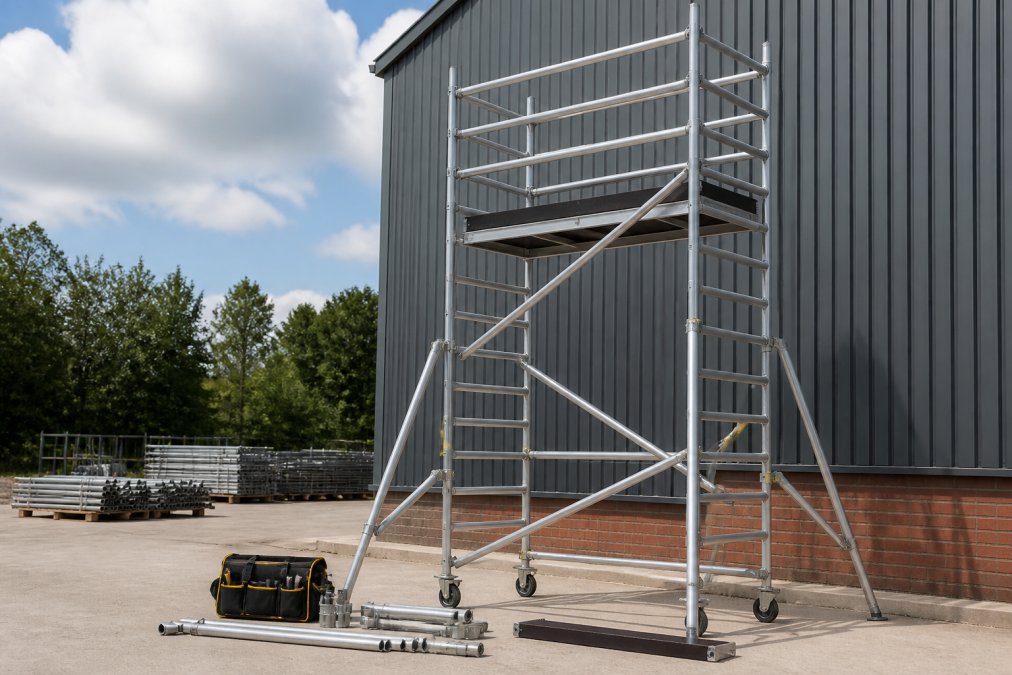
Folding towers arrive partly assembled and fold for transport. They suit decorators and maintenance teams moving between rooms or short-duration jobs on one site.
Modular towers come as separate frames, braces and platforms that you build to the height you need. They are heavier to handle but scale further and pack into a smaller van footprint.
If you are coming from a hire fleet where everything was pre-built for you, expect the first modular build to take noticeably longer than the last one you used. After two or three builds, most tradespeople stop noticing.
PASMA Scaffold Tower Regulations: What Buyers Need to Know
PASMA scaffold tower regulations are not a single law. PASMA is the training body, and its guidance sits on top of the legal duties that already apply to anyone working at height.
The governing framework is the Work at Height Regulations 2005, enforced by the Health and Safety Executive (legislation.gov.uk). Those regulations require that work at height is properly planned, supervised and carried out by competent people, and that equipment is inspected at suitable intervals.
For towers specifically, the HSE guidance on working at height sets out the hierarchy of control: avoid work at height where you can, prevent falls where you cannot, and minimise the consequences of a fall as a last resort.
PASMA training matters because it produces the competence evidence an inspector will ask for. A PASMA card does not certify the tower; it certifies that you know how to assemble, move and dismantle one safely. When you buy aluminium scaffold tower equipment, ask what assembly instructions and certification the supplier provides, because you will need both on site.
Aluminium Scaffold Tower Safety Inspection Checklist
A tower inspection should happen before first use, after any move or alteration, and at intervals set by your risk assessment. The person inspecting must be competent to do so.
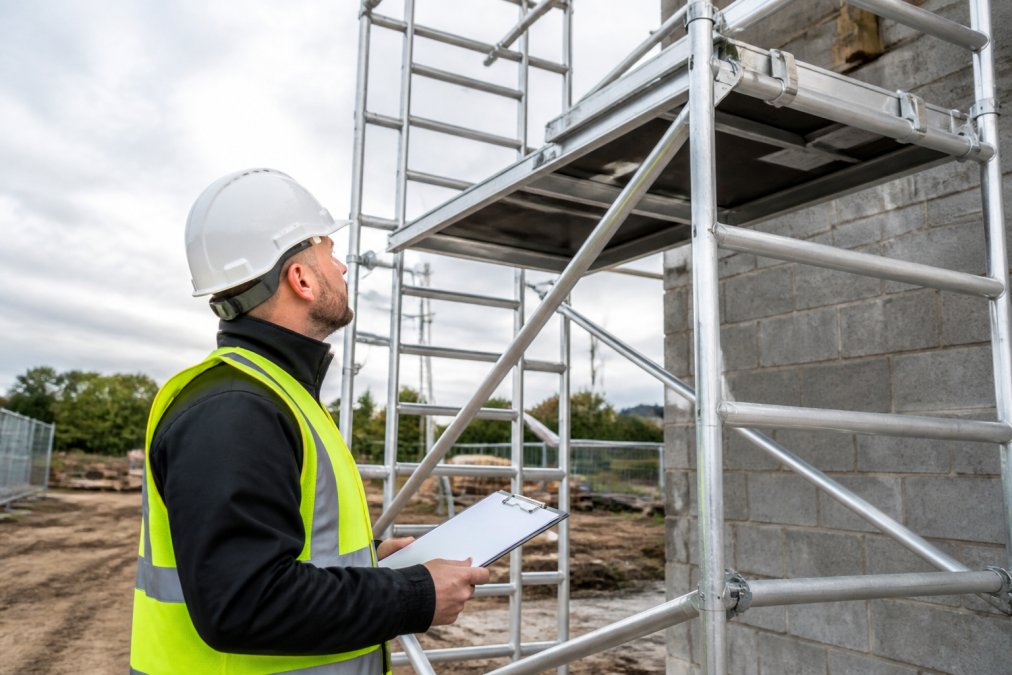
Work through this checklist and record the outcome each time:
- All braces and diagonal members present and locked
- Platform boards seated correctly with no gaps at the hatch
- Guardrails and toe boards fitted at every working level
- Outriggers or stabilisers fitted where the height-to-base ratio requires them
- Adjustable legs wound down to firm, level ground with base plates in place
- Castors locked, or the tower tied in where it is not mobile
- No visible cracks, deep dents or bent tubes on any frame
- Ladder access positioned internally with a secure gate
Any component that fails inspection comes out of service immediately. This is where buying from a supplier with a stocked spare-parts range pays for itself, because a single bent brace should not sideline a tower for a fortnight.
Industrial Scaffold Tower Cost 2026: What Drives the Price
Industrial scaffold tower cost in 2026 comes down to five variables: height, duty rating, material, certification and delivery. There is no single going rate, because a 4 metre folding tower and an 8 metre modular industrial tower are not the same product.
What moves the number most:
| Cost driver | What changes it | Effect on price |
|---|---|---|
| Height | Number of frame sections required | Rises with each added section |
| Duty rating | Load class the platform is built for | Higher rating, heavier build |
| Material | Aluminium versus GRP | GRP costs more, suits live electrical work |
| Certification | Documented standard compliance | Adds cost, removes site rejection risk |
| Delivery | Next-day versus standard carriage | Next-day carries a premium |
The cheapest listing is rarely the cheapest tower. A unit that fails a site audit, or that you cannot get a replacement brace for, costs far more in lost days than the difference in purchase price.
For aluminium towers, expect the material to be the baseline and GRP to sit above it. If your work involves anything near live conductors, GRP is the correct choice, not an upgrade you can skip.
Pricing for the Leader Pro range depends on the height and configuration you need. Current figures sit on our pricing page, and delivery is quoted at checkout.
Delivery, Spare Parts and After-Sales Support
Delivery speed and spare-part availability are the two things buyers underestimate most. A tower that arrives three days late has already cost you the job it was bought for.
Next-day delivery matters most for replacement parts, not new towers. When a brace bends on a Friday, you need the replacement before Monday's shift, not a two-week wait while a supplier orders it in.
Ask three questions before you order from any supplier:
- Are spare parts held in stock or ordered on demand?
- What is the lead time on individual components?
- Who do I speak to if a component fails inspection?
The third question separates a manufacturer-direct supplier from a box-shifter. Expert product advice before purchase is worth little if nobody answers the phone when a platform hatch fails mid-project.
Conclusion: Choosing the Right Tower for Your Next Job
The hard part of buying a tower is not the transaction, it is matching the specification to the job before the money leaves your account. Get the platform height, duty rating and material right, and everything else follows.
Leader Pro Scaffold Towers builds to BS EN1004, supplies direct from the manufacturer, and holds a comprehensive range of spare parts so a damaged component does not become a lost week. Next-day delivery and expert product advice come as standard, and our team will talk you through which build suits your access route before you order.
Shop now and get the tower that clears your next job without a return trip.
Frequently Asked Questions
Can I buy industrial-grade scaffold towers directly from the manufacturer?
Yes. Buying direct removes the distributor mark-up and gives you a single point of contact for warranty claims and spare parts. Leader Pro Scaffold Towers supplies BS EN1004 equipment straight from the factory, with next-day delivery across the UK and a full range of replacement components. Check the tower's duty rating and maximum platform height against the tasks you have planned before ordering.
What are the safety regulations for aluminium scaffold towers in the UK?
Towers must meet BS EN1004, the standard covering mobile access towers. The Work at Height Regulations 2005 require that anyone assembling, moving or dismantling a tower is competent, which in practice means PASMA training or equivalent. A competent person must also inspect the tower before first use, after any alteration, and at intervals not exceeding seven days while it stays erected.
How often should an aluminium scaffold tower be inspected?
A competent person should inspect the tower before it is first used, after it is moved or altered, and then at least every seven days while it remains in place. Work through a written checklist covering braces, locking clips, platform boards, guardrails and toe boards. Any bent, cracked or missing component should be replaced before the tower goes back into service.
How do I choose the right height for an aluminium scaffold tower?
Work out the height you need to reach, then add roughly 1.5 metres for safe working space above the platform. Manufacturers quote both platform height and working height, so check which figure a listing uses. If you need to reach a two-storey gutter, for example, a tower with a platform height around 4 metres usually puts the work comfortably within reach.