 how-to
How to Check Scaffold Tower Certification in 2026
Table of Contents
- Why Scaffold Tower Certification Matters On Site
- What Documents Prove Scaffold Tower Certification?
- PASMA Tower Inspection Requirements Explained
- HSE Scaffolding Inspection Frequency: What the Law Says
- How to Perform a Certification Check in 5 Steps
- Your Scaffold Tower Inspection Checklist
- What to Do If Certification Is Missing or Expired
- Conclusion
- Frequently Asked Questions
Last Updated: September 6, 2026
Checking scaffold tower certification is the single most important safety step you can take before anyone climbs to height, and it is a legal duty under UK health and safety law. This guide from Leader Pro Scaffold Towers explains exactly what documents to look for, how to verify a PASMA qualification, and what the HSE requires for inspection frequency. Below, we’ll show you how to perform a complete certification check in five steps, so you can keep your site compliant and your team safe.
Why Scaffold Tower Certification Matters On Site
Scaffold tower certification is the documented proof that an access tower has been designed, manufactured, and tested to a recognised safety standard. Without it, you cannot verify that the equipment is structurally sound, which exposes your workforce to fall-from-height risks and your business to enforcement action from the Health and Safety Executive.
The paperwork matters for another practical reason: insurers and principal contractors routinely ask to see it during audits. A tower without valid certification can stop a job in its tracks. In practice, the certification trail covers the product’s conformity at manufacture and the user’s competence at assembly, and you need to check both before the tower is used on site.
What Documents Prove Scaffold Tower Certification?
The documents that prove scaffold tower certification fall into two categories: those supplied with the tower by the manufacturer, and those held by the person assembling or using it. You need to review both.
The Declaration of Conformity and CE/UKCA Marking
Every tower manufactured to the harmonised standard BS EN 1004 must carry a Declaration of Conformity. This document states that the product meets the essential health and safety requirements of the relevant legislation and lists the standards it complies with. Look for the CE mark or UKCA mark on the tower itself and cross-reference the model number against the declaration.
The Instruction Manual and Markings on the Tower
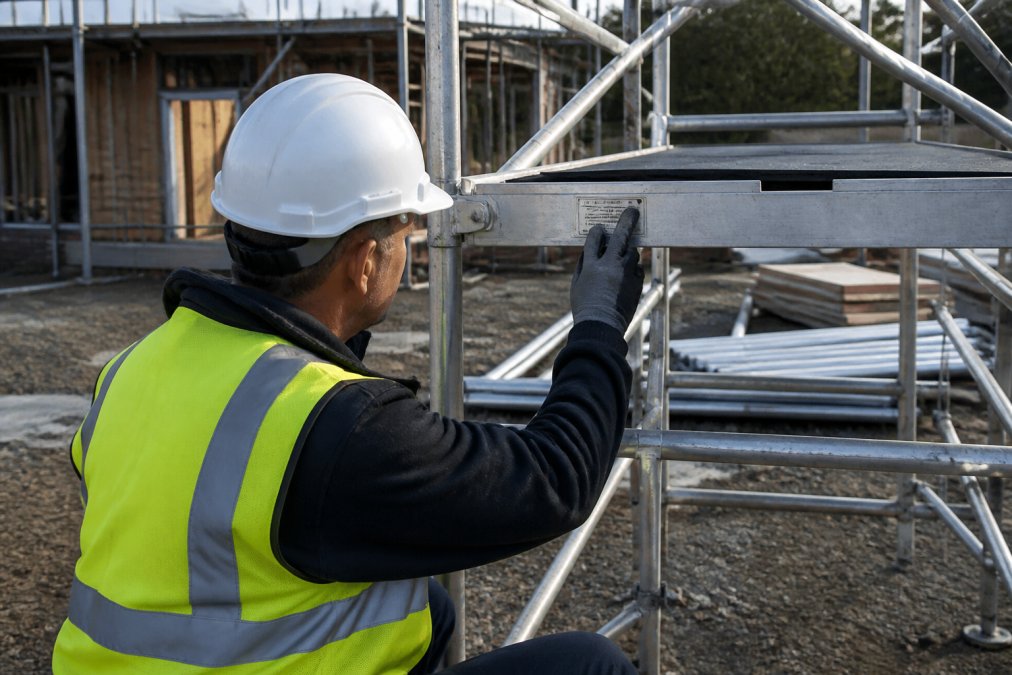
The instruction manual should cover assembly, use, and inspection in line with the manufacturer’s specifications. The tower’s data plate is equally important: it shows the maximum platform height, the load rating, and the number of bays. If the data plate is missing or illegible, treat the tower as uncertified until the manufacturer confirms its status.
PASMA Tower Inspection Requirements Explained
PASMA tower inspection requirements centre on two distinct checks: the pre-use check carried out by the user each time the tower is assembled, and the formal inspection documented by a competent person. The PASMA guidance on tower inspection makes clear that a visual check for damage, deformation, and missing components must happen before every use, while a more detailed inspection is needed after any event that could affect the tower’s stability.
Verifying a PASMA Qualification
Verifying a PASMA qualification means checking that the person assembling the tower holds a current PASMA certificate for the specific tower type they are using. The certificate is valid for five years, so always confirm the expiry date and compare it against the training record (pasma.co.uk). Many sites also require the operative’s photo ID to match the certificate.
HSE Scaffolding Inspection Frequency: What the Law Says
The HSE scaffolding inspection frequency is set out in the Work at Height Regulations 2005, which require a scaffold to be inspected before first use and then at intervals not exceeding seven days. This applies to scaffold towers in the same way it applies to other access equipment, as confirmed in the HSE’s guidance on inspecting scaffolds. A scaffold tower must also be inspected after any alteration, damage, or weather event that could have compromised its safety.
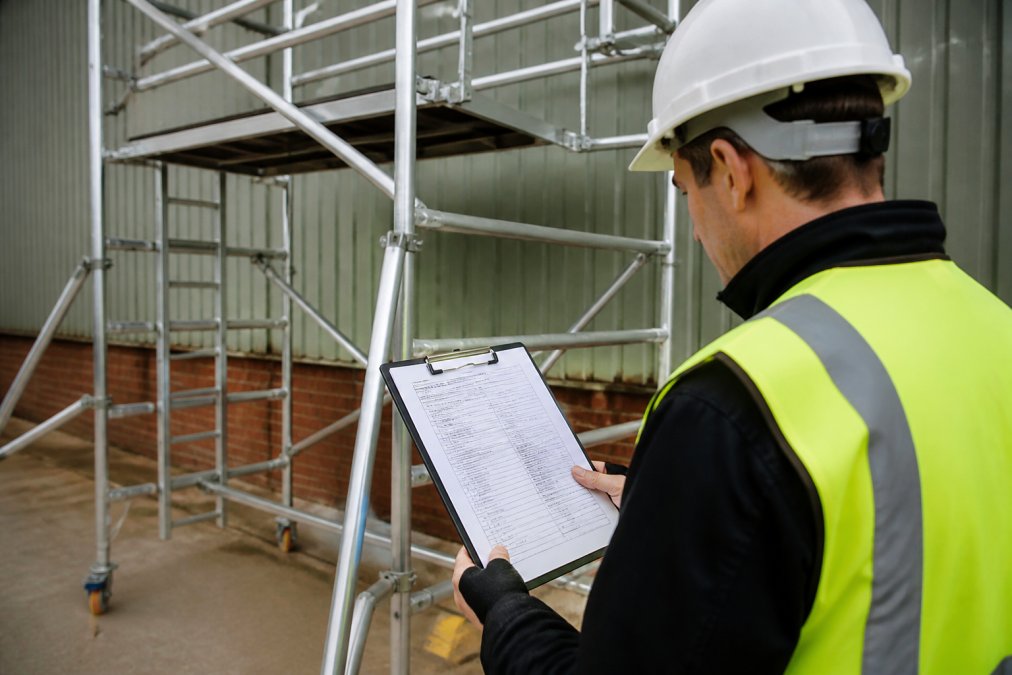
The inspection must be carried out by a competent person and recorded in writing before the tower is used. Keep the inspection report on site and available for review by enforcement officers or the principal contractor.
How to Perform a Certification Check in 5 Steps
Working through a certification check is straightforward once you know what to look for. Use this five-step process every time a tower arrives on site, whether it is new, hired, or has been in storage.
- Check the data plate. Confirm the manufacturer, model, and serial number are present and legible. Cross-reference these details against the Declaration of Conformity.
- Review the Declaration of Conformity. Verify the CE or UKCA mark, the BS EN 1004 reference, and that the document matches the specific tower in front of you, not a different model.
- Confirm the inspection record. Check that the seven-day inspection is current and that the report is signed by a competent person.
- Verify the assembler’s PASMA certificate. Confirm the operative’s certificate is in date and covers the tower type being erected.
- Inspect the tower physically. Look for bent frames, cracked welds, missing pins, or damaged platforms. Any defect means the tower is not fit for use.
Your Scaffold Tower Inspection Checklist
A scaffold tower inspection checklist helps you capture the key checks in a consistent format. The table below summarises what to verify at each stage, based on PASMA tower inspection requirements and the HSE’s seven-day rule.
| Check Stage | What to Verify | Frequency |
|---|---|---|
| Pre-use check | Damage, deformation, missing components, stabilisers | Every assembly |
| Data plate | Model, serial number, load rating, BS EN 1004 mark | Every assembly |
| Formal inspection | Full structural check by a competent person | Before first use, then every 7 days |
| Post-incident check | Condition after impact, alteration, or high winds | Immediately after the event |
| Training records | Valid PASMA certificate matching the tower type | At induction and on request |
What to Do If Certification Is Missing or Expired
If scaffold tower certification is missing or expired, the tower must be taken out of service immediately and clearly tagged to prevent use. Do not attempt to guess the tower’s condition from its appearance alone; a tower that looks sound can still have internal corrosion or fatigue that only a manufacturer’s inspection would reveal.
Contact the manufacturer or supplier with the model and serial number to request a replacement Declaration of Conformity. For an expired PASMA certificate, the operative must complete a refresher course before they can assemble the tower again. If the tower has suffered damage, arrange a manufacturer’s inspection to determine whether it can be repaired or must be scrapped. Many suppliers, including Leader Pro Scaffold Towers, hold comprehensive stocks of spare parts, which can reduce downtime when a component needs replacing rather than the whole tower.
Conclusion
Checking scaffold tower certification is not a box-ticking exercise; it is the foundation of safe working at height and a clear legal duty. Verify the data plate, the Declaration of Conformity, the seven-day inspection record, and the assembler’s PASMA certificate before anyone climbs, and take the tower out of service immediately if any part of that chain is missing.
At Leader Pro Scaffold Towers, every tower we supply is built to BS EN 1004 quality standards, with manufacturer-direct pricing and next-day delivery across the UK. Our team offers expert advice on compliance and a full range of spare parts to keep your equipment certified and working. Get started with Leader Pro Scaffold Towers and ensure your next job runs on certified, compliant access equipment.
Frequently Asked Questions
What is the legal requirement for scaffold tower inspection in the UK?
Under the Work at Height Regulations 2005, every scaffold tower must be inspected by a competent person after assembly and before use, and at intervals not exceeding 7 days thereafter. You must also inspect it after any event that could compromise its stability, such as high winds or a collision. The results must be recorded and kept on site until the tower is dismantled.
How do I verify a PASMA qualification?
Ask the operative for their PASMA photo ID card and check the expiry date. To verify its authenticity, contact PASMA directly through their website or phone line; they maintain a register of accredited training companies and can confirm a card's validity. Employers should keep copies of cards in personnel files and check them regularly, as refresher training is required every 5 years.
Does a scaffold tower require a formal certificate of conformity?
Yes. New towers must come with a Declaration of Conformity and carry a CE or UKCA mark, confirming they meet the BS EN 1004 standard for mobile access towers. This document proves the tower was manufactured to a recognised safety standard. For second-hand towers, ask the seller for the original documentation or evidence that the tower has been inspected and maintained in line with the manufacturer's instructions.
Who is legally allowed to inspect a mobile access tower?
The law requires inspections by a 'competent person' - someone with the training, knowledge and experience to identify risks and faults. For a pre-use check, a trained user who has completed PASMA training is typically considered competent. For the formal 7-day inspection, you need someone with more detailed knowledge of the equipment and regulations, such as a site supervisor or a dedicated inspector.