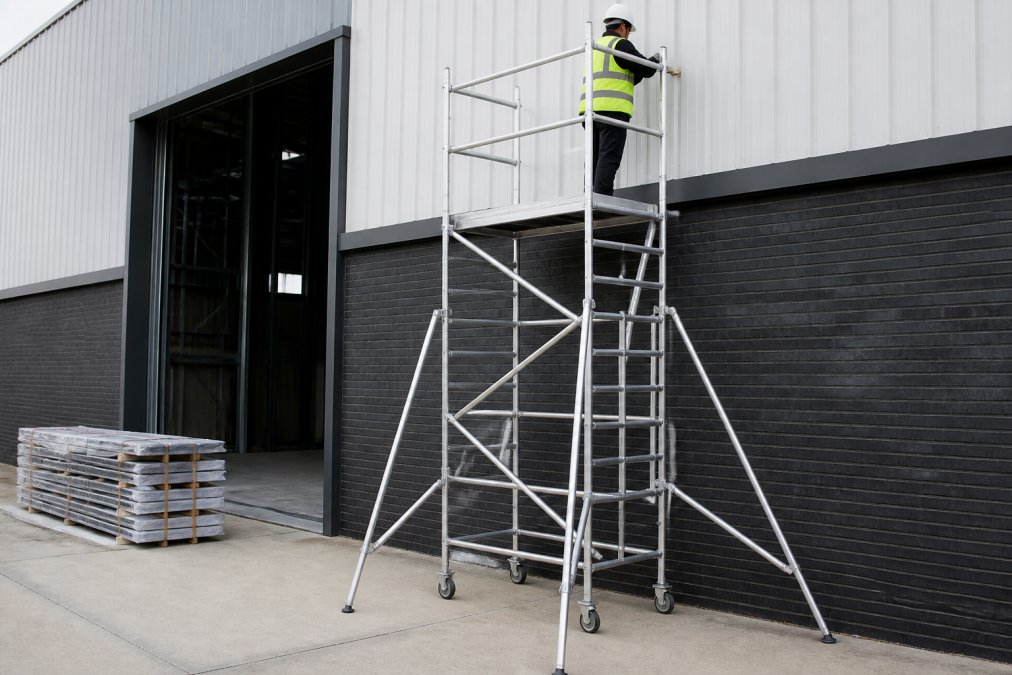
 how-to
How to Hire Scaffold Towers: A 2026 Guide
Table of Contents
- What You'll Need Before Hiring Scaffold Towers
- Step 1: Assess Your Project Requirements and Choose the Right Tower Type
- Step 2: Understand PASMA Training Requirements for Your Team
- Step 3: Complete a Scaffold Tower Safety Inspection Checklist Before Use
- Step 4: Determine Your Scaffold Tower Hire Duration and Booking Timeline
- Common Mistakes to Avoid When Hiring Scaffold Towers
- Conclusion: Making Your Scaffold Tower Hire Decision
- Frequently Asked Questions
Last Updated: September 3, 2026
What You'll Need Before Hiring Scaffold Towers
Before contacting a supplier, gather essential information to hire scaffold towers with confidence. Measure your working height from ground level to the highest point where your team needs to operate. Scaffold towers typically range from 2 to 12 metres; choosing the wrong height wastes money and creates safety risks (bsigroup.com).
Assess the weight your platform must support, including workers, tools, materials, and equipment. A painting crew needs far less capacity than a team installing heavy HVAC units. Check the manufacturer's BS EN1004 specifications for maximum safe load capacity.
Consider your site conditions. Is the ground level and solid, or sloped and soft? Are you working indoors or outdoors? Some projects require non-conductive GRP scaffold towers for electrical work. Document your access constraints, can delivery vehicles reach your site, or will you need a narrow tower that fits through doorways? Finally, establish your timeline. Are you hiring for a day, week, or three months? Planning ahead gives you access to better stock and scheduling flexibility.
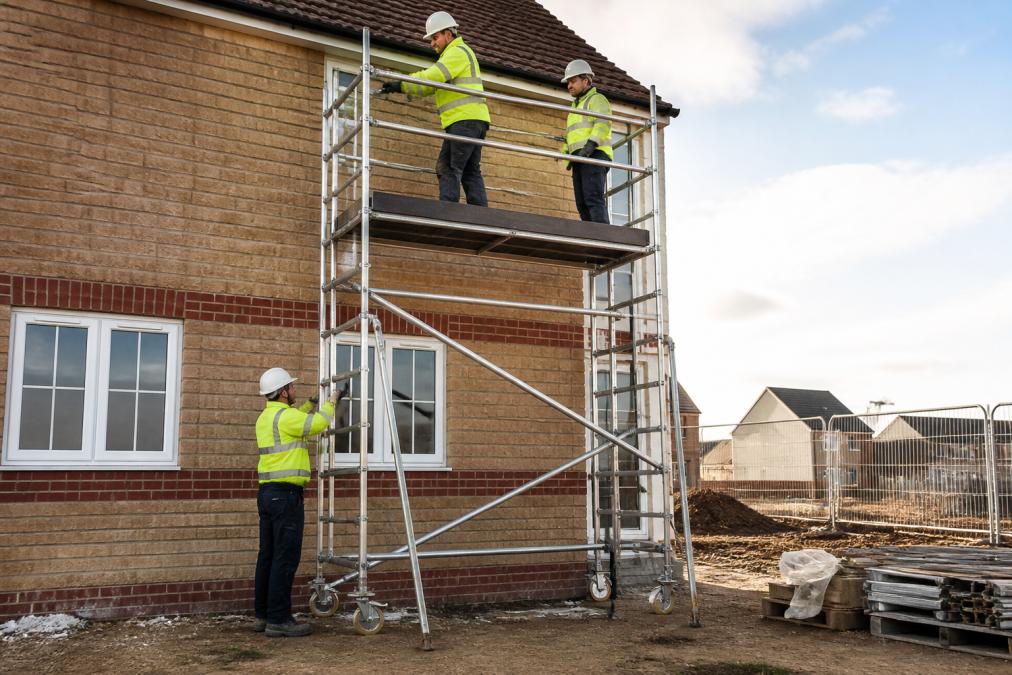
Step 1: Assess Your Project Requirements and Choose the Right Tower Type
Aluminium scaffold towers are the industry standard for most applications. They're lightweight, corrosion-resistant, quick to assemble, and meet BS EN1004 safety standards for both indoor and outdoor work.
GRP (glass-reinforced plastic) scaffold towers are non-conductive and mandatory for electrical work near live installations or power lines. They're heavier and more expensive than aluminium but essential for electrical safety.
Steel scaffold towers offer maximum load capacity for heavy-duty industrial applications but are less common in general hire due to their weight and complexity.
Match the tower type to your actual work. Determine your platform configuration next, single-width platforms suit one or two workers, while double-width platforms give teams more room. Narrow platforms fit through doorways and tight spaces.
Check weight distribution requirements against BS EN1004 specifications. Height adjustability matters if your project involves work at varying levels. Consider assembly time and complexity; simple towers assemble in minutes while multi-section towers take longer but offer greater stability. Leader Pro Scaffold Towers provides clear guidance on assembly requirements for each tower type, helping you plan realistic timelines.
Step 2: Understand PASMA Training Requirements for Your Team
PASMA training is non-negotiable when you hire scaffold towers. The Work at Height Regulations 2005 require that anyone assembling, using, or dismantling a scaffold tower must be competent to do so (hse.gov.uk). PASMA (the Prefabricated Access Suppliers' and Manufacturers' Association) provides the industry-standard training that demonstrates this competence.
PASMA training comes in three levels. Foundation level covers basic assembly, use, and inspection of standard aluminium scaffold towers. Intermediate level adds knowledge of complex configurations and specialist towers. Advanced level is for supervisors managing scaffold operations across multiple projects.
Foundation level training typically takes one day and covers practical assembly alongside theory (pasma.org.uk). Your team learns to identify defects, understand load limits, recognise unsafe conditions, and follow proper assembly sequences. Certification lasts three years; after that, refresher training maintains your PASMA qualification.
Budget for training costs, a one-day PASMA course typically costs £100-£200 per person. For a team of four, that's genuine expense, but it's far cheaper than an accident or regulatory penalties. Confirm your team holds current PASMA certification before equipment arrives. Document training completion and keep certificates on file to demonstrate competence if audited or if an incident occurs.
Step 3: Complete a Scaffold Tower Safety Inspection Checklist Before Use
Before your team steps onto a hired scaffold tower, conduct a thorough safety inspection. Start with the frame and legs, looking for visible damage, dents, cracks, or bending. Check that all legs are present and undamaged. If you spot damage, don't use the tower, contact the hire company and request a replacement.
Examine all connecting components. Pins, clips, and bracing should be secure and undamaged. Loose connections are a primary cause of scaffold collapse. Check that cross-bracing is properly fitted and locked in place.
Inspect the working platform. It should be level, secure, and free of debris. Check that guardrails are properly installed at the correct height (typically 950-1150mm). Test stability before loading by pushing the tower gently from different directions; it should feel solid and immobile.
Verify that the tower sits on level ground. Even a slight slope affects stability. Use adjustable feet or levelling plates to ensure all four legs make solid contact. Create a site-specific safety inspection checklist and document every inspection with the date, inspector name, and any issues found.
Check weather conditions before allowing work at height. High winds, heavy rain, or ice make scaffold towers unsafe. Many hire agreements specify wind speed limits beyond which the tower shouldn't be used. When you hire scaffold towers, ask the supplier what inspection documentation they provide. Leader Pro Scaffold Towers includes guidance on pre-use inspection so you know exactly what to check before work begins.
Step 4: Determine Your Scaffold Tower Hire Duration and Booking Timeline
Calculate your actual working days, not calendar days. If you're hiring a tower for a two-week project but only using it for five working days, you're paying for idle equipment. Many hire companies charge different rates for short-term hire (daily or weekend rates) versus longer periods (weekly or monthly).
Plan for assembly and disassembly time. These require the tower to be on site but aren't traditional working days. A three-day job might need four or five calendar days to account for delivery, assembly, work, and collection.
Consider weather and scheduling delays. Building in a buffer, perhaps booking one extra week, prevents last-minute scrambling and overage charges. For ongoing projects, some hire companies offer flexible arrangements with options to extend weekly.
Booking timeline matters for availability. Popular tower sizes can be in high demand during peak construction seasons. Booking three to four weeks ahead gives you access to better stock and potentially better rates. Coordinate delivery timing carefully; scheduling delivery for when you're ready to assemble saves storage costs.
Ask about weekend and holiday arrangements. Some hire companies charge premium rates for weekend delivery or have collection restrictions. When you hire scaffold tower equipment, get everything in writing. Your hire agreement should clearly state the hire period, delivery date, collection date, and any charges for extending or modifying the arrangement.
Common Mistakes to Avoid When Hiring Scaffold Towers
Underestimating height requirements is common. Measure generously; if uncertain, order the taller option rather than facing mid-project upgrades.
Ignoring ground conditions creates stability problems. Inspect your site carefully before hiring. If the ground is questionable, arrange proper groundwork or request adjustable feet and levelling plates.
Skipping PASMA training is a false economy. The cost is minimal compared to accident or enforcement costs. Every team member who assembles or uses the tower needs current certification.
Ordering the wrong tower type wastes money. Clarify your requirements before hiring. If you're uncertain whether your work qualifies as electrical, ask your hire company or consult your electrical contractor.
Failing to inspect before use is dangerous. Your pre-use inspection is your final safety checkpoint.
Not allowing enough assembly time creates rushed, sloppy work. Calculate realistic assembly time, typically 30 minutes to two hours, and ensure your schedule accommodates it without pressure.
Extending hire periods without confirming availability leads to frustration. Contact your hire company immediately if you need to keep a tower longer than originally booked.
Ignoring wind speed limits is a serious safety error. Scaffold towers have maximum safe wind speeds, typically around 40 mph. Check weather forecasts before work begins.
Storing materials beyond the platform's rated capacity creates collapse risk. Respect load limits; if you need to move more material, use a larger tower or make more trips.
Failing to secure the tower to the building creates tipping risk. Use tie-in points to dramatically improve stability and safety.
Conclusion: Making Your Scaffold Tower Hire Decision
Hiring scaffold towers is straightforward once you understand your requirements and follow essential steps. Assess your needs, choose the right tower type, ensure your team has PASMA training, and conduct proper safety inspections before work begins.
When you hire scaffold towers, you're making a decision that affects project safety, timeline, and cost. Leader Pro Scaffold Towers provides BS EN1004-certified equipment with fast next-day UK delivery, comprehensive spare parts support, and expert product advice. Our direct-from-manufacturer pricing means you get professional-grade access equipment without premium markup. Get started with Leader Pro Scaffold Towers and complete your project with reliable, safe working platforms that meet every regulatory requirement.
Frequently Asked Questions
What are the Work at Height Regulations 2005 requirements for scaffold towers?
The Work at Height Regulations 2005 require that all work at height be properly planned, supervised, and carried out by competent persons. For scaffold towers, this means ensuring they are assembled correctly, inspected regularly, and that users have received appropriate training. BS EN1004-certified towers meet these standards. You must also assess fall risks and use collective protection measures before relying on personal protective equipment. Leader Pro Scaffold Towers are manufactured to these exact specifications.
Do I need a permit to place a scaffold tower on a public pavement?
Yes, in most cases you need permission from your local council or highways authority to place a scaffold tower on a public pavement or footway. This falls under the Highways Act 1980. You'll typically need a licence or permit, which can take several weeks to obtain. Contact your local authority's highways team before delivery. Some councils allow temporary permits for short-term work, while others have stricter requirements. Always check locally before hiring and confirm delivery arrangements with your hire company.
What is the difference between aluminium and GRP scaffold towers?
Aluminium towers are lightweight, durable, and suitable for most general construction and maintenance work. They're quick to assemble and transport. GRP (glass-reinforced plastic) towers are non-conductive, making them essential for electrical work near power lines or utility installations where safety from electric shock is critical. GRP towers are heavier and slightly slower to assemble, but they eliminate electrical hazards. Choose based on your specific work environment and whether electrical risks are present on your site.
How quickly can I get spare parts if a tower is damaged on site?
Leader Pro Scaffold Towers maintains a comprehensive range of spare parts and offers fast replacement services. Most common parts are available for next-day UK delivery, minimising downtime on your project. Contact the support team with details of the damaged component and your hire agreement number. Having spare parts readily available means you can keep your project on schedule without waiting weeks for replacements.