 ultimate-guide
Safe Working Platforms: A 2026 Guide
Table of Contents
- What Are Safe Working Platforms for Commercial Property?
- Types of Safe Working Platforms: Aluminium vs GRP Non-Conductive Access Towers
- Work at Height Regulations 2005 Compliance for Commercial Access
- HSE Scaffold Tower Inspection Checklist: What to Look For
- Key Safety and Stability Features in Commercial Access Platforms
- Choosing the Right Platform for Your Commercial Property Type
- Questions to Ask Scaffold Tower Suppliers
- Conclusion
- Frequently Asked Questions
Last Updated: 4 September 2026
What Are Safe Working Platforms for Commercial Property?
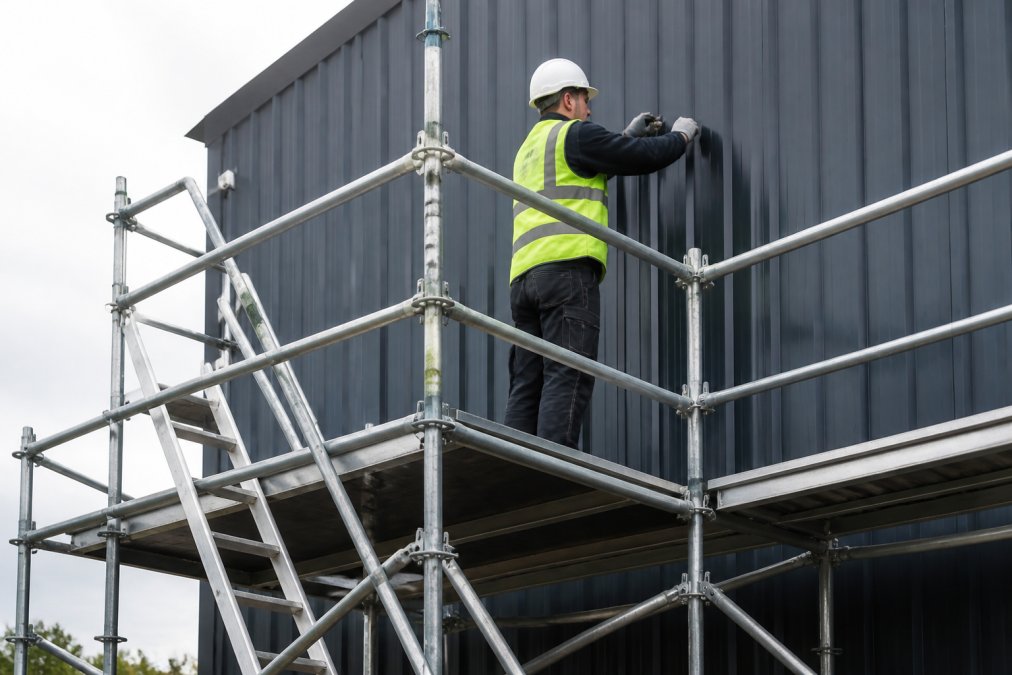
The Work at Height Regulations 2005 shape every decision about access equipment in the UK, and the core requirement is simple: work must be planned, supervised, and carried out from a safe and stable working platform for commercial property management. A safe working platform is any elevated surface that prevents falls and supports both the worker and their tools without movement or collapse. For facilities managers and contractors, this usually means a mobile access tower that has been erected correctly, inspected regularly, and matched to the task at hand.
In this Leader Pro Scaffold Towers guide, we break down what makes an access platform genuinely safe, how to verify compliance, and how to choose between aluminium and GRP options for different commercial settings. The stakes are practical rather than theoretical: a platform that shifts under load or lacks proper guardrails can turn routine maintenance into a serious incident.
What most guides miss is that stability comes from the whole system, not just the platform itself. Base plates, stabiliser bars, outriggers, and locking mechanisms all contribute to whether a tower is genuinely safe to climb. Below, we cover the equipment types, the regulations, and the inspection habits that keep commercial work at height both legal and safe.
Types of Safe Working Platforms: Aluminium vs GRP Non-Conductive Access Towers
For commercial property management, two main types of mobile access tower dominate: aluminium and GRP, which stands for glass-reinforced plastic. Both can deliver safe and stable working platforms, but they serve different risk profiles.
The choice between them is rarely about price alone. It is about the environment where the tower will stand, the work being done, and the electrical or chemical hazards present.
Aluminium Scaffold Towers
Aluminium towers are the default choice for most maintenance and construction work. They are light enough for two people to assemble without mechanical help, resistant to corrosion, and strong for their weight, which makes them practical for routine access across retail units, offices, and industrial sites.
Their main limitation is electrical conductivity. Aluminium will conduct electricity, so these towers should never be used near live services or overhead power lines. That single constraint rules them out for a meaningful share of electrical and utility work.
GRP Non-Conductive Access Towers
GRP non-conductive access towers solve the problem aluminium cannot. The material does not conduct electricity, which makes these towers the standard choice for electrical contractors working near live equipment or overhead cables.
GRP towers cost more and weigh more than aluminium equivalents. The trade-off is justified whenever the risk of electrocution is real. For facilities teams that manage mixed portfolios, owning at least one GRP tower is often the difference between delaying electrical work and completing it safely.
| Platform Type | Best For | Key Limitation | Typical User |
|---|---|---|---|
| Aluminium | General maintenance, painting, guttering | Conducts electricity | Builders, decorators, FM teams |
| GRP | Electrical work, live services, utilities | Heavier, higher cost | Electrical contractors |
Work at Height Regulations 2005 Compliance for Commercial Access
The Work at Height Regulations 2005 apply to every employer and contractor who controls work at height in the UK (hse.gov.uk). The regulations require that all work at height is properly planned, that those involved are competent, and that equipment is inspected before use and at suitable intervals. The official Health and Safety Executive guidance on the Work at Height Regulations sets out these duties clearly.
Compliance is not a paperwork exercise. It means selecting equipment that meets the relevant product standard, ensuring it is erected by trained people, and keeping records of inspections. For access towers, the product standard that matters is BS EN 1004, which covers mobile access and working towers made of prefabricated elements (bsigroup.com). Towers built to this standard carry markings that confirm their configuration and safe working load.
A common mistake is treating a PASMA training card as optional. The Prefabricated Access Suppliers' and Manufacturers' Association runs the recognised training scheme for tower assembly and use. While the regulations do not name PASMA directly, they do require competence, and PASMA certification is the practical way most UK contractors prove it. Site audits routinely ask for both the training records and the inspection logs.
HSE Scaffold Tower Inspection Checklist: What to Look For
A pre-use check takes minutes and prevents most avoidable incidents. The HSE scaffold tower inspection checklist is not a separate legal document, but the Health and Safety Executive expects a visual check before every use and a formal inspection after assembly and at regular intervals.
Before climbing, confirm the tower is on level ground with all wheels locked and stabilisers deployed. Check that the frames are aligned and all locking clips are engaged. Look for damage, corrosion, or bent components that would compromise strength. Confirm guardrails and toe boards are fitted on every working platform above two metres.
The formal inspection should follow the manufacturer's instructions and any defects must be recorded and rectified before further use. Towers that have been moved, altered, or exposed to high winds need a fresh inspection before anyone climbs them. Keep the inspection records available on site, because enforcement officers and principal contractors will ask to see them.
Key Safety and Stability Features in Commercial Access Platforms
The safety features that matter most are the ones you can verify before the tower leaves the depot. Look for stabiliser bars and outriggers on towers above a certain height, lockable castors, and guardrails that meet the required height. Trapdoor platforms, which allow safe climbing through the platform, are another sign of a well-designed unit.
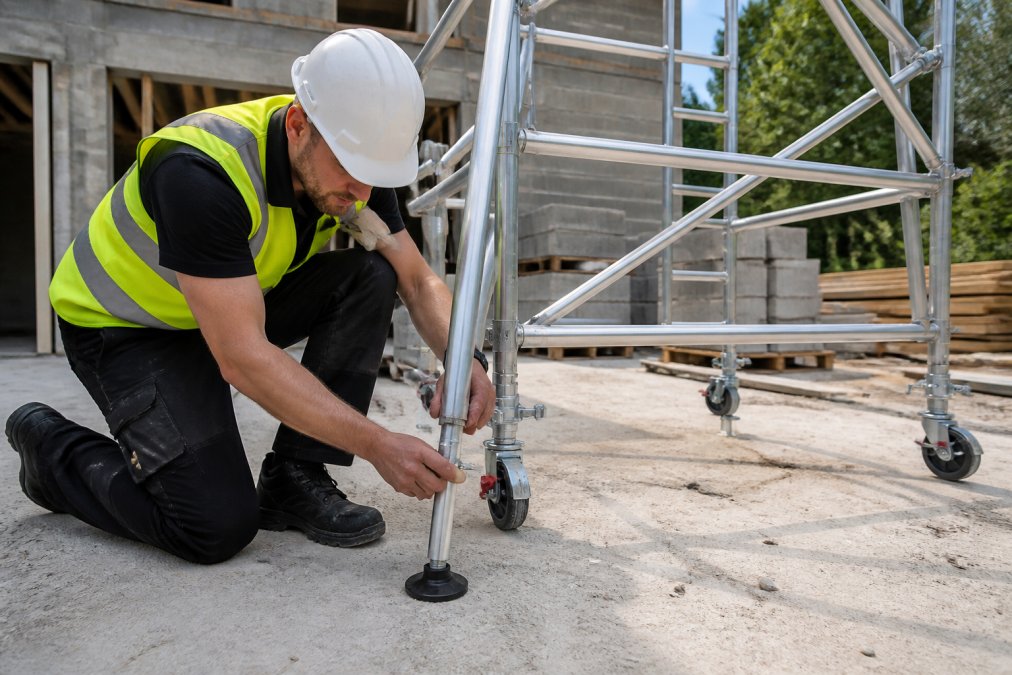
BS EN 1004 certification is the single most reliable indicator of quality. It confirms the tower has been tested to a recognised European standard for stability and structural integrity. When a supplier claims certification, ask to see the certificate and check that the tower's markings match the documentation.
Stability on site depends on how the tower is used as much as its design. Towers must be tied to the structure when used outdoors above a height of three metres, or when the height exceeds three times the smallest base dimension indoors. Ignoring tie-in requirements is one of the most common causes of tower overturning.
Choosing the Right Platform for Your Commercial Property Type
Different commercial properties create different access challenges, and the right platform for a high-rise office block is not the same as the right platform for a warehouse. Matching the equipment to the building saves time and reduces risk.
High-Rise Commercial Buildings
High-rise work usually involves façade maintenance, window cleaning, and work on roof plant. For tasks where a mobile tower is appropriate, height and wind exposure are the dominant concerns. A tower that is tall enough to reach the work will need a larger base or additional stabilisation, and outdoor use at height demands careful attention to tie-in requirements.
Retail and Industrial Facilities
Retail units and industrial facilities tend to have lower eaves but wider floor plates. Internal maintenance, lighting replacement, and work on racking systems are common tasks. The priority here is manoeuvrability through doorways and around obstacles, which favours narrower towers that can still be stabilised properly. For electrical work in industrial settings, GRP towers are often the safer choice.
Questions to Ask Scaffold Tower Suppliers
Buying access equipment is a long-term decision, so the questions you ask before purchase matter. Start with certification: ask to see the BS EN 1004 certificate and confirm the tower markings match the paperwork. If a supplier cannot produce this, move on.
Ask about delivery times and spare parts availability. A tower that is out of service waiting for a replacement part is a cost you did not plan for. Confirm the supplier stocks the components for the models they sell and can dispatch them quickly.
For teams doing electrical work, ask specifically whether GRP models are available and whether the supplier can advise on the right configuration for your site conditions. A supplier that only pushes aluminium is not accounting for your full risk profile. Leader Pro Scaffold Towers, for example, offers BS EN 1004 certified aluminium and GRP towers with manufacturer-direct pricing and next-day UK delivery, backed by a comprehensive range of spare parts.
Conclusion
Safe and stable working platforms for commercial property management come down to three disciplines: choosing equipment that matches the task, verifying it meets BS EN 1004, and inspecting it without shortcuts. The regulations set the legal baseline, but the practical standard is higher.
Get these fundamentals right and working at height becomes a controlled, routine activity rather than a source of risk. Get them wrong and every climb is a gamble.
Leader Pro Scaffold Towers supplies certified aluminium and GRP access towers direct from the manufacturer, with expert advice on configuration and compliance. Get started with Leader Pro Scaffold Towers and equip your team with access equipment you can verify, not just trust.
Frequently Asked Questions
What are the Work at Height Regulations 2005 requirements for commercial property?
The Work at Height Regulations 2005 require that any work at height must use appropriate safe working platforms or access equipment. Employers must carry out a risk assessment, select equipment suitable for the task, ensure proper installation and maintenance, and provide training to staff. Safe working platforms like scaffold towers must comply with British Standards (BS EN1004) and be regularly inspected. The regulations place responsibility on the organisation controlling the work to ensure compliance and worker safety.
How do I choose between scaffold towers and ladders for property maintenance?
Scaffold towers are generally safer than ladders for most commercial property maintenance because they provide a stable platform, guardrails, and secure footing. Ladders are typically suitable for brief, low-risk tasks. For work lasting longer, at greater heights, or involving tools and materials, safe working platforms like scaffold towers are often a more appropriate choice under the Work at Height Regulations 2005. Towers can also reduce fatigue and allow both hands free for work, potentially improving safety and productivity.
What are the benefits of GRP non-conductive access towers for electrical maintenance?
GRP (glass-reinforced plastic) non-conductive access towers eliminate the risk of electric shock when working near live electrical equipment or power lines. Unlike aluminium towers, GRP towers do not conduct electricity, making them a suitable choice for electrical contractors and utility maintenance work. They offer stability and safety features but without the conductive risk. GRP towers are particularly valuable for work on electrical installations, switchboards, and overhead lines where electrical hazards are present.
How often should scaffold towers be inspected under HSE guidelines?
The HSE requires scaffold towers to be inspected before first use, after any modification or damage, and at regular intervals (typically every 7 days during continuous use). A competent person must carry out formal inspections and document findings. Daily visual checks by the user are also important to spot obvious damage, missing parts, or instability. Thorough inspection before each use helps prevent accidents and ensures the platform remains safe. Keep inspection records on site to demonstrate compliance during audits.
What safety features should I look for in commercial access platforms?
Look for platforms with sturdy base stabiliser feet, diagonal bracing, secure locking mechanisms on wheels, and fully enclosed guardrails. The platform should comply with BS EN1004 standards and be manufactured by a reputable supplier. Check for non-slip surfaces, clear weight capacity markings, and easy-to-assemble components. The tower should have adjustable feet to level uneven ground, and all joints should be secure and rattle-free. Ensure spare parts are readily available and the supplier offers technical support if issues arise.
Who is responsible for safety when contractors work at height on commercial premises?
Under the Work at Height Regulations 2005, the organisation controlling the work (usually the property owner or facilities manager) is responsible for ensuring safe working practices. This includes selecting appropriate equipment, ensuring it is properly installed and maintained, and verifying that contractors are trained and competent. Contractors must also follow safe working procedures and report hazards. Both parties share responsibility for compliance. Regular inspections and documented risk assessments protect everyone and demonstrate due diligence if incidents occur.
Are safe working platforms suitable for small decorating projects and loft conversions?
Yes, safe working platforms are suitable for loft conversions, extensions, and decorating work. Smaller, lightweight towers designed for modest heights are available and can be cost-effective for these projects. They can offer better safety, stability, and efficiency than ladders, especially for jobs lasting several days. Many suppliers offer various sizes and configurations to suit different project scales. Using proper access equipment on smaller projects can reduce accident risk, improve work quality, and help ensure compliance with regulations, protecting both workers and your business.
Frequently Asked Questions
Q: What are the Work at Height Regulations 2005 requirements for commercial property?
A: The Work at Height Regulations 2005 require that any work at height must use appropriate safe working platforms or access equipment. Employers must carry out a risk assessment, select equipment suitable for the task, ensure proper installation and maintenance, and provide training to staff. Safe working platforms like scaffold towers must comply with British Standards (BS EN1004) and be regularly inspected. The regulations place responsibility on the organisation controlling the work to ensure compliance and worker safety.
Q: How do I choose between scaffold towers and ladders for property maintenance?
A: Scaffold towers are generally safer than ladders for most commercial property maintenance because they provide a stable platform, guardrails, and secure footing. Ladders are typically suitable for brief, low-risk tasks. For work lasting longer, at greater heights, or involving tools and materials, safe working platforms like scaffold towers are often a more appropriate choice under the Work at Height Regulations 2005. Towers can also reduce fatigue and allow both hands free for work, potentially improving safety and productivity.
Q: What are the benefits of GRP non-conductive access towers for electrical maintenance?
A: GRP (glass-reinforced plastic) non-conductive access towers eliminate the risk of electric shock when working near live electrical equipment or power lines. Unlike aluminium towers, GRP towers do not conduct electricity, making them a suitable choice for electrical contractors and utility maintenance work. They offer stability and safety features but without the conductive risk. GRP towers are particularly valuable for work on electrical installations, switchboards, and overhead lines where electrical hazards are present.
Q: How often should scaffold towers be inspected under HSE guidelines?
A: The HSE requires scaffold towers to be inspected before first use, after any modification or damage, and at regular intervals (typically every 7 days during continuous use). A competent person must carry out formal inspections and document findings. Daily visual checks by the user are also important to spot obvious damage, missing parts, or instability. Thorough inspection before each use helps prevent accidents and ensures the platform remains safe. Keep inspection records on site to demonstrate compliance during audits.
Q: What safety features should I look for in commercial access platforms?
A: Look for platforms with sturdy base stabiliser feet, diagonal bracing, secure locking mechanisms on wheels, and fully enclosed guardrails. The platform should comply with BS EN1004 standards and be manufactured by a reputable supplier. Check for non-slip surfaces, clear weight capacity markings, and easy-to-assemble components. The tower should have adjustable feet to level uneven ground, and all joints should be secure and rattle-free. Ensure spare parts are readily available and the supplier offers technical support if issues arise.
Q: Who is responsible for safety when contractors work at height on commercial premises?
A: Under the Work at Height Regulations 2005, the organisation controlling the work (usually the property owner or facilities manager) is responsible for ensuring safe working practices. This includes selecting appropriate equipment, ensuring it is properly installed and maintained, and verifying that contractors are trained and competent. Contractors must also follow safe working procedures and report hazards. Both parties share responsibility for compliance. Regular inspections and documented risk assessments protect everyone and demonstrate due diligence if incidents occur.
Q: Are safe working platforms suitable for small decorating projects and loft conversions?
A: Yes, safe working platforms are suitable for loft conversions, extensions, and decorating work. Smaller, lightweight towers designed for modest heights are available and can be cost-effective for these projects. They can offer better safety, stability, and efficiency than ladders, especially for jobs lasting several days. Many suppliers offer various sizes and configurations to suit different project scales. Using proper access equipment on smaller projects can reduce accident risk, improve work quality, and help ensure compliance with regulations—protecting both workers and your business.