 ultimate-guide
Scaffolding Safety Regulations: A 2026 Guide
Table of Contents
- Scaffolding Safety Regulations: Overview and Scope
- Work at Height Regulations 2005: Core Requirements
- Competent Person Scaffolding Requirements
- Scaffold Inspection Checklist and Frequency
- Standards and Certification: BS EN1004 and Beyond
- Guardrails, Toe Boards, and Access Requirements
- Common Compliance Mistakes to Avoid
- Frequently Asked Questions
Last Updated: September 2, 2026
Scaffolding Safety Regulations: Overview and Scope
Scaffolding safety regulations form the foundation of safe working at height across construction sites, maintenance projects, and industrial environments. These regulations exist because falls from height remain one of the most serious workplace hazards, and scaffolds that fail to meet standards put workers' lives at immediate risk.
In the UK, scaffolding safety regulations are governed primarily by the Work at Height Regulations 2005, supported by British Standards like BS EN1004 and enforced through the Health and Safety Executive. At Leader Pro Scaffold Towers, we help contractors, builders, and facility managers navigate these requirements to ensure their teams work safely and remain compliant during audits and inspections.
The scope of scaffolding safety regulations covers everything from how scaffolds are designed and assembled to how they're inspected and maintained throughout a project. Whether you're erecting a temporary access tower for a two-day job or managing permanent scaffolding on a large construction site, understanding these regulations isn't optional, it's a legal requirement that protects your workers and your business.
This guide walks through the key regulations, competent person requirements, inspection standards, and common compliance mistakes that catch contractors off guard. By the end, you'll understand not just what the regulations say, but why they matter and how to implement them on your sites.
Work at Height Regulations 2005: Core Requirements
The Work at Height Regulations 2005 is the primary legal framework governing all work at height in the UK, including scaffolding operations. These regulations apply to any work where a person could fall more than two metres and suffer injury (hse.gov.uk). For scaffolding, this threshold is almost always met.
The Work at Height Regulations 2005 establish a hierarchy of control that must be followed. First, you must avoid work at height where reasonably practicable. Second, if work at height cannot be avoided, you must use collective protective measures (like guardrails and safety nets). Third, only if these measures are not possible should you rely on personal protective equipment like harnesses.
Planning and Risk Assessment
Every scaffold project requires documented planning and risk assessment before work begins. The Work at Height Regulations 2005 requires duty holders to plan work at height, taking into account site conditions, weather, worker competence, and equipment suitability. This isn't a box-ticking exercise, it's a detailed evaluation that informs every decision made during the project.
Your risk assessment must identify specific hazards: unstable ground, overhead power lines, wind exposure, worker fatigue, and access routes. For each hazard, you document control measures and assign responsibility. A common mistake is treating the risk assessment as a generic template. Instead, assessments should be site-specific, updated when conditions change, and accessible to all workers on site.
Documentation matters. The Work at Height Regulations 2005 requires written records of your planning and assessment. These documents become critical evidence if an incident occurs or if a Health and Safety Executive inspector visits your site. Keep them on site, not filed away in an office drawer.
Duty Holders and Responsibilities
The Work at Height Regulations 2005 assigns clear responsibilities to different parties. The duty holder, typically the employer or contractor managing the work, is responsible for ensuring compliance. This includes selecting competent people, providing appropriate equipment, and ensuring adequate supervision.
Site managers must understand their specific responsibilities. They're accountable for ensuring scaffolds are erected correctly, inspected regularly, and maintained throughout the project. Workers also have duties: they must follow instructions, report hazards, and use equipment properly. Subcontractors and temporary workers are not exempt, they must understand their role in maintaining safety standards.
Many contractors assume that hiring a competent scaffolder absolves them of responsibility. This is incorrect. The duty holder remains accountable even when delegating tasks to competent people. Regular site visits, documented inspections, and clear communication about scaffold condition are non-negotiable.
Competent Person Scaffolding Requirements
A competent person in scaffolding is someone with the knowledge, experience, and training to identify hazards and take appropriate action. The competent person doesn't need to be qualified in every aspect of scaffolding, they need competence in the specific tasks they're performing.
For erecting, altering, and dismantling scaffolds, competence is essential. A competent person understands load calculations, foundation requirements, tie-in points, and the specific equipment being used. They can identify when conditions are unsafe and take corrective action without waiting for instruction.
Training and Certification Standards
Formal training and certification provide evidence of competence, though they're not the only way to demonstrate it. The PASMA (Prefabricated Access Suppliers' and Manufacturers' Association) scaffold tower training is widely recognised and covers tower assembly, dismantling, and safety. PASMA training typically takes one to three days and includes both classroom and practical assessment (pasma.co.uk).
Other recognised qualifications include NVQ Level 2 in Scaffolding and specific manufacturer training for proprietary systems. These qualifications are time-limited, typically three to five years, and refresher training is often required. The requirement for ongoing training reflects that regulations, equipment, and best practices evolve.
Beyond formal qualifications, competence comes from experience under supervision. A scaffolder with ten years of hands-on experience may be competent without a recent PASMA certificate, provided they've kept up with current standards and can demonstrate their knowledge. However, formal training provides documented evidence that's valuable during audits.
Responsibilities on Site
The competent person's on-site responsibilities include supervising assembly and dismantling, conducting formal inspections, and ensuring the scaffold meets design specifications. They must be present during critical phases, initial assembly, major alterations, and final inspection before use.
The competent person is not responsible for every nail and bolt. Instead, they're responsible for ensuring systems are in place, workers understand requirements, and the scaffold meets safety standards. This requires clear communication with the site team, documented inspections, and the authority to stop work if safety is compromised.
One often-overlooked responsibility is training site workers on safe use of the scaffold. The competent person should brief workers on load limits, access points, and any specific hazards of that particular scaffold. Written instructions displayed on site reinforce this training.
Scaffold Inspection Checklist and Frequency
Regular inspections are the primary mechanism for catching scaffold deterioration before it becomes dangerous. The frequency and depth of inspections depend on the scaffold type, site conditions, and how long it remains in place.
Daily and Weekly Inspection Points
Daily visual checks by site workers should identify obvious damage: bent components, loose bolts, missing guardrails, or debris accumulation. These checks take ten to fifteen minutes and can be performed by anyone on site. A simple checklist, printed and posted on the scaffold, ensures consistency.
Weekly inspections by a competent person go deeper. The competent person checks structural integrity, verifies that ties and bracing are secure, confirms guardrails meet height requirements, and documents findings. For long-term scaffolds, weekly inspections are standard practice. For short-duration projects, weekly inspections may be excessive, but at minimum, inspections should occur before work begins and after any significant change (weather, heavy loading, or alterations).
Weather events require prompt re-inspection. High winds, heavy snow, or flooding can compromise scaffold stability. After such events, a competent person should inspect the scaffold before work resumes, even if the previous inspection was recent.
Formal Inspections by Competent Persons
Formal inspections by competent persons are documented, thorough examinations of the entire scaffold. These inspections typically occur at project start, at regular intervals (usually monthly for long-term scaffolds), after any modification, and before final use.
The formal inspection checklist should cover: foundation and base plates, vertical standards and cross-bracing, guardrails and toe boards, access and egress routes, ties and anchors, load distribution, and any damage or wear. Each item is documented with pass/fail status and corrective actions noted.
Documentation is critical. Inspection records should be dated, signed by the competent person, and retained throughout the project and for a period afterward. These records demonstrate due diligence and provide evidence of compliance if questions arise.
Standards and Certification: BS EN1004 and Beyond
BS EN1004 is the British Standard for safety of temporary access equipment and specifies requirements for mobile access towers and scaffolds. This standard covers design, materials, assembly, inspection, and use. Compliance with BS EN1004 is not optional for commercial scaffolding, it's the baseline expectation.
BS EN1004 requires that equipment be designed by competent engineers, manufactured to specifications, and supplied with clear assembly instructions and load information. The standard specifies maximum heights, tie-in requirements, and guardrail dimensions. It also requires that manufacturers provide documentation proving compliance.
When selecting scaffolding equipment, verify BS EN1004 certification. This certification indicates that the manufacturer has tested the equipment and can prove it meets safety requirements. Leader Pro Scaffold Towers' aluminium towers are BS EN1004 certified, providing assurance that they meet these stringent safety standards.
Beyond BS EN1004, other relevant standards include BS 5973 (Code of Practice for Access and Working Scaffolds) and HSE guidance documents. BS 5973 provides detailed guidance on design, erection, and use of scaffolds. HSE documents like the "Safe Use of Ladders and Stepladders" provide practical guidance aligned with regulations.
Staying current with standards matters. Standards are updated periodically to reflect new knowledge and technology. A scaffold that met 2020 standards may have gaps compared to 2026 requirements. Manufacturers and competent persons should track standard updates and ensure practices reflect current requirements.
Guardrails, Toe Boards, and Access Requirements
Guardrails and toe boards are primary collective protective measures that prevent falls and falling objects. These components are not optional extras, they're fundamental to scaffold safety and are required by regulation on any scaffold where people work at height.
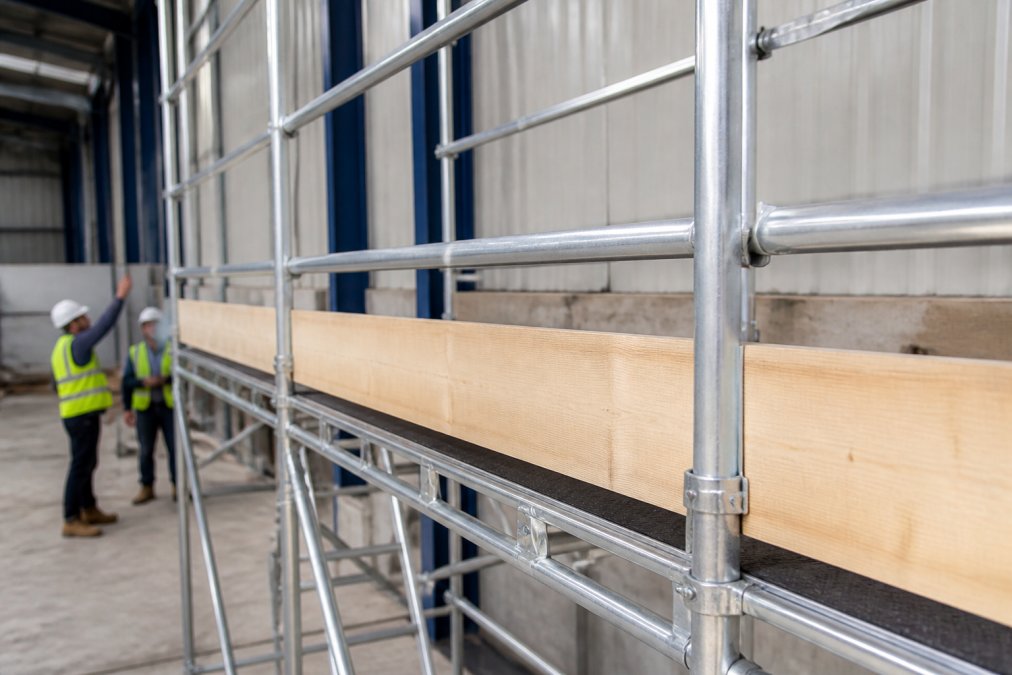
Guardrails must be installed on all open sides and ends of the scaffold where workers could fall. The top rail must be at a height of 950 to 1150 millimetres above the working platform (bsigroup.com). A mid-rail is required halfway between the top rail and the platform. Both rails must be capable of withstanding a horizontal force without deflecting excessively.
Toe boards prevent tools, materials, and debris from falling to lower levels. These boards must be at least 150 millimetres high and must be positioned on all sides where people work or where materials are stored. Gaps between the platform and toe board must not exceed 25 millimetres.
Access to the scaffold must be safe and secure. Ladders, ramps, or stairways must be provided. Ladders should be inclined at approximately 75 degrees and secured at the top and bottom. For scaffolds in use for extended periods, fixed stairways are preferable to ladders, as they reduce fatigue and the risk of slips.
Inspectors and auditors pay close attention to guardrails and toe boards because they're visible indicators of safety culture. Missing or damaged guardrails suggest that other, less visible aspects of the scaffold may also be neglected. Maintaining these components in perfect condition demonstrates commitment to worker safety.
Common Compliance Mistakes to Avoid
Many contractors understand the regulations but still make mistakes in implementation. These errors often stem from time pressure, cost-cutting, or simply not thinking through the implications of regulations.
The most common mistake is inadequate planning. Contractors assume they know how to assemble a scaffold and skip the detailed planning and risk assessment. When conditions are more complex than expected, unstable ground, overhead hazards, or difficult access, the scaffold ends up being unsafe. Spending two hours on proper planning prevents days of rework and serious safety incidents.
A second frequent error is using unqualified people for critical tasks. Hiring a general labourer to erect a scaffold because they're cheaper than a trained scaffolder creates liability and safety risk. The competent person requirement exists because scaffolding knowledge is specialised. Cutting corners here is false economy.
Inadequate inspection is another major issue. Some contractors inspect scaffolds only at the start of a project and assume they remain safe throughout. In reality, scaffolds deteriorate from use, weather, and vibration. Regular inspections catch problems early when they're cheap to fix.
Documentation gaps are surprisingly common. A contractor may have done everything correctly, planning, competent assembly, regular inspections, but failed to document it. Without written records, there's no evidence of compliance if questions arise. Inspectors expect to see documented risk assessments, inspection records, and competent person certifications.
Finally, many contractors fail to brief workers adequately. A scaffold may be perfectly safe, but if workers don't understand load limits, access routes, or specific hazards, they'll use it unsafely. Clear, written instructions displayed on site and reinforced through toolbox talks prevent misuse.
Keeping your team safe at height requires understanding these regulations, implementing them consistently, and maintaining rigorous documentation.
At Leader Pro Scaffold Towers, we support this process by supplying BS EN1004-certified aluminium towers with comprehensive documentation and expert guidance. Our next-day UK delivery means you're never waiting for equipment, and our spare parts availability keeps projects moving when repairs are needed. When you choose equipment from a manufacturer committed to safety standards, you're investing in both worker protection and regulatory compliance. Shop now and speak with our team about your next project.
Frequently Asked Questions
What are the primary Health and Safety Executive regulations for scaffolding safety?
The Work at Height Regulations 2005 form the foundation of UK scaffolding safety law. They require all work at height above 2 metres to be properly planned, supervised, and executed by competent persons. The Health and Safety at Work etc. Act 1974 also applies, along with the Management of Health and Safety at Work Regulations 1999. These regulations mandate risk assessments, safe systems of work, and appropriate training for anyone erecting, using, or dismantling scaffolding equipment.
Who is legally responsible for scaffolding safety on a construction site?
Responsibility is shared among multiple parties. The site manager or principal contractor is responsible for ensuring safe systems are in place. The scaffolding company or erector must ensure equipment meets standards and is properly assembled. Site supervisors and workers must follow safe procedures and report hazards. A competent person oversees inspection and maintenance. Everyone on site has a duty to work safely and report defects. Failure to meet these duties can result in enforcement action by the Health and Safety Executive.
How often must a scaffold be inspected under UK law?
Formal inspections by a competent person must occur before first use, then at least every seven days. Additional inspections are required after adverse weather, high winds, or if the scaffold has been altered. Daily visual checks by users are also mandatory, workers should report any obvious damage, missing components, or instability immediately. Documentation of all inspections must be kept on site and made available to the Health and Safety Executive if requested.
What training is required for those erecting or dismantling scaffold towers?
Anyone involved in erecting, altering, or dismantling scaffolding must hold a recognised qualification such as PASMA (Prefabricated Access Suppliers' and Manufacturers' Association) certification or equivalent. Training typically covers assembly procedures, safety systems, load calculations, and hazard recognition. Supervisors and competent persons require additional training in inspection and sign-off procedures. All training must be documented, and workers should receive refresher training every few years to maintain competency.
What are the requirements for scaffold guardrails and toe boards?
Guardrails must be installed at a height of 910-1150 millimetres above the working platform and be capable of withstanding a horizontal load of at least 1.2 kilonewtons. Toe boards must be at least 150 millimetres high and prevent materials falling from the platform. Both must be securely fixed and free from damage. On working platforms above 2 metres, these barriers are mandatory unless alternative fall protection (such as safety harnesses) is in place. Regular inspection ensures they remain effective.
Do I need a licence for scaffolding on a public highway?
Yes, if your scaffolding extends over or encroaches on a public highway, you must obtain a licence from the local authority. This is separate from building control and health and safety approvals. The process typically involves submitting plans, proof of insurance, and safety documentation. Your local authority will assess whether the scaffolding poses a risk to the public. Failure to obtain a licence can result in fines and enforcement action, so contact your council early in the planning stage.
What should I check when selecting a scaffold tower supplier?
Verify that the supplier is accredited to BS EN1004, which sets performance standards for aluminium and steel access towers. Ask for documentation of quality certifications, such as ISO 9001. Confirm they provide spare parts quickly and have a track record of reliable delivery. Check whether their equipment has been tested for load capacity and stability. Request references from other contractors or hire companies. Ensure the supplier offers technical support and guidance on safe assembly and use.
This article was written using GrandRanker