 how-to
Tower Scaffold Safety Tags: What You Must Know
Table of Contents
- Why Tower Scaffold Safety Tags Matter on Site
- Work at Height Regulations 2005 Inspection Requirements
- What Information Must a Tower Scaffold Safety Tag Show?
- Who Is a Competent Person for Scaffold Inspection?
- Scaffold Tower Inspection Checklist: Step by Step
- Green vs Red Tags: When to Use Each Colour
- Conclusion
- Frequently Asked Questions
Last Updated: 5 September 2026
Why Tower Scaffold Safety Tags Matter on Site
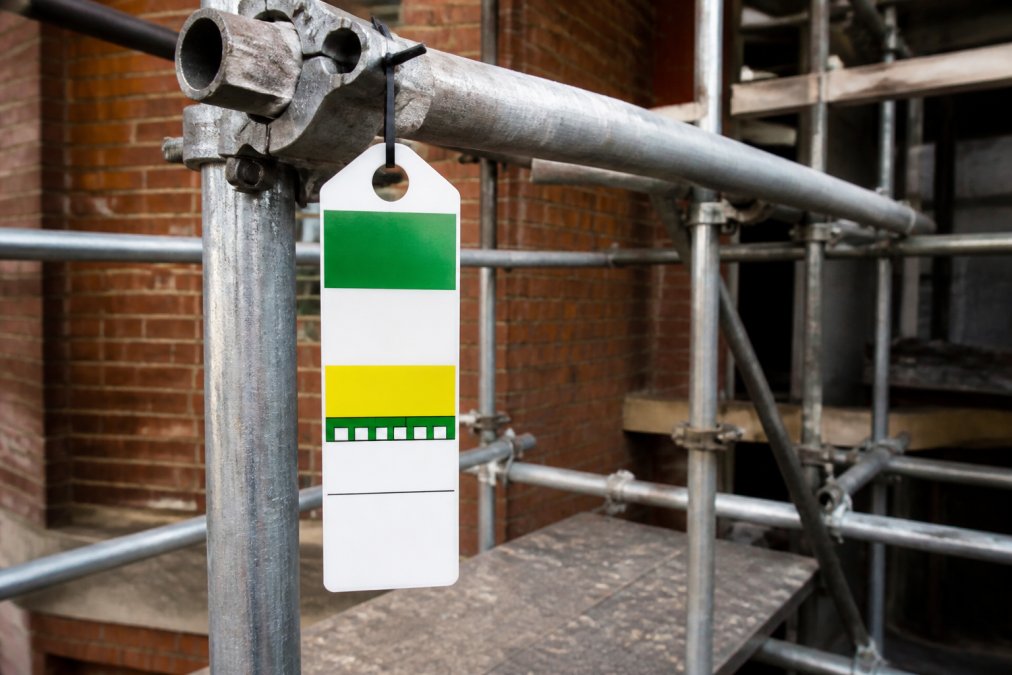
A tower scaffold safety tag is a visual declaration that an access tower has been inspected, assembled correctly, and is safe for use. It is the single most effective way to prevent unauthorised use of an incomplete or damaged tower. Without a clearly displayed tag, there is no way to verify that a tower has been checked by a competent person, which leaves you exposed if an accident occurs.
At Leader Pro Scaffold Towers, we supply BS EN1004-certified aluminium access towers to contractors and facilities teams across the UK. This guide explains what the law requires, what information your tag must carry, and how to run a proper inspection before you sign one off. We will show you exactly how to use the tower scaffold safety tag system so your site stays compliant and your team stays safe.
The stakes are higher than a paperwork tick-box. If an incident is investigated, the absence of a valid tag is treated as evidence that the tower was not properly controlled.
Work at Height Regulations 2005 Inspection Requirements
The Work at Height Regulations 2005 inspection requirements apply to every scaffold tower used on a job site. Under the Regulations, any working platform from which a person could fall more than 2 metres must be inspected before it is first used, and then at intervals not exceeding 7 days or after any event that could compromise its safety, such as strong winds or a collision (hse.gov.uk).
The inspection must be carried out by a competent person and the results recorded. For a scaffold tower, that record is your safety tag. The Health and Safety Executive provides the enforcement framework for these duties, and their guidance makes clear that a tag alone is not the inspection; it is the visible outcome of one. The actual check must follow a systematic process, which we cover below.
This is where many small contractors slip up. They assume a tower assembled by their own team does not need a formal inspection because nobody else will use it. The Regulations do not make that distinction. If it is your tower and your team, you still need a competent person to inspect it and a record of that check.
What Information Must a Tower Scaffold Safety Tag Show?
A compliant scaffold tower safety tag must show the date of inspection, the name and signature of the competent person who carried it out, the tower location or identification number, and the condition of the tower. It must also state clearly whether the tower is safe for use or whether it is out of service.
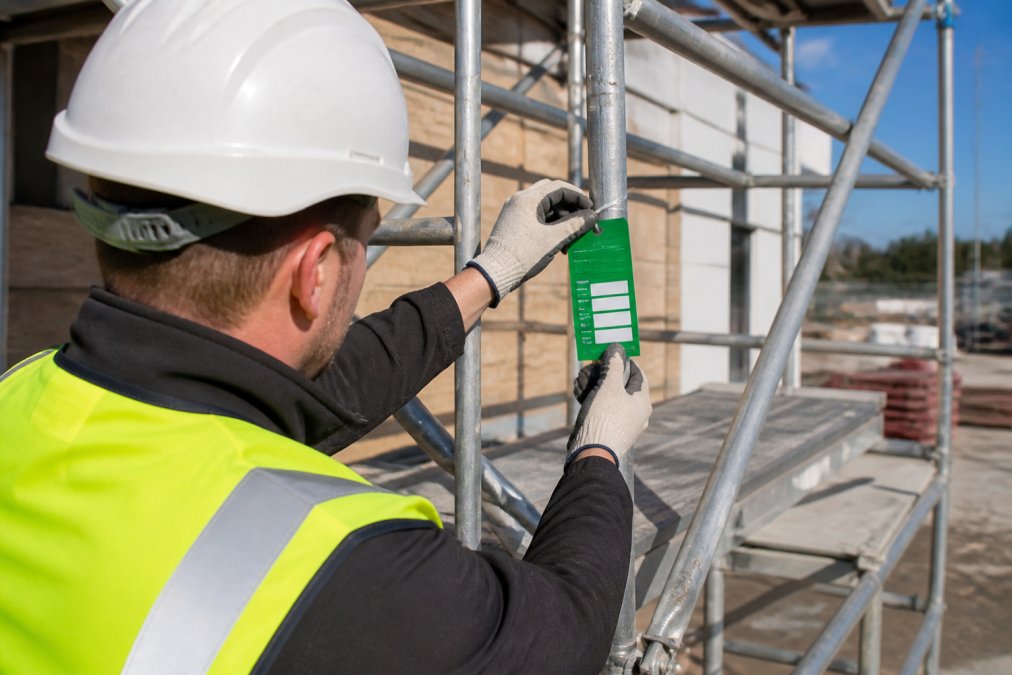
The tag needs to be durable and weatherproof, and it should be fixed to the tower at the access point where it cannot be missed. A tag that has faded, torn, or been covered in paint is as good as no tag at all. Many sites also print the inspection date on both sides of the tag so it remains readable regardless of how the tower is positioned.
If the tower fails inspection, the tag must say so. Do not leave a green tag on a tower that has developed a fault. Replace it immediately with a red tag and isolate the tower so nobody can climb it until the issue is resolved. This is the core of the tower scaffold safety tag system: it communicates the status of the tower to every person on site, not just the person who inspected it.
Who Is a Competent Person for Scaffold Inspection?
A competent person for scaffold inspection is someone with the appropriate training, knowledge, and experience to identify hazards and judge whether a tower is safe to use. For most aluminium tower work, this means someone who has completed a recognised training course, such as those offered by PASMA, and who understands the specific manufacturer's instructions for the tower in question.
The term "competent" is defined by the individual's actual ability, not their job title. A site manager who has never assembled a tower is not competent to inspect one, regardless of their seniority. Conversely, an experienced scaffold erector who has not received formal PASMA training may not be considered competent by an enforcing authority, because they lack the documented evidence of their knowledge.
Many of our customers ask whether they need an external inspector every time. You do not. If you have a trained member of staff on your team, they can carry out the inspection. What matters is that the person is demonstrably competent and that you can evidence their training. The Health and Safety Executive guidance on scaffold inspection makes this expectation clear for duty holders.
Scaffold Tower Inspection Checklist: Step by Step
The scaffold tower inspection checklist should be followed in the same order every time so nothing gets missed. Work through the tower from the ground up, starting with the base and finishing at the platform.
- Base and ground conditions: Check the ground is level, firm, and free of debris. Confirm all four stabilisers or outriggers are deployed and locked.
- Frames and bracing: Inspect every frame for dents, corrosion, or cracks. Verify that diagonal braces are fitted and all locking pins are engaged.
- Platforms and trapdoor: Ensure each platform is fully boarded, undamaged, and correctly clipped. The trapdoor must open and close freely.
- Guardrails and toe boards: Confirm guardrails are fitted on all open sides at the correct height and that toe boards are present to prevent tools falling.
- Wheels and brakes: Check that all castors are locked and that the wheels are suitable for the ground surface.
- Access: Verify the internal ladder or stairway is secure and that there are no gaps between the ladder and the platform.
- Overall stability: Give the tower a gentle push at platform height. Any excessive movement indicates a problem with assembly or ground conditions.
If any item fails, the tower is not safe for use. Tag it red and do not let anyone climb it. The table below summarises the common issues and their consequences.
| Check Area | Common Fault | Required Action |
|---|---|---|
| Base / ground | Soft or sloping surface | Relocate or use spreader plates |
| Frames | Bent or corroded stile | Remove frame from service |
| Locking pins | Missing or not engaged | Replace pins before use |
| Platforms | Warped or cracked boards | Replace damaged platform |
| Guardrails | Not fitted on open side | Fit before any access |
| Wheels | Brakes not applied | Lock castors at all times |
A common mistake is rushing this check because the tower was only used yesterday. Conditions change overnight, and a tower that was safe on Tuesday can be undermined by a vehicle strike or a shift in the ground. The inspection takes ten minutes. The cost of skipping it can be far higher.
Green vs Red Tags: When to Use Each Colour
The green and red tag system gives everyone on site an instant, colour-coded answer about whether a tower is safe to climb. A green tag means the tower has been inspected, is safe for use, and displays the date of that inspection. A red tag means the tower is out of service and must not be used under any circumstances.
A tower should carry a green tag only after it has passed the full inspection checklist. The tag shows the inspection date, and that date governs the next required check, which must occur within 7 days under the Work at Height Regulations. If a tower remains erected beyond that period, it needs a fresh inspection and a new green tag.
A red tag is required when a tower fails inspection, is awaiting repair, or is in the process of being erected or dismantled. When you attach a red tag, physically isolate the tower where possible, such as by removing the ladder or tying off the access point. A red tag that is ignored because the tower "looks fine" is a serious risk. The PASMA guidance on tag systems and best practice reinforces that the colour system only works when every person on site respects it.
Conclusion
The tower scaffold safety tag is your first line of defence against unsafe access, and it is a legal requirement under the Work at Height Regulations 2005. Tagging is only half the job; the inspection behind it is what keeps people safe. Train your team, follow a consistent checklist, and never allow a tower to be used without a valid tag showing the date and the name of the competent person who checked it.
Choosing equipment that is easy to inspect and maintain makes compliance simpler. At Leader Pro Scaffold Towers, our BS EN1004-certified towers are built to a consistent standard, and our direct-from-manufacturer model means you can get replacement parts quickly if a component is ever damaged. Get started with Leader Pro Scaffold Towers and make sure every tower on your site carries a tag you can trust.
Frequently Asked Questions
Are scaffold tags a legal requirement in the UK?
Yes. The Work at Height Regulations 2005 require that a scaffold tower is inspected after installation and before first use, and at suitable intervals afterwards. The inspection must be recorded. A completed tower scaffold safety tag is the standard way to show that inspection has taken place, and it gives the next user confidence that the tower is safe to climb.
How often should a scaffold tower be inspected and tagged?
The Work at Height Regulations 2005 do not set a fixed interval for towers. The tower needs inspection after assembly and before first use, after any event that could affect its stability, and after any significant alteration. Many sites adopt a 7-day inspection routine. The key is that the tower scaffold safety tag must show a current inspection date and remain valid for the work being carried out.
Who is competent to sign off a tower scaffold inspection tag?
A competent person must carry out the inspection. This means someone with the right training, knowledge and experience to spot defects and judge whether the tower is safe. PASMA training is widely recognised for tower assembly, but the competent person role may also require additional inspection training. The person's name should be written clearly on the tower scaffold safety tag so the responsibility is traceable.
What is the difference between a green and red scaffold tag?
A green tag means the tower has been inspected and is safe to use. A red tag means the tower is unsafe or incomplete and must not be used. The tower scaffold safety tag should state the reason for the red status, such as missing components or damage. Never climb a tower with a red tag. Report it to the site supervisor immediately so the issue can be corrected and the tower re-inspected.
Frequently Asked Questions
Q: Are scaffold tags a legal requirement in the UK?
A: Yes. The Work at Height Regulations 2005 require that a scaffold tower is inspected after installation and before first use, and at suitable intervals afterwards. The inspection must be recorded. A completed tower scaffold safety tag is the standard way to show that inspection has taken place, and it gives the next user confidence that the tower is safe to climb.
Q: How often should a scaffold tower be inspected and tagged?
A: The Work at Height Regulations 2005 do not set a fixed interval for towers. The tower needs inspection after assembly and before first use, after any event that could affect its stability, and after any significant alteration. Many sites adopt a 7-day inspection routine. The key is that the tower scaffold safety tag must show a current inspection date and remain valid for the work being carried out.
Q: Who is competent to sign off a tower scaffold inspection tag?
A: A competent person must carry out the inspection. This means someone with the right training, knowledge and experience to spot defects and judge whether the tower is safe. PASMA training is widely recognised for tower assembly, but the competent person role may also require additional inspection training. The person's name should be written clearly on the tower scaffold safety tag so the responsibility is traceable.
Q: What is the difference between a green and red scaffold tag?
A: A green tag means the tower has been inspected and is safe to use. A red tag means the tower is unsafe or incomplete and must not be used. The tower scaffold safety tag should state the reason for the red status, such as missing components or damage. Never climb a tower with a red tag. Report it to the site supervisor immediately so the issue can be corrected and the tower re-inspected.