 Comparison
Best Height Access Solutions for Tight Spaces Compared
Quick Summary
The best height access solutions for tight spaces depend on the working height needed, the narrowest point on the access route and the floor conditions. Narrow aluminium towers suit most moderate-height trade work on firm, level floors, while low-level platforms and podium steps handle short tasks. Powered narrow lifts are the next step when height or reach exceeds what a tower can safely provide.
- Measure the narrowest point on the access route before choosing any equipment.
- Work out platform height by adding the worker's reach to the task height.
- Check whether stabilisers can be fully deployed, as they widen the footprint at height.
- Narrow aluminium towers suit decorating and light electrical work in hallways and stairwells.
- Powered equipment needs trained operators and a site-specific risk assessment under the Work at Height Regulations 2005.
Table of Contents
- Why Tight Spaces Need a Different Approach to Working at Height
- Measuring Your Access Constraints Before You Choose Equipment
- Narrow Scaffold Towers and Mobile Access Towers Compared
- Access Equipment for Confined Spaces: Narrow Platforms, Micro and Compact Lifts
- Compact Access Platforms and Low-Level Access Equipment for Awkward Work
- Side-by-Side Comparison by Space, Height and Task
- Total Cost, Hire Considerations and Floor Protection in Tight Spaces
- Booking the Right Access Tower for Your Next Tight-Space Job
- Frequently Asked Questions
Narrow spaces are where most working-at-height jobs go wrong. A tower that is fine in an open warehouse can be unstable, too tall or impossible to manoeuvre in a hallway, loft stairwell or plant room. The right choice depends on the height you need, the width of the access route, the floor and the task. This guide compares the main options for tight UK sites and explains how to choose between them.
Leader Pro Scaffold Towers supplies aluminium access towers and related equipment for trade, industrial and commercial users, so the comparison below focuses on what each equipment type is suited to rather than on which one to buy. Work at height in the UK is governed by the Work at Height Regulations 2005, which require a risk assessment and suitable equipment for every job (The law). Check the HSE guidance on work at height before you order.
Why Tight Spaces Need a Different Approach to Working at Height
Most access equipment is designed for open ground, and tight spaces break the assumptions behind that design, which is why finding the best height access solutions for tight spaces takes more planning. A standard tower needs room to be assembled, levelled and walked around safely.
The usual problems are predictable:
- Limited footprint: the base must fit through the doorway and stand on the available floor.
- Restricted overhead clearance: ceilings, beams and pipework can stop a platform from reaching its rated height.
- Awkward access routes: tight turns and steps make moving equipment slow and risky.
- Uneven or fragile floors: the equipment must spread its load without damaging the surface.
A safe approach starts by treating the space itself as the main constraint, then choosing equipment that fits it.
Measuring Your Access Constraints Before You Choose Equipment
Measure before you order. Write down the following for the actual work location:
- Minimum width and depth of the working area, including the route from the van.
- Ceiling or obstruction height, so you know the highest point the platform must clear.
- Working height needed, meaning the height of the task, not the height of the platform. Add the reach of the worker to find the platform height required.
- Floor type and load limits, such as timber, tiles or a suspended floor.
- Number of people who will be on the platform at one time.
Platform height and working height are not the same thing. The platform sits lower than the point you actually need to reach, so always work backwards from the task.
Narrow Scaffold Towers and Mobile Access Towers Compared
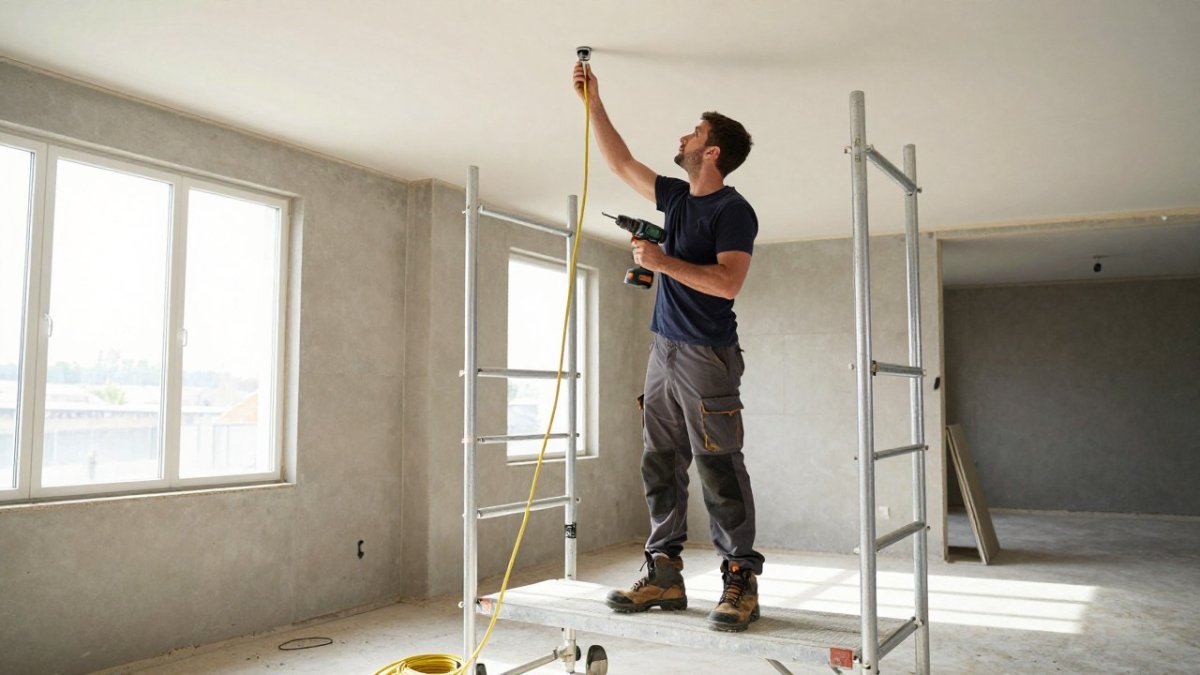
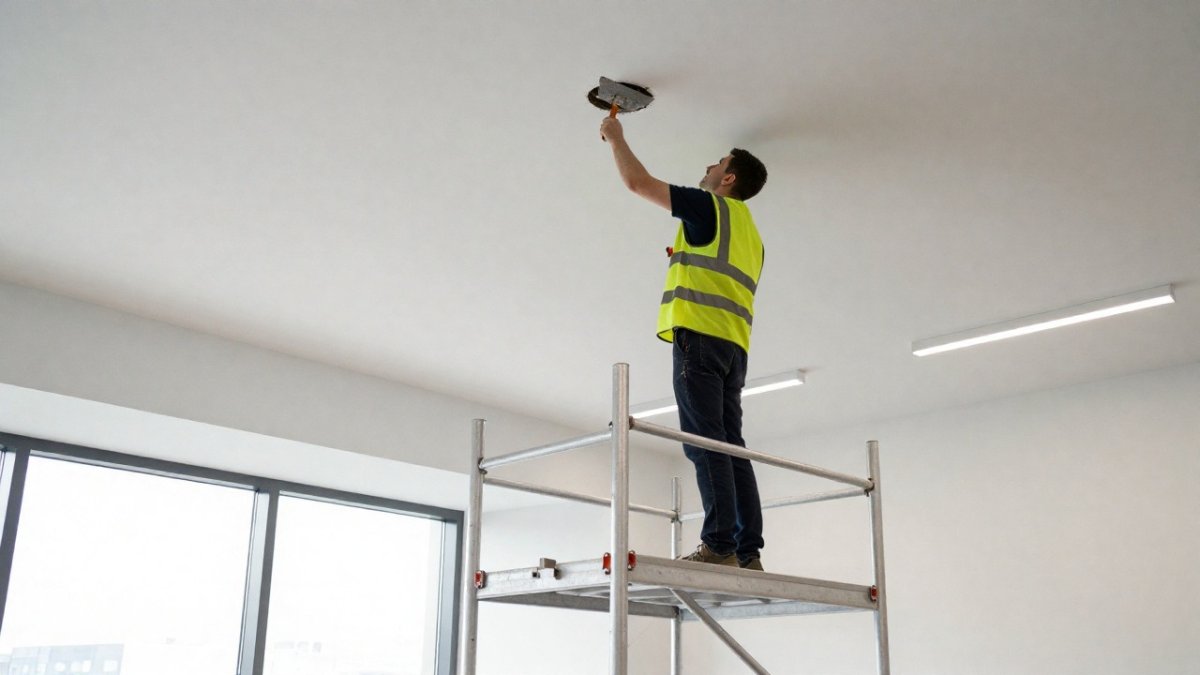
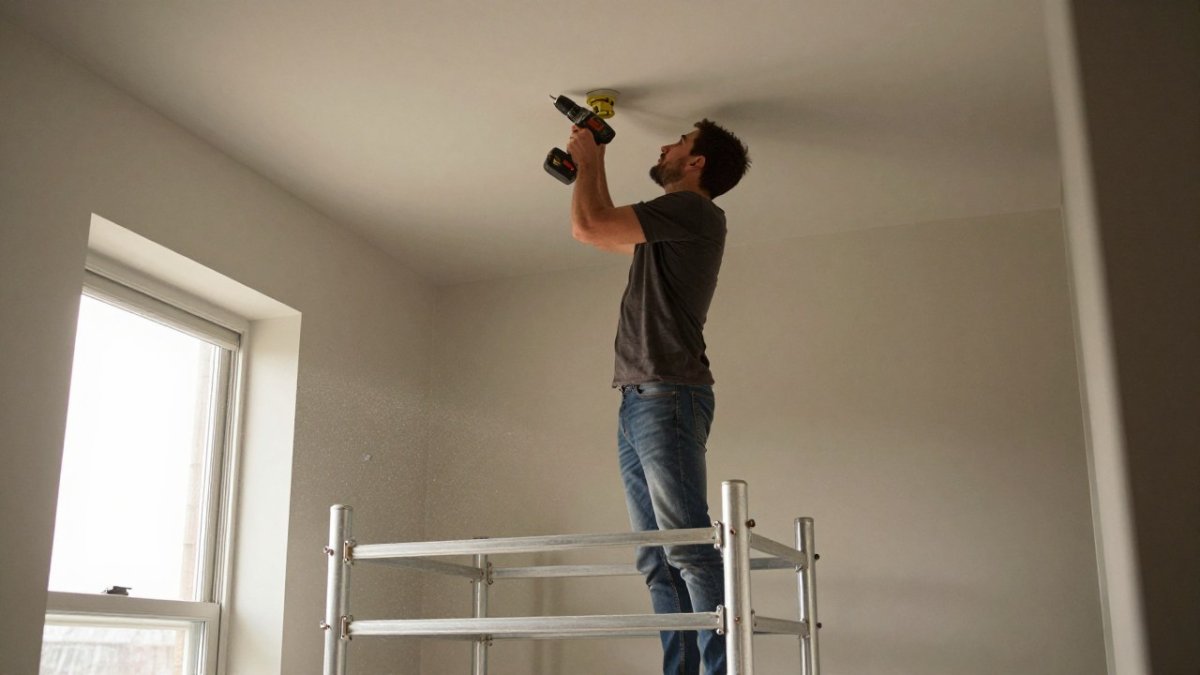
Narrow scaffold towers and mobile access towers are the most common answer when searching for the best height access solutions for tight spaces at moderate height. They are light, can be moved by one or two people and set up without specialist training when used correctly.
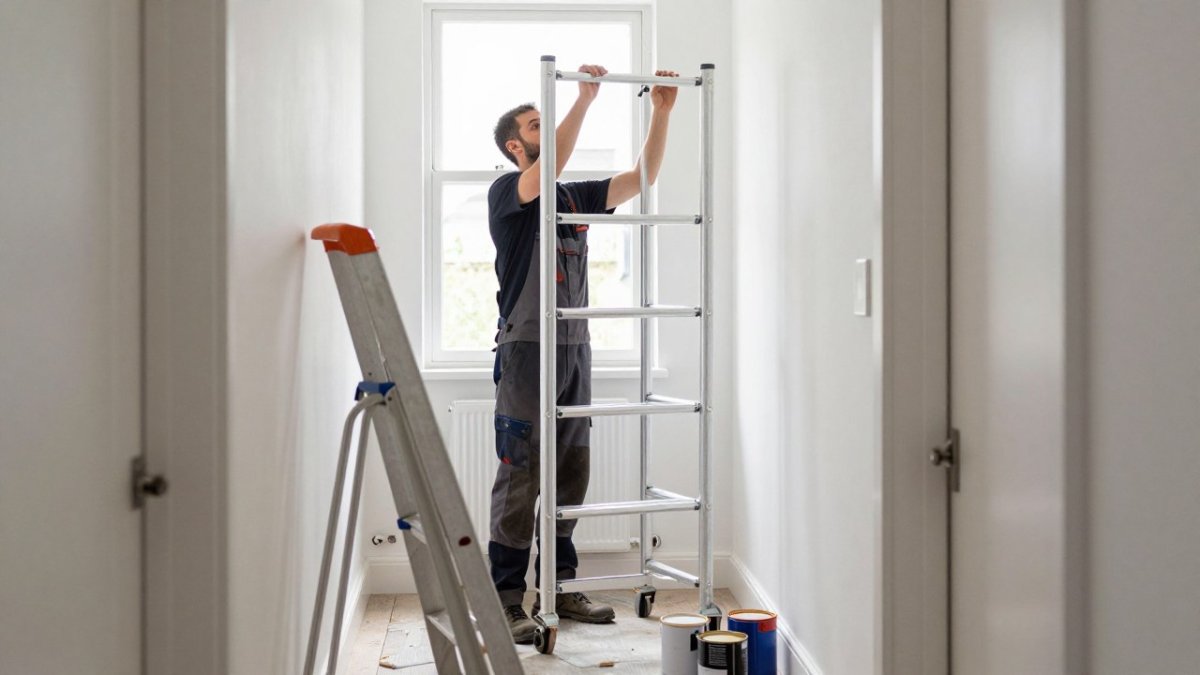
BS EN 1004 is the UK standard that applies to mobile access towers, and the aluminium towers Leader Pro Scaffold Towers supplies are described in its product information. When comparing towers, look at:
- Base width: the narrowest footprint that still meets the stability requirements for the height.
- Maximum platform height: check the rated figure, not the height you hope to reach.
- Stabilisers and outriggers: these widen the base at height but need extra floor space.
- Weight: lighter aluminium towers are easier to manoeuvre through doorways and stairs.
Where a Mobile Tower Fits and Where It Does Not
A mobile tower works well on firm, level floors with a clear route for moving it. It struggles on soft ground, slopes, uneven tiles or where the stabilisers cannot be fully deployed.
Pros:
- Quick to set up and reposition
- Lightweight aluminium options are easy to move through narrow doors
- Suitable for decorating, electrical and maintenance tasks at moderate height
Cons:
- Stabilisers need floor space that tight rooms may not have
- Not suitable for uneven surfaces or outdoor wind exposure without extra precautions
- Height is limited compared with powered equipment
Always check the manufacturer's rated height and the wind limits in the instruction manual before use.
Access Equipment for Confined Spaces: Narrow Platforms, Micro and Compact Lifts
Narrow access platforms are designed for tight spaces and cover many working heights.
Micro and narrow electric scissor lifts are built for confined work areas.
Compact tracked spider lifts can move over difficult ground while keeping a small footprint. They suit confined areas that also have uneven or poor-quality floors.
Each powered option needs trained operators and a site-specific risk assessment. Confirm the specifications directly with the equipment supplier, as published dimensions and working heights vary between models.
Compact Access Platforms and Low-Level Access Equipment for Awkward Work
Not every tight-space job needs height. Many awkward tasks sit between floor level and about two metres, such as skirting boards, cornices at low height, or work around radiators and under-stairs spaces.
For this range, consider:
- Low-level platforms with a small footprint and a guardrail for safety
- Podium steps that give a stable standing position without the bulk of a full tower
- Compact access platforms designed to move through standard doorways
Low-level equipment is often the safest and quickest choice for short tasks. Using a stepladder for work that needs a platform is a common mistake, because ladders offer less stability and leave the worker's hands unavailable for the task.
Side-by-Side Comparison by Space, Height and Task
The table below is a starting point for shortlisting, not a substitute for checking the manufacturer's data sheet for the exact model you intend to use.
| Equipment | Typical platform height | Typical working height | Footprint / width to allow | Reach and capacity notes | Best-suited tasks |
|---|---|---|---|---|---|
| Narrow aluminium tower | Up to around 8 m platform height depending on configuration | Add roughly 2 m to platform height for a standing worker's reach | Base width set by the model; stabilisers or outriggers widen the effective footprint at height | Capacity typically rated for two persons plus tools; check the data plate | Decorating, light electrical, ceiling and partition work in hallways and stairwells |
| Standard mobile access tower | Similar range to narrow towers but with a wider base | As above | Wider base than a narrow tower; needs clear floor to walk the tower into position | Two-person capacity common; stabilisers required above a set height | General trade work on firm, level floors with a clear route |
| Narrow access platform | Model-dependent; spans low-level to several metres | Add worker reach to platform height | Designed to pass through standard doorways and work in confined bays | Capacity and reach vary widely; confirm both against the task | Maintenance and inspection where a tower will not fit |
| Micro electric scissor lift | Usually low to moderate platform heights | Add worker reach to platform height | Small footprint but heavy; floor loading must be checked | Capacity typically one or two persons; limited outreach beyond the platform edge | Repetitive work at height in enclosed areas with a firm floor |
| Compact tracked spider lift | Model-dependent, often higher than scissor lifts | Add worker reach to platform height | Small stowed footprint; outriggers or tracks spread load when deployed | Outreach beyond the base is the key advantage; capacity varies by model | Awkward sites with rough ground or obstructions at the work face |
| Podium steps | Around 1 m to 1.5 m platform height | Add worker reach to platform height | Small footprint; folds for carrying through doorways | Usually one person plus tools | Skirting, low cornices, work around radiators and under-stairs spaces |
Use the table in this order: first rule out anything whose footprint will not pass the narrowest point on the route, then rule out anything whose platform height cannot reach the task, then check capacity against the number of people and tools.
Watch out: a tower's rated platform height assumes the stabilisers or outriggers are fully deployed.
Total Cost, Hire Considerations and Floor Protection in Tight Spaces
Cost depends on quantity, dates and delivery, so no fixed prices are quoted here.
Hire duration and the break-even point. The practical question is how many times you will use the equipment.
Site conditions and floor protection. Floor loading is the cost driver most often missed.
Watch out: stabilisers and outriggers spread load but also concentrate it at their feet.
Booking the Right Access Tower for Your Next Tight-Space Job
Before you book or order, run through this checklist:
- Confirm the working height needed and the platform height required to reach it.
- Measure the narrowest point on the access route and the footprint of the working area.
- Check the floor type and whether stabilisers can be fully deployed.
- Confirm the number of people using the platform at one time.
- Review your risk assessment under the Work at Height Regulations 2005. The HSE work at height guidance sets out the duties employers and contractors must meet.
- Check the equipment's rated height, load limit and wind limit against the job.
For most small trade jobs in tight spaces, a lightweight aluminium tower or a low-level platform is the most practical choice. For greater height or more difficult access, powered equipment may be needed, and the decision should be made with a trained operator and a proper risk assessment.
If you are unsure which tower or platform fits your access constraints, speak to the Leader Pro Scaffold Towers team for expert product advice before you buy or hire.
Frequently Asked Questions
What is the best access equipment for working in tight spaces?
There is no single best option. For work at low to moderate heights in narrow hallways or loft spaces, a lightweight aluminium scaffold tower with a small footprint is often the most practical. For greater height in a confined area, a micro or narrow electric scissor lift can work if the floor is level and the doorways are wide enough. Measure the route, the ceiling height and the floor strength first, then match the equipment to those limits.
Which scaffold tower is suitable for narrow areas?
Look for a narrow-base aluminium tower whose base footprint and width fit through your doorways and stairs. Check the working platform height against the task, and confirm the tower is supplied with compliant guardrails and can be assembled by one or two people. Towers built to BS EN 1004 are designed for mobile use, and their dimensions should be checked against the specific space before ordering. Leader Pro Scaffold Towers can advise on suitable models; see the website for current prices or a quote.
What is the difference between a narrow scaffold tower and a podium step?
A podium step is a low, fixed-height platform for short tasks, usually reaching around one metre of working height, and it is simple to move around. A narrow scaffold tower is a taller, adjustable structure with a platform that can be raised for ceiling and wall work, and it needs proper assembly and stabilisation. Choose a podium step for quick, low-level jobs and a narrow tower when you need greater reach for a sustained period.
Can you use a mobile access tower in a confined space?
Yes, provided the tower can be moved in and used within the space. Confirm the footprint, the clearance above the platform and the ceiling height before you start. Mobile towers should only be moved with the platform cleared and the castors locked when in use, and the floor should be firm and level. If the space is too restricted for a standard tower, a low-level platform or a compact lift may be a better choice.
What should you check before using access equipment in a tight space?
Measure the doorway widths, the ceiling clearance above the working height and the floor condition. Check that the equipment is in good condition, with no damaged rungs, guardrails or castors, and that it is assembled and locked according to the manufacturer's instructions. Plan the route in and out, and confirm that the person using the equipment has appropriate training for working at height in the UK.