 Comparison
Safe Stable Working Platforms vs Cost-Effective Access
Table of Contents
- Safe and Stable Working Platforms vs Cost-Effective Access Solutions: The Core Trade-Off
- How Spare Parts Availability Changes the Cost Equation
- Scaffold Tower Maintenance Tips 2026: Protecting Your Platform Investment
- PASMA Scaffold Tower Inspection Checklist: What to Verify Before Every Use
- Work at Height Regulations 2005 Compliance: What It Means for Platform Choice
- Where Each Approach Wins: Matching the Solution to the Job
- Frequently Asked Questions
Last Updated: September 16, 2026
Safe and Stable Working Platforms vs Cost-Effective Access Solutions: The Core Trade-Off
Choosing between safe and stable working platforms vs cost-effective access solutions for source spare parts comes down to one question: what does downtime actually cost you? This guide from Leader Pro Scaffold Towers breaks down where stability pays for itself and where cheaper access platforms genuinely make sense.
The trade-off is rarely about safety versus price. It is about when you pay. Stable platforms cost more upfront but reward you with predictable maintenance and parts you can source quickly. Budget access options cost less on day one, then ask for the difference back in hire fees, downtime, or replacement cycles.
Below, we'll show you exactly how spare parts availability, inspection routines, and compliance duties shift the maths, and which approach suits which job.
How Spare Parts Availability Changes the Cost Equation
Spare parts availability is the hidden line item that decides whether a cheap platform stays cheap. A tower with a comprehensive spares range can be repaired in days; one with scarce components can sit idle for weeks.
Think about what actually fails on an aluminium tower: locking claws, frames, braces, toe boards, and adjustable legs. These are consumables in everything but name. A modular design lets you swap a single damaged component rather than scrapping a whole section.
- Readily available parts: repair within your own maintenance schedule, minimal downtime
- Scarce or discontinued parts: waiting on backorders, hiring replacements at short notice, or retiring usable equipment early
- Modular components: lower long-term cost because one part fails, not the whole tower
This is where the cost equation flips. A platform that is cheaper to buy but expensive to keep running rarely stays the cheaper option. As documented in [HSE guidance on work at height(https://scaffold-tower.uk/knowledge-centre/safety-and-standards/working-at-height-regulations) | hse.gov.uk], equipment that cannot be maintained to standard should not be used, which turns a parts shortage into a compliance problem, not just a budget one.
Scaffold Tower Maintenance Tips 2026: Protecting Your Platform Investment
Scaffold tower maintenance tips 2026 start with a simple principle: inspect often, store properly, and replace components before they fail. Maintenance is what converts a purchase into a long-life asset.
A tower that is checked daily and stored dry will outlast one that is thrown in a van at the end of every shift. The difference is not luck. It is routine.
Daily Checks and Weekly Inspections
Daily checks take minutes and catch the problems that cause incidents. Walk the tower before every use and look for bent frames, cracked welds, missing locking pins, and damaged feet. Anything compromised comes out of service immediately.
Weekly inspections go deeper. Check locking mechanisms under load, examine brace connections for wear, and confirm adjustable legs still thread cleanly. Record what you find. A written log is evidence of diligence if an incident is ever investigated.
Storage and Transport Practices That Extend Component Life
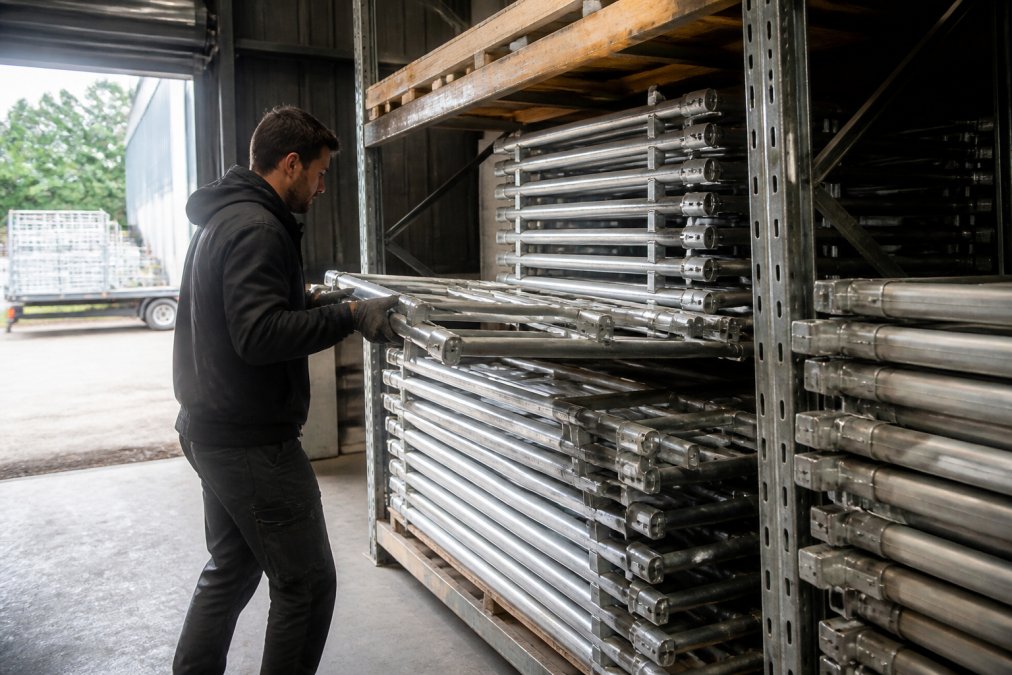
Aluminium corrodes less than steel, but it dents, bends, and suffers fatigue. Store towers indoors or under cover where possible, and never stack components so that frames bear weight on their bracing.
During transport, secure sections so they cannot shift and strike each other. A common mistake is strapping a tower loosely in a van and treating minor dents as cosmetic. Those dents become crack initiation points, and a cracked frame is a scrap frame.
PASMA Scaffold Tower Inspection Checklist: What to Verify Before Every Use
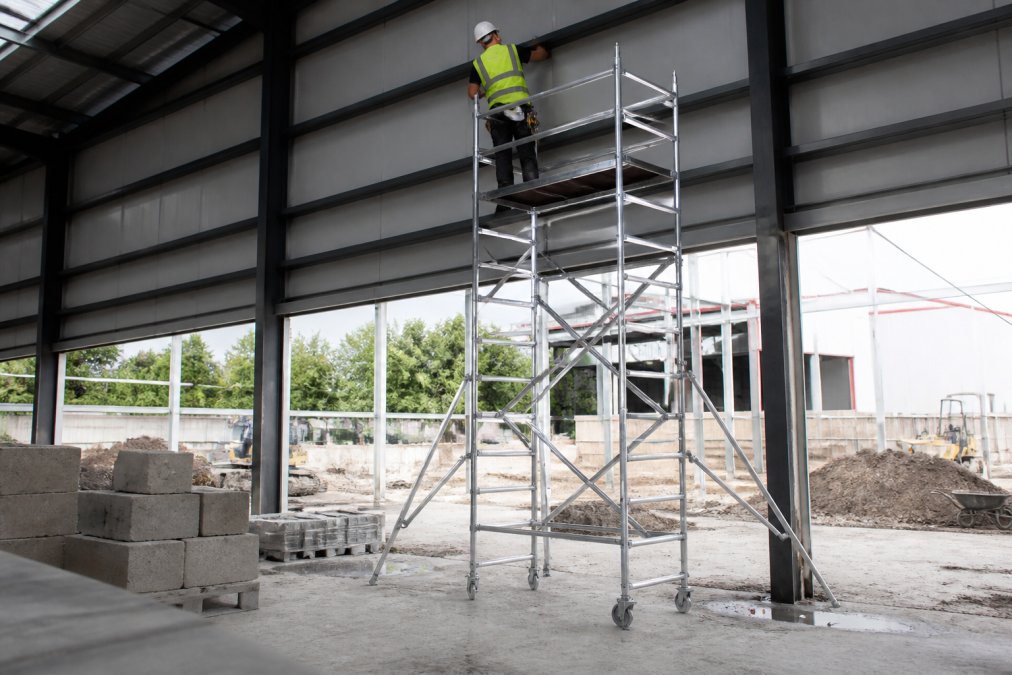
A PASMA scaffold tower inspection checklist covers the components that keep a tower upright: feet and legs, frames, bracing, platform decking, guardrails, toe boards, and locking mechanisms. PASMA is the industry body for mobile access tower training, and its inspection principles are the benchmark most sites expect.
Run through the same list every time. Consistency is what makes an inspection reliable.
- Ground conditions firm, level, and free of voids
- Adjustable legs thread freely and lock securely
- Frames straight, with no bends, cracks, or corrosion
- All bracing fitted and clips engaged
- Locking claws and pins present and functioning
- Platform decking complete, located, and free of damage
- Guardrails and toe boards fitted at every working level
- Outriggers or stabilisers fitted where the height-to-base ratio requires them
- Tower vertical and within the manufacturer's height limits
- Inspection record completed and signed
Work at Height Regulations 2005 Compliance: What It Means for Platform Choice
Work at Height Regulations 2005 compliance means every platform you use must be suitable, stable, and maintained, with falls prevented or mitigated by collective measures first. The regulations place duties on employers and those in control of work at height.
That has a direct bearing on the buying decision. Cheaper access platforms are only compliant if they can be inspected, maintained, and repaired to the required standard. If spare parts are hard to source, you cannot demonstrate that the equipment remains fit for purpose.
According to the Work at Height Regulations 2005, duty holders must ensure equipment used for work at height is inspected at suitable intervals and that any defects are remedied. Selection of work equipment must also follow the hierarchy: avoid work at height where possible, prevent falls where it cannot be avoided, and mitigate the distance and consequences of a fall.
For most trade and maintenance work, a properly assembled mobile tower sits comfortably within that hierarchy. What matters is that you can evidence its condition, which brings the argument back to parts availability and inspection discipline.
Where Each Approach Wins: Matching the Solution to the Job
Matching the solution to the job is the fastest way to cut access costs without cutting safety. Neither approach wins everywhere.
| Approach | Best For | Spare Parts Reality | Long-Term Cost Pattern |
|---|---|---|---|
| Owned stable platform | Repeat work, long projects | Comprehensive spares range, fast repair | Higher upfront, lower running cost |
| Hired access platform | One-off or short jobs | Supplier manages parts and servicing | Low upfront, rises with hire duration |
| Fixed work platform | Permanent machinery access | Minimal maintenance, few wear parts | High capital, very low ongoing cost |
| Modular platform system | Changing site layouts | Interchangeable components | Moderate upfront, flexible over time |
The pattern is consistent. Ownership rewards frequency of use. Hire rewards short, unpredictable jobs. Fixed platforms reward a single location that never moves.
What most guides miss is that the decision is reversible. You can hire for a first project, learn your real usage pattern, then buy once you know how often the tower leaves the van. Buying before you have that data is how businesses end up with equipment that sits idle while hire charges continue elsewhere.
Leader Pro Scaffold Towers supplies BS EN1004-certified aluminium towers with a comprehensive range of spare parts and next-day delivery, which shortens the repair window that makes ownership work. For teams weighing stability against cost, that combination is what keeps a platform earning rather than waiting on a backorder.
The real challenge with safe and stable working platforms vs cost-effective access solutions for source spare parts is that the cheapest option on the invoice is rarely the cheapest over the life of the equipment.
Frequently Asked Questions
What are the legal requirements for working platforms under the Work at Height Regulations 2005?
The Work at Height Regulations 2005 require that all working platforms are stable, strong enough for the intended load, and fitted with guardrails and toe-boards to prevent falls. Platforms must be inspected before first use and after any event that could affect stability. For scaffold towers, BS EN1004 certification demonstrates compliance. Duty holders must also ensure anyone assembling or using the platform is competent, which typically means PASMA training or equivalent.
How do I identify genuine spare parts for aluminium scaffold towers?
Genuine spare parts carry the manufacturer's markings and match the original component specifications, including tube diameter, wall thickness and locking mechanism design. Buying from the original manufacturer or an authorised supplier ensures the part meets the same BS EN1004 structural requirements as the tower. Non-compatible parts can compromise load ratings and stability. Check that any replacement frame, brace or platform carries the correct certification stamp before fitting it.
How often should scaffold towers be inspected for structural integrity?
Scaffold towers should be inspected before every use, with a more thorough documented inspection at least weekly while in service. Additional inspections are needed after bad weather, after any impact or damage, and whenever components are replaced. Following a PASMA scaffold tower inspection checklist ensures consistency. Record all findings, including any spare parts fitted, so you have a clear maintenance history if questions arise on site.
What are the risks of using non-compatible spare parts for access equipment?
Non-compatible spare parts can fail under load because they are not designed to the same tolerances as the original components. A mismatched brace or platform can reduce the tower's overall stability, void the manufacturer's warranty and breach Work at Height Regulations 2005 compliance. In the worst case, a single substandard part causes a collapse. Always source parts from the manufacturer or a supplier who can confirm BS EN1004 compatibility.