 Comparison
Aluminium vs GRP Scaffold Towers: Which to Choose?
Table of Contents
- Aluminium vs GRP Scaffold Towers: Key Differences at a Glance
- Aluminium Scaffold Towers: Strengths and Limitations
- GRP and Non-Conductive Scaffold Towers: When Safety Demands Them
- PASMA Scaffold Tower Regulations: What Both Materials Must Meet
- Scaffold Tower Maintenance Requirements for Aluminium and GRP
- Cost, Lifespan and Resale: Aluminium vs GRP Scaffold Towers Compared
- Which Material Should You Choose?
- Frequently Asked Questions
Last Updated: September 15, 2026
Aluminium vs GRP Scaffold Towers: Key Differences at a Glance
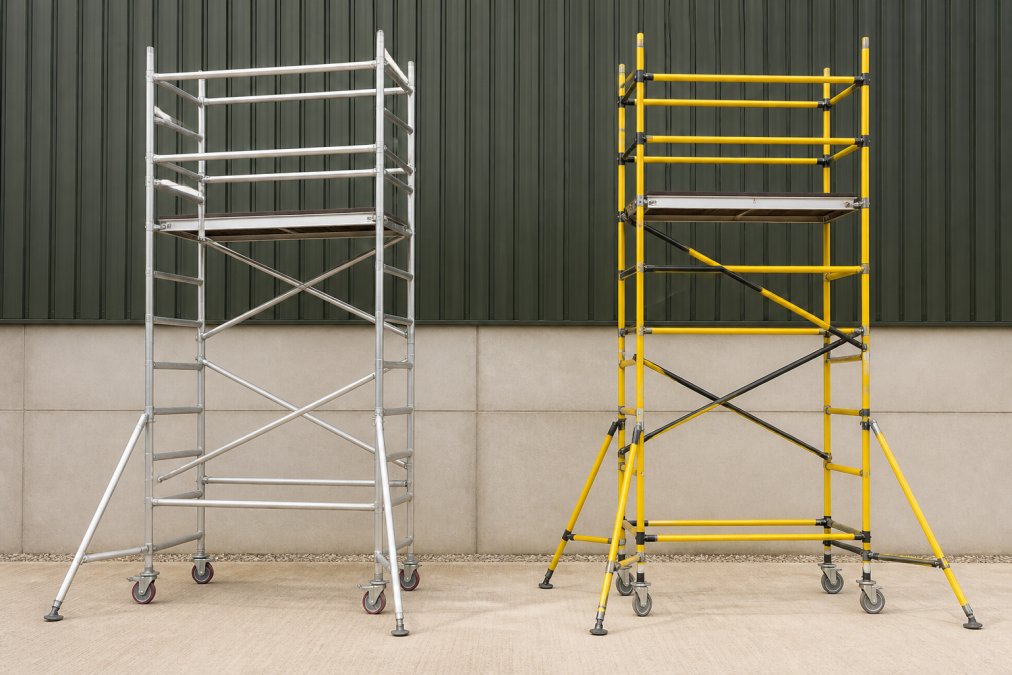
Choosing between aluminium vs grp scaffold towers comes down to one question: are you working near live electrical equipment or not? Aluminium towers are lighter, cheaper and easier to move around site. GRP towers are heavier and cost more, but they will not conduct electricity, which makes them the only sensible option for utility and industrial electrical work. At Leader Pro Scaffold Towers, we supply aluminium access equipment to contractors, builders and facilities teams.
Here is the short version before the detail:
| Factor | Aluminium | GRP (Glass-Reinforced Plastic) |
|---|---|---|
| Weight | Light, easy to manoeuvre | Noticeably heavier |
| Conductivity | Conductive, unsafe near live power | Non-conductive and non-sparking |
| Purchase cost | Lower | Higher |
| Corrosion resistance | Good, but degrades in harsh chemicals | Excellent |
| Best for | General construction, decoration, maintenance | Electrical, utility, chemical environments |
| Resale value | Strong | Weaker |
If there is any chance of contact with live conductors, GRP is not optional. For everything else, aluminium usually wins on cost and handling.
Aluminium Scaffold Towers: Strengths and Limitations
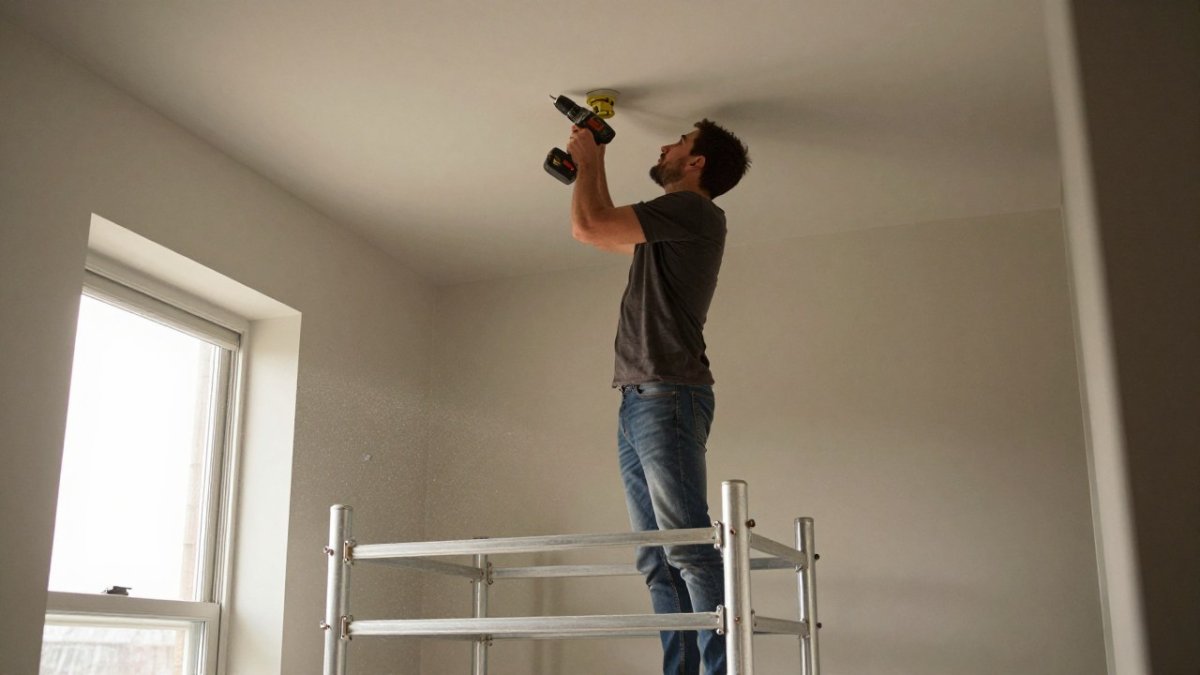
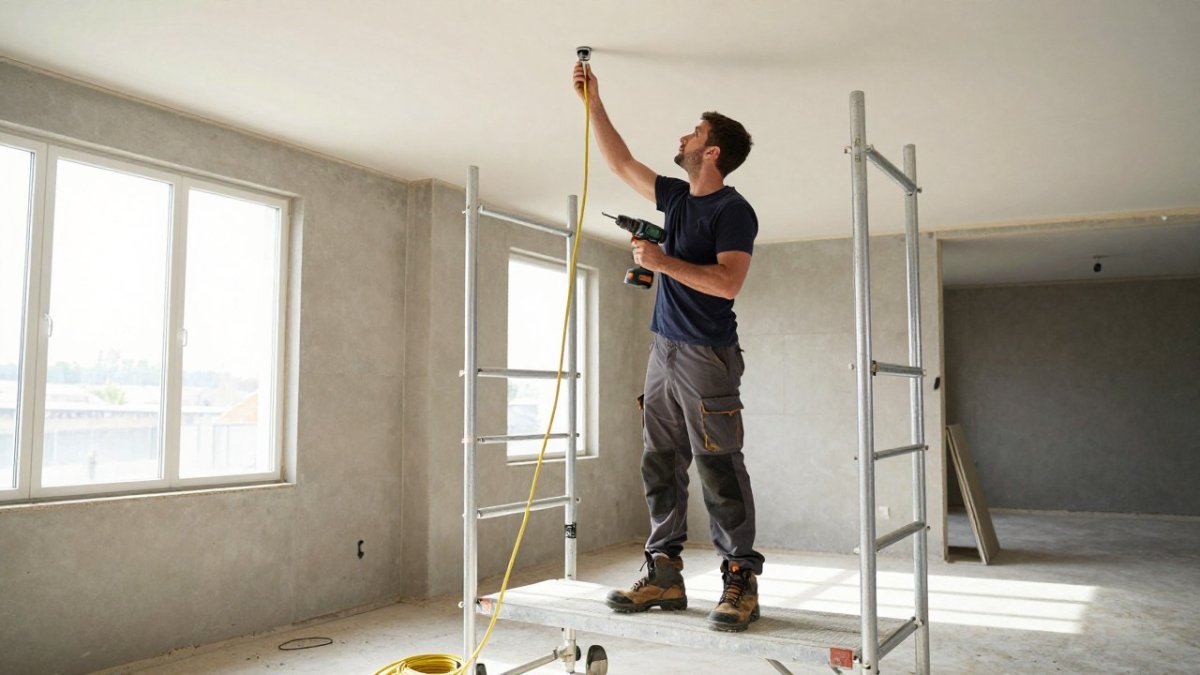
Aluminium is the default material for mobile access towers, and for good reason. A quality aluminium tower can be assembled by two people in a matter of minutes, moved by one, and packed down into a van at the end of the day. The Health and Safety Executive guidance on working at height is clear that mobile towers must be erected by competent people following the manufacturer's instructions, and aluminium's low weight makes that process genuinely practical on a busy site.
The limitations matter too. Aluminium conducts electricity, so it has no place near live installations. It also dents rather than flexes under impact, and repeated knocks on hire fleets shorten service life.
Where Aluminium Towers Perform Best
- Interior fit-out and refurbishment
- Painting, decorating and plastering
- General building maintenance and facilities work
- Short-duration tasks where speed of assembly matters
For this kind of work, an aluminium tower is the pragmatic choice. It gets you up and gets you down.
GRP and Non-Conductive Scaffold Towers: When Safety Demands Them
GRP scaffold towers are built from glass-reinforced plastic, a material that does not conduct electricity and does not spark on impact (Tower scaffolds). That single property makes them essential for anyone working on or near live electrical installations, where an aluminium tower would create a serious electrocution risk.
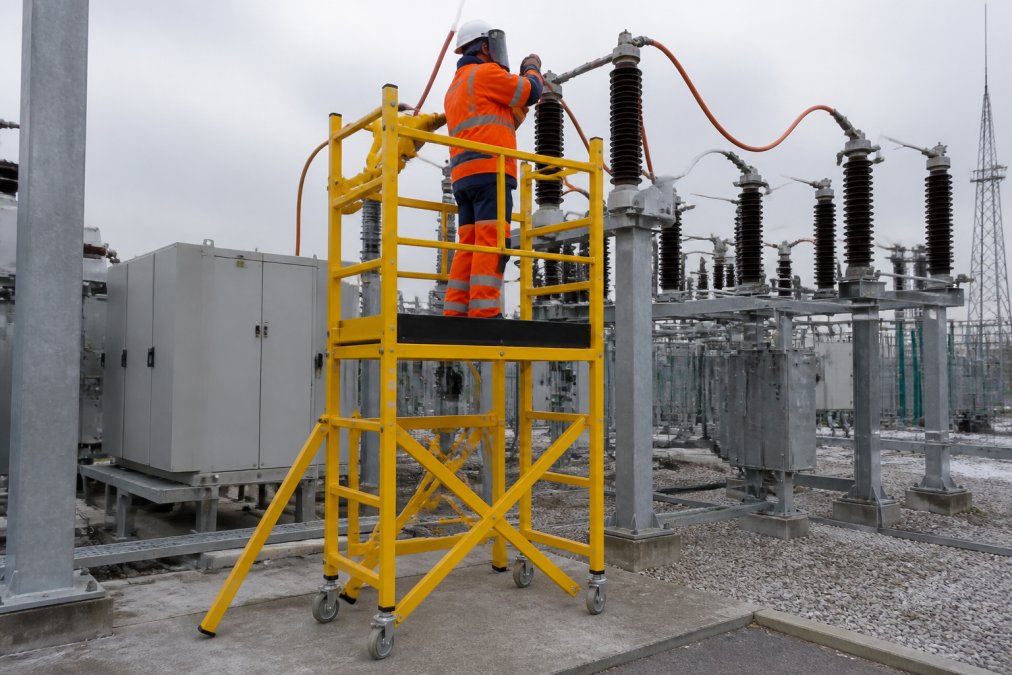
The trade-off is weight and cost. GRP towers are heavier to handle and carry a higher purchase price than equivalent aluminium units. Teams that only occasionally need non-conductive access often hire rather than buy.
Industries and Tasks That Require GRP
- Electrical contracting and substation maintenance
- Utility and power distribution work
- Chemical and petrochemical plant maintenance
- Any task within a defined live-working zone
PASMA Scaffold Tower Regulations: What Both Materials Must Meet
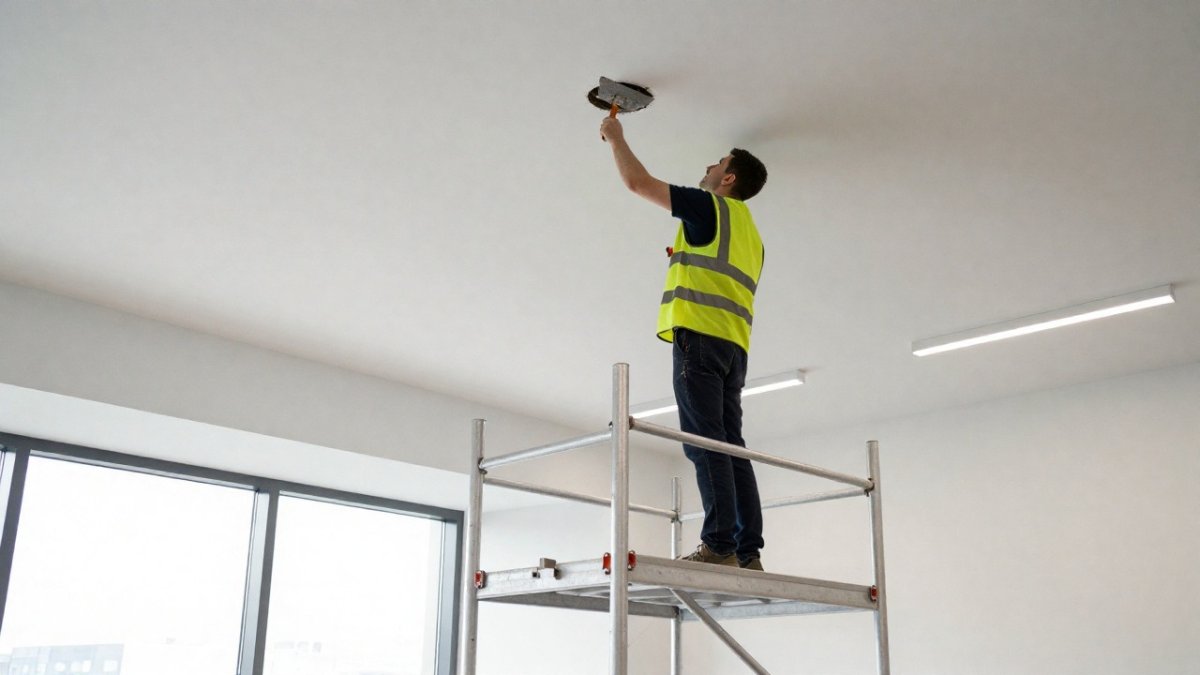
Material choice does not change your legal obligations. Both aluminium and GRP towers must be manufactured and supplied to BS EN 1004, the standard covering mobile access towers, and both must be erected and used by competent operatives (British Standards Institution). PASMA scaffold tower regulations sit alongside this: PASMA is the industry training body whose competency card is widely accepted as evidence that an operative has been trained to assemble, move, inspect and dismantle mobile towers safely.
A common mistake is assuming that buying a compliant tower is the end of the story. It is not. The tower has to be assembled correctly, inspected before use, and used within its rated load and height limits. Site audits increasingly ask for evidence of both the product standard and the operative's training.
Scaffold Tower Maintenance Requirements for Aluminium and GRP
Maintenance needs differ by material, and this is where a lot of buyers get caught out. Aluminium towers need regular inspection for dents, bent braces, cracked welds and worn locking mechanisms. Any deformed component should be replaced rather than straightened, because the structural integrity of the frame depends on every part being within tolerance.
GRP scaffold tower maintenance requirements are lighter in one respect and heavier in another. GRP does not corrode, so it stands up well to chemical exposure and damp environments where aluminium would degrade. However, GRP can suffer surface damage, UV-related degradation over long periods, and stress cracking that is harder to spot than a bent aluminium tube. Inspect GRP platforms and tubes for cracks, crazing and delamination, not just obvious breakage.
For both materials, the practical routine is the same: inspect before every use, replace damaged parts with manufacturer-approved spares, and store towers dry and off the ground. A comprehensive spare parts supply matters more than most buyers expect. A tower out of service waiting on a brace is lost time on a project.
Cost, Lifespan and Resale: Aluminium vs GRP Scaffold Towers Compared
Aluminium wins on upfront cost and resale. A well-maintained aluminium tower holds its value reasonably well because the market for used units is broad and the material is in constant demand. GRP costs more to buy and resells into a much narrower market, so the financial case for GRP rests entirely on the safety requirement, not on economics.
Which Material Should You Choose?
Choose aluminium unless the task involves live electrical equipment or a hazardous atmosphere. That covers the large majority of construction, maintenance and decoration work, and it keeps your costs down and your towers easy to handle. Choose GRP when the work sits inside a live zone, in a substation, or in a chemical environment where non-sparking, corrosion-resistant access is required.
The decision framework is simple:
- Is there any live electrical equipment within reach? If yes, specify GRP.
- Is the environment chemically aggressive or highly corrosive? If yes, lean GRP.
- Is the work general access at height with no electrical hazard? If yes, aluminium.
- Do you need it weekly? Buy, and buy from a supplier who stocks spares.
If you are still weighing it up, ask the question in reverse: what would it cost you if the tower failed the one job it had to do safely? That usually settles the material question quickly.
Working at height safely starts with specifying the right tower for the job, and that means matching material to risk rather than to price alone. Leader Pro Scaffold Towers supplies BS EN1004-compliant aluminium access towers with manufacturer-direct pricing, fast next-day delivery and a full range of spare parts to keep your equipment in service. Our team can talk you through platform heights, load ratings and the right configuration for your site before you order. Get started with Leader Pro Scaffold Towers and put compliant, reliable access equipment on your next project.
Frequently Asked Questions
What are the main benefits of GRP scaffold towers?
GRP towers are non-conductive, so they do not carry current if they contact live cables. They are also non-sparking, which matters in explosive or flammable atmospheres. The material resists corrosion from chemicals, salt and moisture, so it holds up in industrial and coastal settings. GRP towers cover most maintenance and electrical tasks.
When is it mandatory to use non-conductive scaffold towers?
You need non-conductive access when there is any risk of contact with live electrical equipment or overhead lines. That covers substation work, utility maintenance, railway electrification and industrial plant rooms. PASMA guidance and site-specific risk assessments determine whether aluminium is acceptable or whether GRP is required. If the risk assessment flags electrical hazards, aluminium towers should not be used because the frame can conduct current to anyone standing on the platform.
Are aluminium scaffold towers lighter than GRP?
Yes. Aluminium is significantly lighter than glass-reinforced plastic, which makes aluminium towers easier to move, lift and assemble, often with fewer people. That weight advantage is the main reason aluminium dominates general construction, decorating and facilities work. GRP towers weigh more, so you may need extra hands or mechanical help on site. The trade-off is that GRP gives you electrical insulation and corrosion resistance that aluminium cannot match.
How do GRP towers compare to aluminium in terms of cost?
GRP towers generally cost more to buy or hire than standard aluminium. The higher price reflects the raw material and the specialist manufacturing needed to achieve non-conductive properties. Aluminium towers are cheaper upfront and hold strong resale value, which suits contractors who use them daily. Check Leader Pro Scaffold Towers' pricing page for current figures.
Which scaffold tower material is more durable for industrial use?
Both materials last well when maintained, but they fail differently. Aluminium resists rust but can corrode in chemical or salt-heavy environments and dents on impact. GRP resists chemical and environmental degradation, does not spark and needs less maintenance, which suits industrial plants, food processing and coastal sites. For general construction, aluminium's lighter weight and lower cost usually win. For harsh or electrical environments, GRP is the more durable long-term choice.