 Comparison
Folding vs Modular Scaffold Towers: Which to Choose
Last Updated: October 29, 2026
Quick Summary
Choose folding scaffold towers for repetitive, quick jobs at low to medium heights, as they unfold in minutes and store compactly. Choose modular scaffold towers for varied heights and complex access, because separate frames and braces extend higher and configure to the job.
- A folding tower unfolds and locks in minutes, often by one person.
- Modular towers take longer to build because every frame and brace is fitted and checked.
- Working height adds roughly your reach above the platform height, so size by platform height.
- Towers should meet BS EN 1004, and PASMA-trained assembly is recommended.
- Never mix components from different tower systems unless the manufacturer confirms compatibility.
Table of Contents
- Folding vs Modular Scaffold Towers: The Core Differences
- Folding vs Modular at a Glance: Comparison Table
- Folding Tower Design and How It Works
- Modular Scaffold Design and How It Works
- Scaffold Tower Assembly: Setup and Dismantling Trade-offs
- Scaffold Tower Working Height and Platform Requirements
- Scaffold Tower Safety Checks and Compliance
- Your Scaffold Tower Buying Guide: Cost, Storage and Choosing
- Frequently Asked Questions
Folding vs Modular Scaffold Towers: The Core Differences
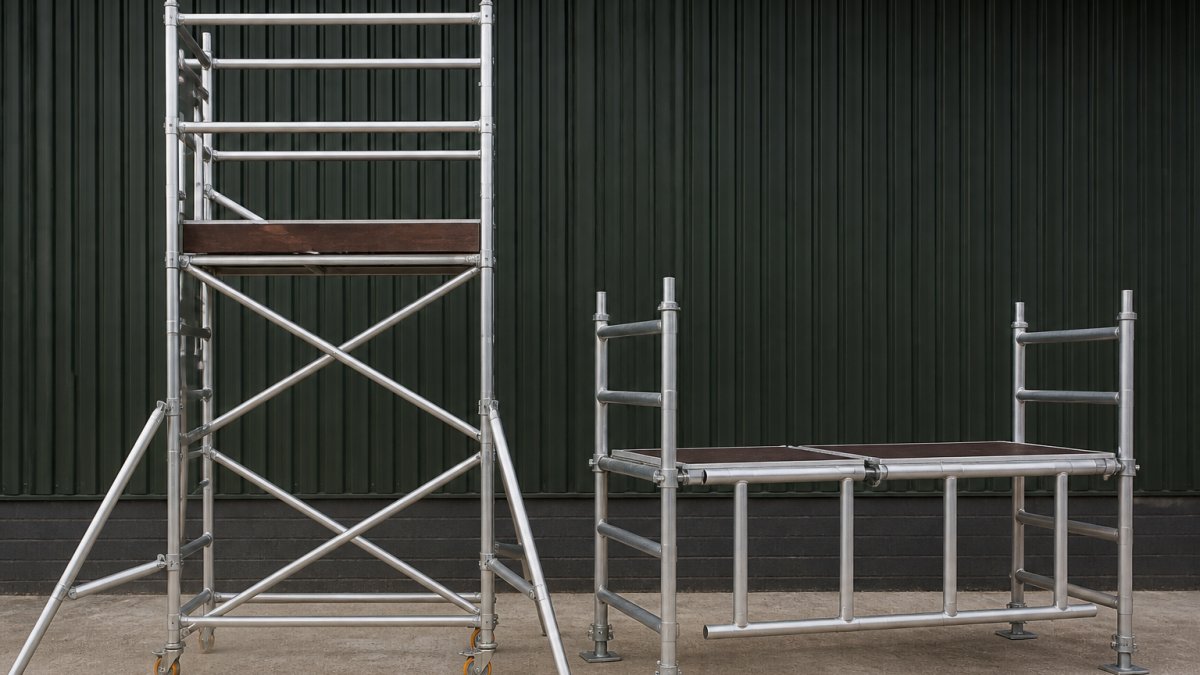
Choosing between folding and modular scaffold towers comes down to one question: is your work repetitive and quick, or varied and demanding? This decision often trips up buyers, because the two types solve very different problems. A folding scaffold tower arrives as one partly assembled unit that unfolds in minutes for short jobs. A modular scaffold tower ships as separate frames, braces and platforms that you build to the height and shape you need. The first wins on speed and storage; the second wins on flexibility and reach. Below, we break down where each type earns its place.
Folding vs Modular at a Glance: Comparison Table
The table below compares the two tower types against the criteria that actually decide a purchase.
| Factor | Folding Tower | Modular Tower |
|---|---|---|
| Setup time | Minutes; unfolds as one unit, often one person | Longer; every frame, brace and platform fitted and checked |
| Dismantling | Packs down as one connected unit | Broken down and stored piece by piece |
| Best for | Repetitive, low-to-medium jobs | Varied heights, complex access, facade work |
| Storage | Compact when folded; suits a van or small lock-up | Takes more space as separate parts |
| Portability | Easy for one person to wheel and reposition | Needs more handling and transport room |
| Height flexibility | Fixed configuration; limited extension | Extendable with modular sections |
| Platform size and load | Fixed platform; check the rated load before use | Configurable platform; load depends on the assembled configuration |
| Stability and stabilisers | Built-in outriggers or stabilisers as specified | Outriggers and stabilisers fitted per the manufacturer's instructions |
| Compliance | Must meet BS EN 1004 and be assembled to the manufacturer's instructions | Same standard applies; configuration must match the permitted build |
| Whole-life cost | Lower transport and storage cost; less setup labour per job | Higher upfront and storage cost; flexibility can justify it on varied work |
| Typical use | Decorating, maintenance, short reactive jobs | Facade work, industrial access, irregular structures |
Neither column is "better". The right pick depends on how often you climb, how high, and where. Use the table as a starting point, then check the platform height, load rating and permitted configuration in the manufacturer's instructions before you buy or hire.
Folding Tower Design and How It Works
A folding scaffold tower is a mobile access platform built as a single hinged frame that opens into a stable working platform. You can browse the LEADER PRO Folding Towers range to check specifications and prices. The frame stays connected in transit, so you wheel it into position, unfold it, lock the braces and climb. That design suits tradespeople who move between jobs and need access fast.
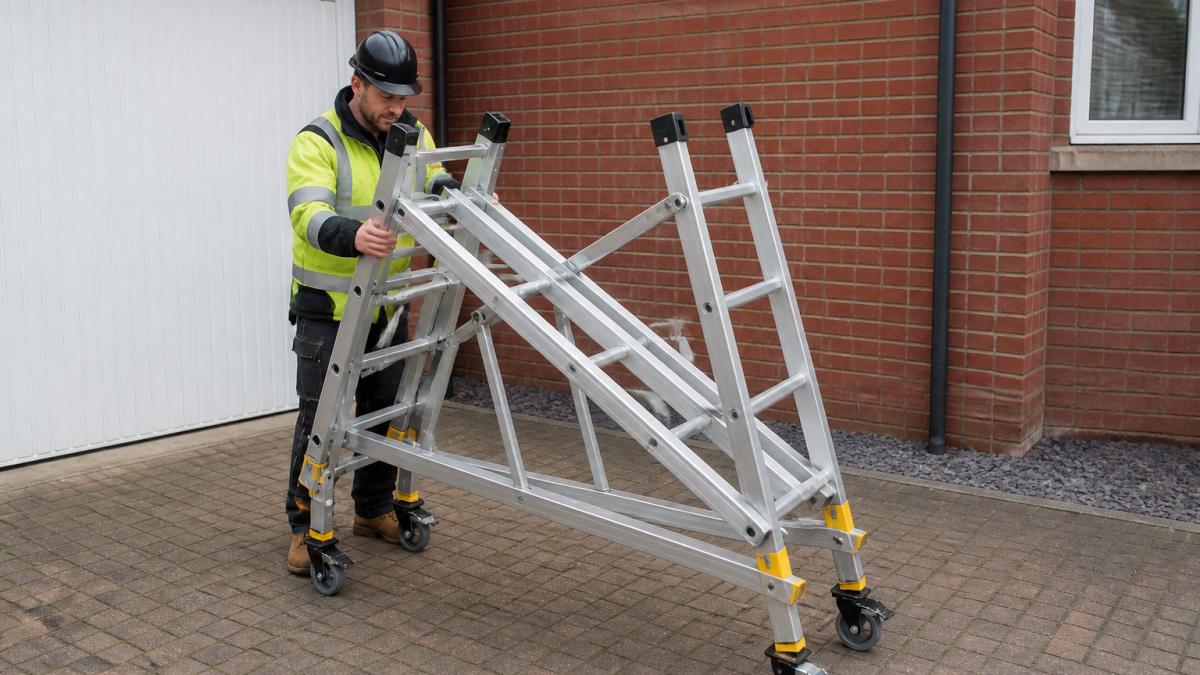
The trade-off is reach. A folding tower is built for low to medium heights, and its configuration is largely fixed. If your work climbs higher or wraps around awkward structures, you will feel the limit quickly.
Modular Scaffold Design and How It Works
Modular scaffold towers are assembled from individual components: frames, horizontal and diagonal braces, platforms and outriggers. You can browse the LEADER PRO Industrial Scaffold Towers range to see the modular systems available. You build the tower to the height and footprint the job demands, adding sections as you go. That flexibility is the whole point.
The catch is handling. More parts means more trips, more setup time and more storage space. A common mistake is buying a modular system for occasional low-level work and then resenting the assembly every time. If your jobs are routine and low, modular is often more tower than you need.
Scaffold Tower Assembly: Setup and Dismantling Trade-offs
Setup speed is where these two types diverge most sharply. A folding tower is unfolded and locked in minutes, often by one person. A modular tower takes longer because every frame and brace is fitted and checked individually.
- Folding: fastest to erect, ideal for short jobs and frequent moves
- Modular: slower to build, but you configure it precisely to the task
- Dismantling: folding packs down as one unit; modular must be broken down and stored piece by piece
In practice, the folding tower's advantage compounds across a working week. Five quick jobs mean five fast setups. For a single complex job, the modular tower's slower build pays off in reach and stability.
Scaffold Tower Working Height and Platform Requirements
Working height and platform height are not the same number, and mixing them up is one of the most common buying errors. Platform height is where your feet stand; working height adds roughly your reach above that. Always size a tower by the platform height you actually need.
Folding towers suit lower platform heights; modular towers extend higher through added sections. Before buying, confirm the platform height your tasks demand, then check the tower's rated maximum. Our guide on what platform height you need walks through the conversion so you order the right tower first time.
Scaffold Tower Safety Checks and Compliance
Compliance is not optional, and it is where cheap towers cut corners. Towers should meet BS EN 1004, the standard governing mobile access towers, and PASMA-trained assembly is recommended for anyone erecting one on site. A tower is only compliant if it is built, checked and used correctly.
Three points are worth checking:
- Assembly to the manufacturer's instructions. A tower built to a permitted configuration is compliant; one built to an unpermitted configuration is not, even if every component is present. Follow the specific instructions for your model, including the maximum platform height and the number of sections allowed.
- Inspection expectations. Towers should be inspected before first use, after any alteration or relocation, and at intervals appropriate to the site conditions. A visual check before every climb is good practice; a recorded inspection is often required on construction sites.
- Competence and training. Work at height should be properly planned, supervised and carried out by competent people (Introduction to working at height safely). PASMA training is a recognised route for mobile access tower competence.
Run these checks before every use:
- All braces and locking pins fully engaged
- Outriggers or stabilisers fitted as specified
- Ground level, firm and free of slopes
- Platform boards secure and complete
- Wheels locked before climbing
- Tower inspected for damage since last use
- Configuration matches the manufacturer's permitted build
- No missing components or substituted parts
Your Scaffold Tower Buying Guide: Cost, Storage and Choosing
Whole-life cost matters as well as purchase price. A folding tower can reduce transport, storage and setup labour, while a modular tower takes more space and may justify its outlay if your work varies. Match the tower to your job type: repetitive low-level work points to folding, varied or higher access points to modular.
Here is how we would decide:
| Your situation | Recommended type |
|---|---|
| Frequent short jobs, one person | Folding tower |
| Varied heights, complex access | Modular tower |
| Tight storage or van space | Folding tower |
| Facade or industrial work | Modular tower |
For current prices, specifications and stock, visit the Leader Pro Scaffold Towers website.
Frequently Asked Questions
What is the difference between a folding and a modular scaffold tower?
A folding scaffold tower arrives as one hinged frame that unfolds into position, so there is little to assemble or store loose. A modular tower is built up from separate tower sections, frames and braces, which you stack and pin together to reach the height you need. Folding towers suit repetitive, lower-level jobs where speed matters; modular towers suit varied or taller work where configuration flexibility matters more than setup time.
Which scaffold tower is quicker to assemble?
Folding towers usually win on setup time for low to mid-height work because the frame is already hinged and only needs unfolding, levelling and securing. A modular tower needs each section lifted, located and pinned in sequence, which takes longer but lets you build to greater heights. If your work is short jobs at modest height, folding saves minutes on every move; if you regularly build tall, the modular routine becomes familiar and efficient.
Are folding scaffold towers easier to transport and store?
Yes, generally. A folding tower collapses into a slimmer footprint that fits through doorways and into a van or workshop corner with less fuss. Modular towers break down into separate components, which can be easier to carry individually but take up more storage space and are easier to lose or damage in transit. Factor in your vehicle size and storage area before deciding which type suits your routine.
What should I check before buying a scaffold tower?
Confirm the tower is certified to BS EN1004, check the platform height and working height against your tallest job, and verify the load capacity suits your tools and materials. Look at platform size for the work you do, whether outriggers or stabilisers are included, and how easy spare parts are to source. A tower that meets the standard and matches your actual jobs will outlast one bought on price alone.
What safety checks should be carried out before using a scaffold tower?
Check the tower is on firm, level ground, that all braces, pins and locking devices are secure, and that outriggers or stabilisers are fitted where specified. Inspect components for damage or missing parts, and make sure the tower is BS EN1004 compliant. Anyone assembling or using the tower should be trained, typically through a PASMA course, and checks should be repeated after any move.
The wrong tower costs you time on every job, not just the first. Leader Pro Scaffold Towers supplies BS EN1004-certified aluminium towers with manufacturer-direct pricing, next-day delivery and a full range of spare parts to keep you working. Get started with Leader Pro Scaffold Towers and choose a tower built for the way you actually work.