 Comparison
Mobile Scaffold Tower vs Ladder: Safety Comparison 2026
Table of Contents
- Quick Comparison: Mobile Scaffold Towers vs Ladders
- Stability and Fall Risk: What the Data Shows
- Work at Height Regulations 2005 Compliance for Each Option
- PASMA Training Requirements for Mobile Scaffold Towers
- Ladder Safety Inspection Checklist: What to Check Before Every Use
- Cost, Assembly Time, and Practical Trade-Offs
- Which Access Equipment Suits Your Job?
- Frequently Asked Questions
Last Updated: 17 September 2026
Quick Comparison: Mobile Scaffold Towers vs Ladders
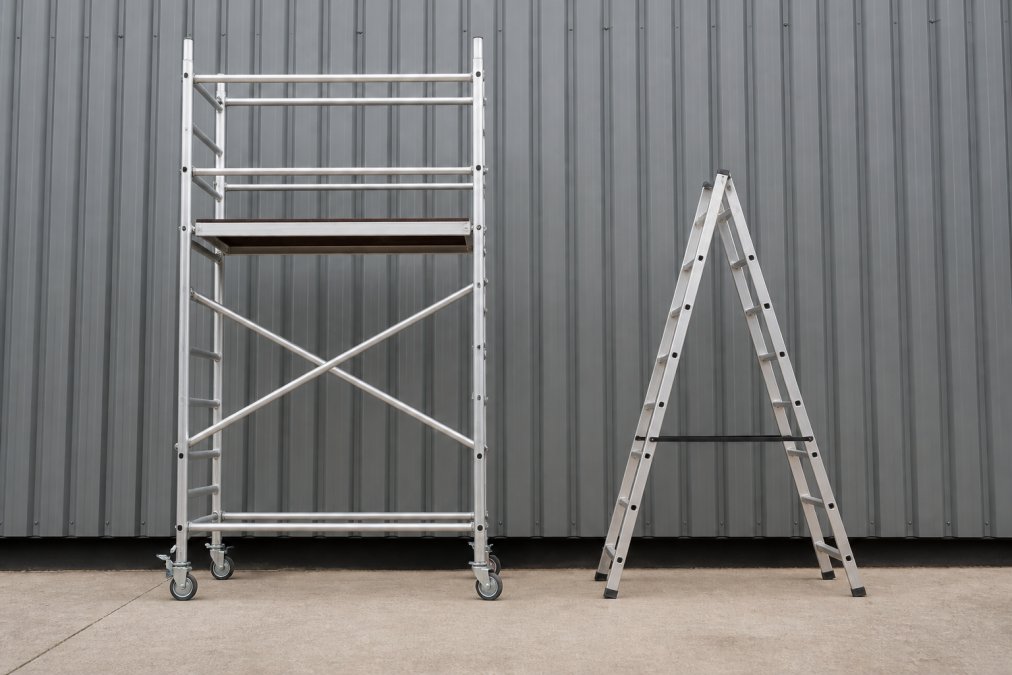
Choosing between a mobile scaffold tower and a ladder for work at height is a safety decision first and a convenience decision second. A mobile scaffold tower provides a stable, guarded platform for longer tasks, while a ladder remains a portable option for short-duration access. The scaffold tower vs ladder question comes down to task duration, working height, and how much you need your hands free. Below, we break down stability, legal compliance, training, inspection, and cost so you can match the right equipment to the job.
Stability and Fall Risk: What the Data Shows
Falls from height remain the leading cause of workplace fatalities in the UK, according to Health and Safety Executive fatal injury statistics. That single fact reframes the whole comparison.
A ladder offers a narrow contact point and demands constant balance. A mobile scaffold tower gives you a full working platform with guardrails and toe boards, so you can use both hands and carry tools and materials.
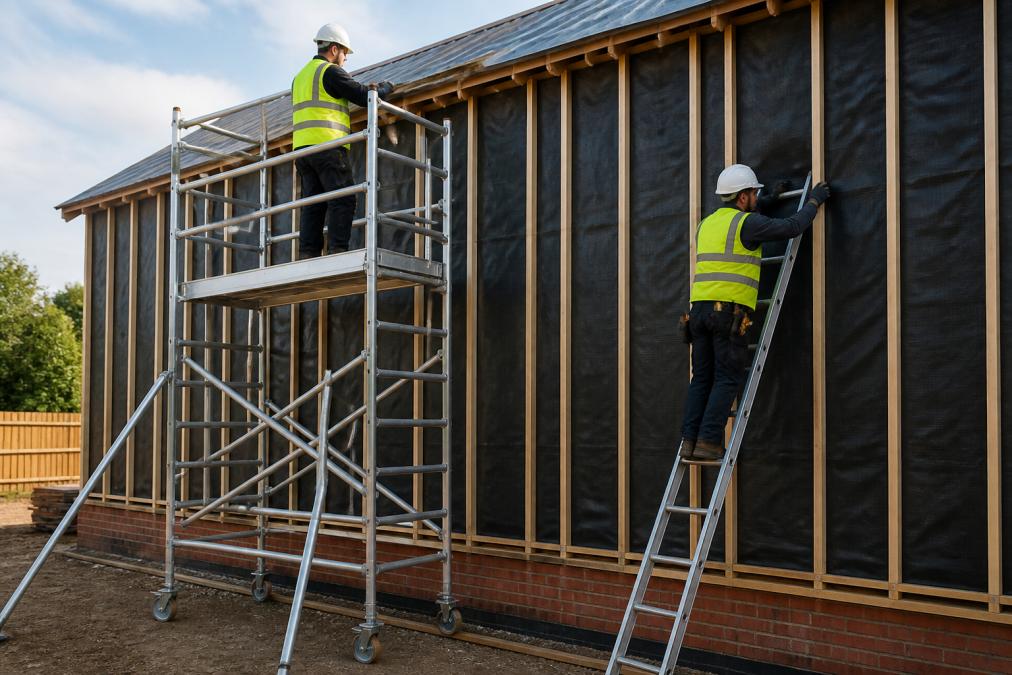
The practical difference show up over time. For tasks lasting more than a few minutes, fatigue on a ladder builds quickly, and fatigue is where mistakes happen.
Work at Height Regulations 2005 Compliance for Each Option
Both ladders and mobile scaffold towers can comply with the Work at Height Regulations 2005, but each carries different conditions. The regulations require that work at height is properly planned, supervised, and carried out by competent people, and that equipment is suitable for the task.
The Work at Height Regulations 2005 guidance sets out a clear hierarchy: avoid work at height where possible, prevent falls where it cannot be avoided, and minimise the distance and consequences of a fall.
A ladder is generally acceptable only for low-risk, short-duration tasks where a risk assessment supports it. A mobile scaffold tower is the more suitable choice for longer tasks, heavier tools, or work requiring a stable platform. For compliance, the deciding factor is not the equipment type alone, it is whether that equipment suits the task.
PASMA Training Requirements for Mobile Scaffold Towers
PASMA training is the recognised standard for anyone assembling, moving, or using a mobile access tower. PASMA is the Prefabricated Access Suppliers' and Manufacturers' Association, and its competency scheme is widely expected on commercial sites.
For a ladder, no formal certification is legally required, though competence still applies. For a tower, PASMA training covers assembly, stability, moving the tower safely, and inspection before use. Many principal contractors will not allow a tower to be erected on site without evidence of PASMA-trained personnel.
If you are hiring or buying a tower, factor training into your planning. A competent, trained user is as important as the equipment itself.
Ladder Safety Inspection Checklist: What to Check Before Every Use
A ladder safety inspection checklist should be completed before every use, not once a week. Pre-use checks catch the defects that cause incidents.
- Check stiles for cracks, bends, or splits
- Inspect rungs for damage, wear, or missing anti-slip feet
- Confirm the locking mechanism engages fully on extension ladders
- Look for corrosion, especially on aluminium in damp conditions
- Verify the ladder is on firm, level ground before climbing
- Check for any temporary repairs, which mean the ladder should be withdrawn
- Confirm the ladder is the correct duty rating for the user and load
Any ladder that fails a check should be tagged and removed from service immediately. The same discipline applies to towers: inspect the frame, braces, castors, and platform before every erection.
Cost, Assembly Time, and Practical Trade-Offs
Cost and assembly time are where the trade-offs become real. A ladder costs less upfront and takes seconds to position. A mobile scaffold tower costs more and takes longer to assemble, but it removes the fatigue and balance problems that come with ladder work.
| Factor | Ladder | Mobile Scaffold Tower |
|---|---|---|
| Setup time | Under a minute | Several minutes |
| Working platform | Narrow rungs | Full guarded platform |
| Hands-free working | Limited | Full |
| Storage footprint | Small | Larger |
| Best for | Short, light tasks | Longer, tool-heavy tasks |
| Training expectation | Competence | PASMA certification |
For a five-minute job at low height, a ladder wins on practicality. For anything longer or higher, the tower pays back its setup time within the first hour.
Leader Pro Scaffold Towers supplies BS EN1004-certified aluminium towers with next-day delivery and a full range of spare parts, so a damaged component does not stall a job for weeks. Pricing depends on the tower size and configuration, so check the website for current figures.
Which Access Equipment Suits Your Job?
Match the equipment to the task, and the decision becomes straightforward. Use a ladder for quick, low-risk access where you can maintain three points of contact and the task takes minutes, not hours.
Choose a mobile scaffold tower when the task is longer, requires both hands, involves tools or materials, or sits at a height where a fall would cause serious injury. This is where a scaffold tower vs ladder comparison tips firmly toward the tower.
For electrical work near live components, non-conductive GRP towers are the safer option, and aluminium is the practical choice for general trade use. The right answer depends on duration, height, and what you need to carry.
Frequently Asked Questions
What do the Work at Height Regulations 2005 say about ladder use?
The Work at Height Regulations 2005 require that ladders are only used for low-risk, short-duration tasks where a risk assessment confirms they are appropriate. Ladders must be on firm, level ground, secured to prevent slipping, and inspected before each use. For tasks lasting more than 30 minutes or requiring both hands, a mobile scaffold tower is a more suitable option for meeting compliance obligations.
When is a mobile scaffold tower required instead of a ladder?
A mobile scaffold tower is required when a ladder cannot be used safely, such as for tasks lasting over 30 minutes, work requiring both hands, tasks at height with heavy tools, or any job where a fall from a ladder would cause serious injury. The Work at Height Regulations 2005 hierarchy of control means you must use the safest practical option, and a scaffold tower provides a stable platform that ladders cannot match.
Do I need formal training to assemble a mobile scaffold tower?
PASMA training is not a legal requirement, but it is widely recognised as the industry standard for safe assembly and use of mobile scaffold towers. The Work at Height Regulations 2005 require that anyone working at height is competent, which means having the right skills, knowledge, and experience. PASMA certification provides documented proof of competence that satisfies both regulatory requirements and site-specific safety audits.
Are scaffold towers more stable than extension ladders?
Yes. A mobile scaffold tower with outriggers and locked castors provides a stable working platform that eliminates the balance and fatigue issues associated with ladders. The Work at Height Regulations 2005 hierarchy of control prioritises collective fall prevention measures, and a scaffold tower's guardrails and toe boards offer this protection. Ladders rely on the user maintaining three points of contact, which is not always practical during trade work.
What should a ladder safety inspection checklist include?
A ladder safety inspection checklist should cover the stiles for cracks or bends, rungs for damage or excessive wear, feet for missing or worn rubber, locking mechanisms for correct engagement, and the overall condition of the ladder. Check that the ladder is on firm, level ground, secured at the top, and positioned at the correct 75-degree angle. Document each inspection and remove any ladder that fails from service immediately.
The challenge is not knowing that towers are safer for longer jobs, it is having compliant equipment ready when the job starts. Leader Pro Scaffold Towers offers manufacturer-direct pricing, BS EN1004 quality standards, fast next-day delivery, and a comprehensive range of spare parts to keep your team working. Get started with Leader Pro Scaffold Towers and equip your next job with a stable, compliant platform.