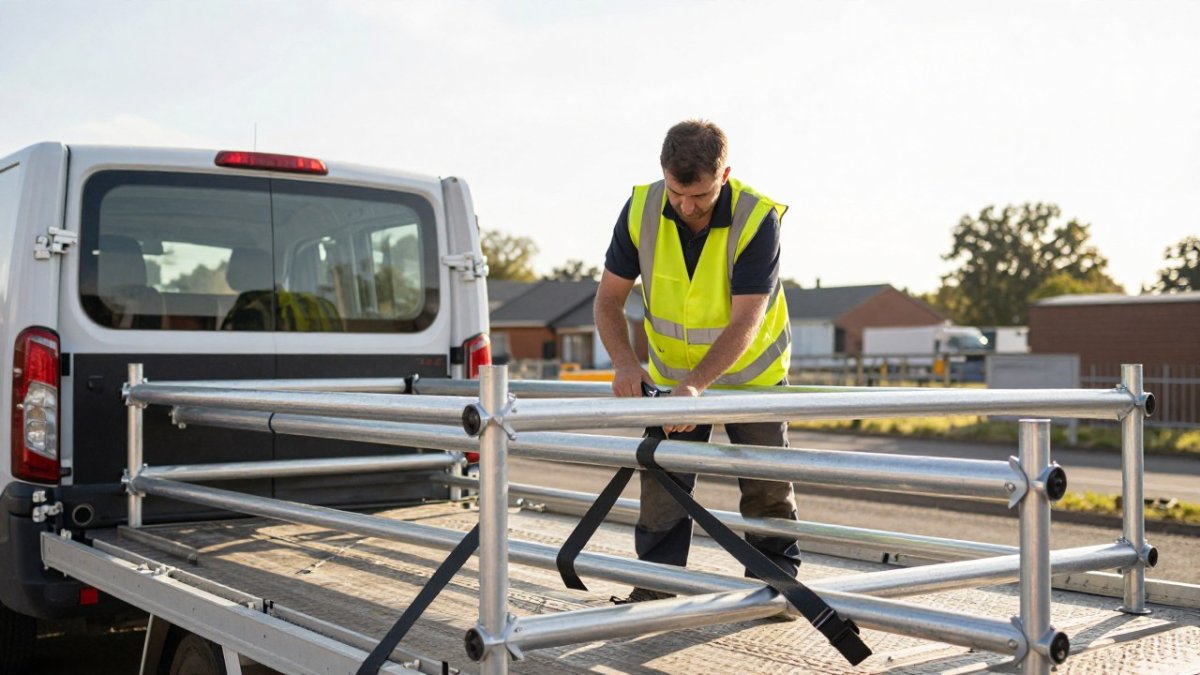
 How-to
7 Steps to Transport Scaffold Towers Between Job Sites Safely
Last Updated: 24 November 2026
Quick Summary
The safest way to transport scaffold towers between job sites is to dismantle them into main parts, load them into a vehicle with the right payload, and secure every component before setting off. Planning the move before leaving the yard keeps the load secure and protects both equipment and crew.
- Check the vehicle's payload rating and compare it with the combined weight of all components.
- Lock the castors and dismantle the tower from the top down, lowering each frame with two people.
- Stack the heaviest frames low and central, over or between the axles where possible.
- Recheck straps after the first ten minutes of driving and again at every stop.
- Inspect the tower for cracks, bends and loose pins before anyone climbs it on arrival.
Table of Contents
- How do you transport scaffold towers between job sites?
- What You'll Need Before Moving a Scaffold Tower
- Step-by-Step: Dismantling and Loading the Tower
- How to secure scaffold tower parts in a van
- Scaffold tower inspection before use
- Moving the tower safely around the worksite and in bad weather
- Scaffold tower storage safety checks and common mistakes
- Booking Your Next Delivery or Replacement Parts with Leader Pro
- Frequently Asked Questions
How do you transport scaffold towers between job sites?
Transporting scaffold towers is a routine task for many contractors, but it carries real risk. Securing every load against movement is just as important when you transport a compact tractor safely as when moving scaffold components between sites.
This guide from Leader Pro Scaffold Towers walks you through the process step by step. We cover choosing the right vehicle, dismantling and loading, securing parts, checking the tower before use, and handling bad weather.
What You'll Need Before Moving a Scaffold Tower
Gather the right tools and checks before you touch the tower. Working from a list saves time and stops parts going missing.
- Ratchet straps and load restraint straps rated for the load
- Protective blankets or padding to stop frames scratching
- A torque or spanner set for locking pins and bolts
- A torch and a spare pin set for on-site checks
- A pre-transport inventory sheet listing every component
- A copy of your risk assessment and safe method of work
Step-by-Step: Dismantling and Loading the Tower
Work through the process in order. Rushing the dismantling stage is one of the most common causes of damaged parts, and a clear sequence makes the loading stage faster and safer.
- Lock the castors and check the tower is stable before you start. Never dismantle a tower that is on soft ground or a slope without first making the base secure.
- Remove platforms and guard rails from the top down. Keep the pins and clips together in a labelled bag or box so they do not end up loose in the van.
- Take off the frames and braces in the reverse order to assembly. Two people should lower each frame rather than letting it drop.
- Stack the frames on a flat surface, keeping the heaviest parts at the bottom and never leaning them against a wall or vehicle where they can slide.
- Check each component for cracks, bends and worn pins before it goes on the vehicle. Set aside anything damaged so it does not get loaded by mistake.
- Load the vehicle with the heaviest items low and central, over or between the axles where possible.
- Secure everything before you move off, then recheck the straps after the first ten minutes of driving.
Choosing a vehicle, van or trailer with the right payload
Pick the vehicle before you pick the load when you transport scaffold towers. Check the payload rating on the van or trailer and compare it with the weight of the components you plan to carry.
Measure the load bay as well. Long frames and platforms need enough length and height, and you should allow space for padding and straps. A flatbed truck or trailer suits larger tower sections because it gives clear access for loading and strapping down.
Check the axle limits as well as the total payload. A heavy stack placed behind the rear axle can overload that axle even when the total weight looks acceptable, and it will make the vehicle handle poorly on bends.
Loading and unloading components safely
Loading and unloading cause more damage than most drivers expect. Lift with your legs, keep loads close to your body, and use two people for any part that is awkward or heavy.
When unloading, reverse the sequence. Take off the loose parts first, then the lighter items, and leave the heaviest frames until last so you are not working around a shifting stack.
The seven steps below summarise the loading sequence, in the order the article gives them.
| Step | What to do | Note |
|---|---|---|
| 1. Lock castors | Check the tower is stable before dismantling | Avoid soft ground or slopes |
| 2. Remove platforms and guard rails | Work from the top down | Keep pins and clips labelled and together |
| 3. Take off frames and braces | Reverse the assembly order | Two people lower each frame |
| 4. Stack frames | Heaviest parts at the bottom | Never lean against a wall or vehicle |
| 5. Check each component | Look for cracks, bends and worn pins | Set damaged parts aside |
| 6. Load the vehicle | Heaviest items low and central | Over or between the axles where possible |
| 7. Secure everything | Recheck straps after the first ten minutes | Retighten after the first ten minutes of driving |
How to secure scaffold tower parts in a van
Securing the load matters as much as loading it. A part that shifts during braking can injure someone or crack against the van wall, and a strap that loosens on a long run can let a whole stack move.
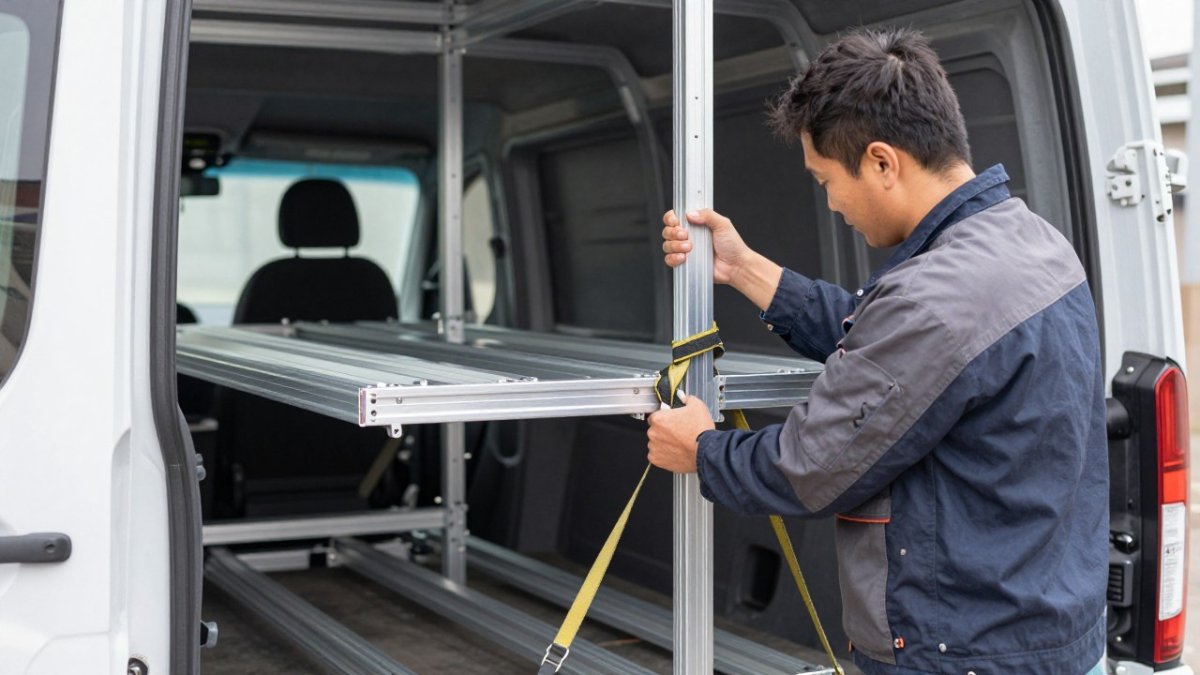
- Place frames flat or upright in a fixed position, never leaning on a door or against a loose item.
- Use ratchet straps over the top of the load and anchor them to secure points on the vehicle, not to other parts of the load.
- Fit padding between metal parts to stop scratches and dents, and wrap castors so they cannot catch on straps or clothing.
- Check the straps after the first ten minutes of driving and again at each stop. Vibration and settling can loosen a strap that felt tight at the yard.
- Keep sharp edges and castors away from people and walkways, and never leave loose pins or clips on the floor of the van.
Think about load distribution too. A van with a heavy load at the back can handle poorly on bends, so keep weight low and central. If you are carrying several towers at once, separate the components by tower and label each bundle so you are not sorting through a mixed pile at the next site.
Restraining the load: what to check and when
Use straps that are rated for the load and in good condition. Check the webbing for cuts, fraying and worn stitching before each journey, and replace any strap that shows damage rather than tying it off. Anchor points should be part of the vehicle structure, not a temporary fixing.
A common pattern is to tension straps over the load, press down on the stack to settle it, then retension. This takes a few minutes and reduces the chance of a strap going slack once you are moving. Recheck at every stop, and again before the return journey when the load may be different.
For guidance on securing loads, follow the vehicle manufacturer's instructions for anchor points and payload.
Preventing damage and keeping track of parts
Damage and missing parts cause delays at the next job, so treat the load as an inventory as well as a weight. Keep pins, clips and castors in a labelled container, and separate frames with padding or offcuts so metal does not rub against metal.
On arrival, unload in a clear area and check each component against the list before it goes to the tower position. Record any damage straight away so it is not mistaken for damage caused during assembly. This habit reduces the chance of a missing pin or bent frame stopping work later in the day.
Scaffold tower inspection before use
Inspect the tower every time it arrives at a new site, not just after it has been moved. Transport can loosen pins, bend frames and knock off clips.
Check the following before anyone climbs:
- All pins and locking devices are in place and undamaged
- Frames show no cracks, bends or corrosion
- Platforms sit flat and lock securely
- Guard rails and toeboards are fitted correctly
- The castors lock and the base is level
- Any missing or damaged parts are replaced before use
Record each inspection. A dated log protects you if the tower is ever questioned on site (Tower scaffolds). Many contractors also keep a simple tag system to show whether a tower is safe to use.
Minor damage, such as a small dent or loose fixing, can often be dealt with on the spot. Do not use a tower with a crack or a bent frame, and do not try to repair structural damage yourself.
Moving the tower safely around the worksite and in bad weather
Moving an assembled tower across a site needs care. Always check the path is clear, flat and free of cables, holes and loose debris. Unlock the castors only when you are ready to move, and lock them again as soon as the tower is in position.
Bad weather adds extra risk. Wind can catch the platform and push the tower over, and wet or icy ground can make the castors slide. Stop moving towers in strong wind, and secure the tower after use.
Long-distance transport in wet weather also needs planning. Cover the load with a waterproof sheet, keep metal parts dry to prevent rust, and check the straps more often.
Scaffold tower storage safety checks and common mistakes
Storage is where many problems start. Keep components dry and off wet ground where possible. Keep frames and platforms stacked neatly so nothing can fall.
Common mistakes to avoid:
- Leaving pins and clips loose in the back of the van
- Stacking heavy frames on top of lighter platforms
- Storing towers outdoors where rain causes rust
- Skipping the inspection because the tower "looked fine"
- Overloading the vehicle to save a trip
A regular storage check helps catch problems early. Look for corrosion, missing pins and worn castors every time you return equipment to the yard.
Booking Your Next Delivery or Replacement Parts with Leader Pro
If transport or the job has left you with damaged or missing parts, you need to act quickly. Leader Pro Scaffold Towers supplies replacement components. Delivery timescales depend on stock, quantity and delivery details, so check the website for current availability.
Our expert product advice and support can help you find the right replacement parts. Visit our website to browse the range when you are ready to restock or expand your kit.
Frequently Asked Questions
Can you transport a scaffold tower while it is assembled?
Transporting a fully assembled tower is possible only for short moves, and only if the tower is locked, the castors are secured and the vehicle has enough height and load capacity. For most van or trailer journeys between job sites, dismantling the tower into frames, platforms, guard rails and toe boards is safer and easier to load. Always check the manufacturer's instructions and your own risk assessment before moving an assembled tower, and never ride on or stand on it while it is being transported.
How do you secure scaffold tower components in a van or trailer?
Lay heavier frames flat on the floor, place lighter parts on top, and keep everything stable so nothing can shift. Use ratchet straps or load restraint straps anchored to the vehicle's fixing points, and check the straps before each journey. Keep sharp edges and aluminium surfaces protected from rubbing, and do not overload the vehicle beyond its stated payload. Check the load again after the first few miles of any journey.
What should you check before loading a scaffold tower?
Inspect each component for cracks, bent rungs, damaged locking pins, worn castors and missing guard rails or toe boards before it goes on the vehicle. Confirm that the tower parts are clean and dry so they do not slip during transit. Make sure you have the correct tools to dismantle the tower and that everyone involved has been trained in safe handling. Damaged parts should be removed from service and not transported to the next site.
What should you do if a scaffold tower part is damaged in transit?
Stop, check the load and make the area safe before continuing. Remove the damaged part from use, do not attempt to repair it on site unless the manufacturer's guidance allows it, and label it clearly so nobody erects it. Record the damage with photographs and contact Leader Pro for replacement parts or advice on whether the component needs to be inspected or retired. Keeping a simple damage log helps with inventory control and with any later insurance claim.