 How-to
Scaffold Tower Ground Protection Mats: UK Selection Guide
Quick Summary
Ground protection mats are temporary, interlocking panels that spread a scaffold tower's load and stabilise its base on soft, wet or uneven ground. They are usually made from HDPE or composite material. Always check the mat's load rating against the combined weight of the tower and everyone working on it.
- Mats spread the load so the tower does not sink, tilt or shift on soft ground.
- Foot-traffic ratings do not guarantee safety under a loaded tower; check the load figure.
- Mats should cover the tower footprint with a margin, and the tower must sit fully on them.
- Do not place a tower on steep slopes, crumbling edges or subsiding ground, even with mats.
- Lift mats promptly after the job, because leaving them on grass can yellow the turf beneath.
Table of Contents
Why Scaffold Towers Need Ground Protection Mats
Leader Pro Scaffold Towers supplies aluminium access towers to UK trade and industrial customers, and a common site problem has nothing to do with the tower itself. It is the ground beneath it. A tower standing on soft soil, wet grass or broken paving can sink, tilt or shift under load, and that puts people at risk. Ground protection mats spread the load, stabilise the base and protect the surface underneath, so the tower sits on a firm, level platform.
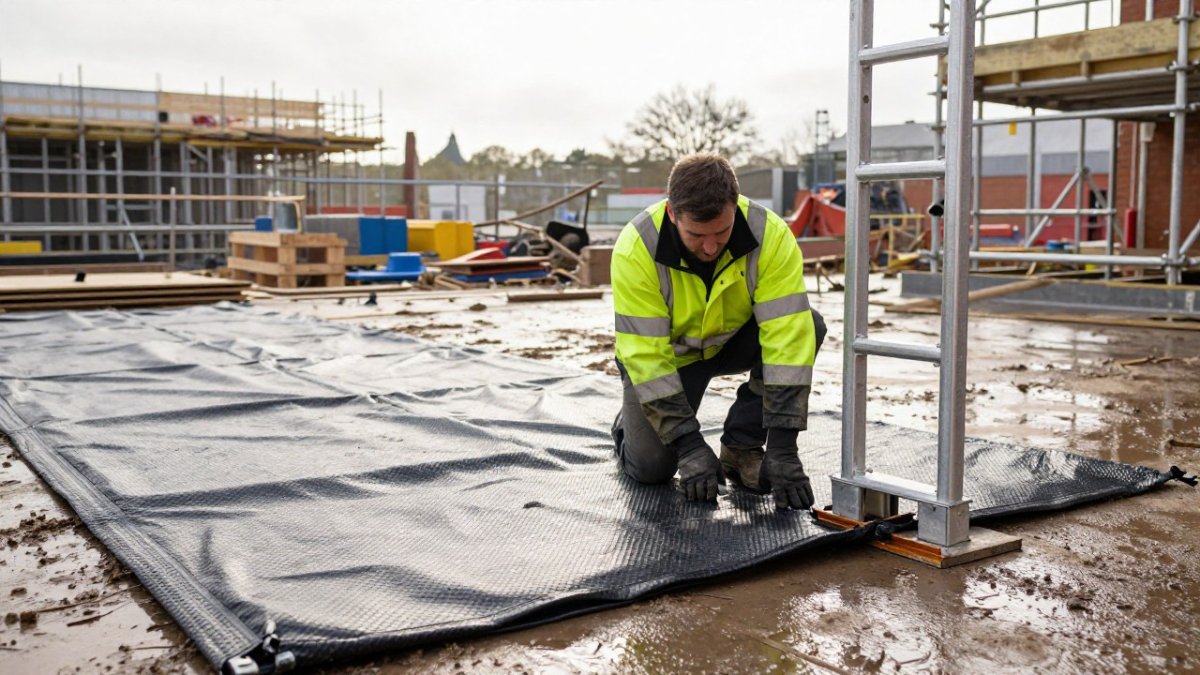
Ground protection mats are temporary, interlocking panels that create a stable working surface. They are commonly made from high-density polyethylene (HDPE) or composite materials, and they are used across construction sites, landscaping jobs, events and pedestrian walkways. For scaffold towers specifically, the mat's job is to distribute the combined weight of the tower, the operatives and their materials over a wider area than the castors or base plates alone could manage.
Turf reinstatement, repairs to damaged paving and re-levelling a tower that has settled can all be costly. Pricing depends on quantity, dates and delivery, so check the Leader Pro Scaffold Towers website for current prices or request a quote.
Watch out: a mat rated for foot traffic is not automatically rated for a loaded tower. Check the load rating against the combined weight of the tower and everything that will be on it before you rely on the mat.
Some sites also require ground protection as part of their wider risk assessment. Under UK health and safety law, the Health and Safety Executive (HSE) expects work at height to be planned, including the surface the equipment stands on. HSE guidance on working at height
Scaffold Tower on Grass: Protecting Turf and Surfaces
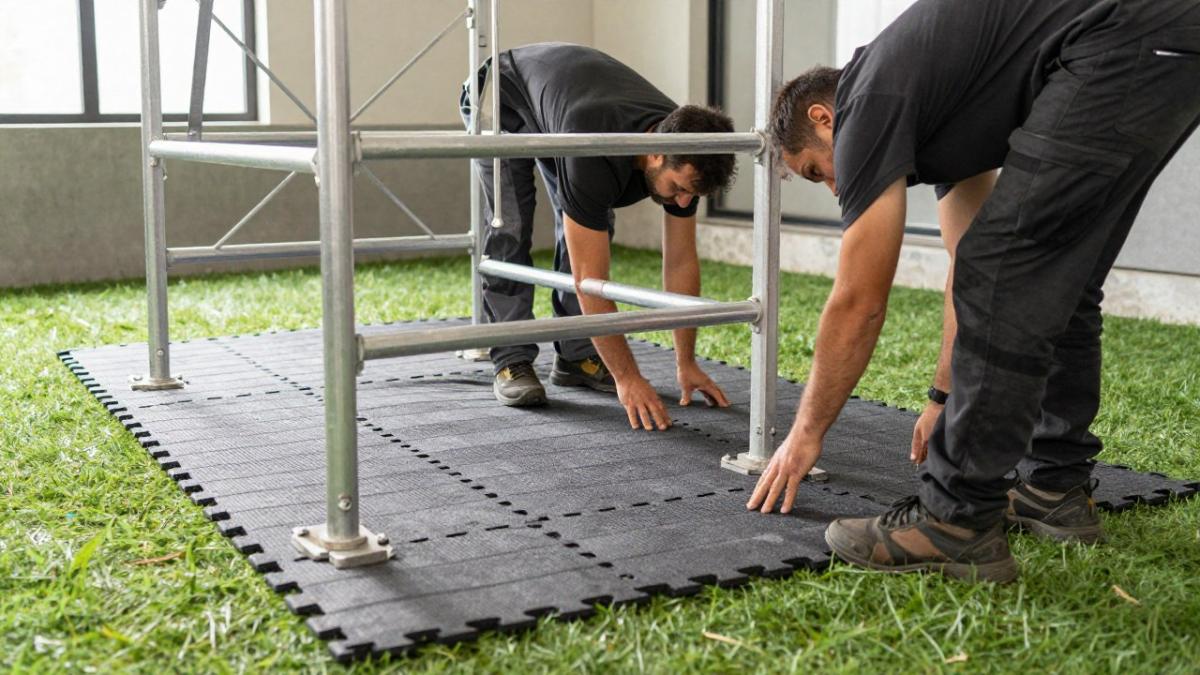
Grass and turf are the surfaces most often damaged by a tower without protection. Castors dig in, wet ground compresses, and the marks can last well after the job ends. Interlocking mats placed under the tower's footprint prevent this by spreading the load and keeping the wheels off the bare surface.
Before laying mats, clear debris and check for buried services. Lay the mats edge to edge so the surface is continuous, and make sure the tower sits fully on the mat rather than straddling its join. Where access is needed across lawn, a longer run of mats forms a temporary route for the tower to be moved.
A common mistake is leaving mats in place for too long on grass, which can cause the turf beneath to yellow. Lift them promptly once the work is complete and inspect the ground before reinstatement.
Scaffold Tower on Uneven Ground: Assessing Suitability
Mats are not a cure for every surface. A tower on a steep slope, a crumbling edge or ground that is actively subsiding is not safe, however many mats you lay. Assess the ground first: is it firm when you press into it, is it level within acceptable tolerance, and is there any sign of voids, drainage problems or previous excavation?
Where ground is only slightly uneven, adjustable legs can level the tower. Where it is significantly out of level, do not try to correct it with packing alone. Find a different position or prepare the ground properly before erecting the tower.
If in doubt about a surface, stop and get a competent person to assess it. The cost of a short delay is far lower than the cost of a collapse.
Choosing Mat Size, Thickness and Load Rating for Your Tower
Match the mat to the tower. Check the tower's footprint and the number of castors or base plates, then choose mats that cover that area with a margin around the edges. Thicker mats generally spread load better, but thickness alone does not tell you the rating. Always read the manufacturer's load figure.
The table below summarises the main selection factors. Use it as a starting point and confirm specifications with the supplier before purchase.
| Factor | What to check | Why it matters |
|---|---|---|
| Mat size | Covers tower footprint plus margin | Prevents edges sinking |
| Thickness | Heavier-duty for loaded towers | Better load spread |
| Load rating | Above combined tower and user weight | Safe working limit |
| Material | HDPE or composite | Durability and reuse |
| Surface grip | Textured top | Reduces slip risk |
Pros and cons by mat type:
- Lighter-duty mats: Easy to move and cheap to buy, but suited to pedestrian routes rather than loaded towers.
- Heavy-duty HDPE mats: Strong and reusable, though heavier to handle and more costly up front.
- Composite mats: Good load performance and corrosion resistance, but check compatibility with your site conditions.
Scaffold Tower Base Plates and Mat Setup, Step by Step
- Confirm the ground is suitable and clear of debris.
- Lay the first mat square to the planned tower position.
- Connect further mats edge to edge, ensuring the surface is continuous.
- Set the tower's base plates or castors fully onto the mats, not across a join. If you need a replacement or compatible base plate to match your mats, buy a scaffold tower base plate from our range.
- Fit and check adjustable legs so the platform is level.
- Test the tower's stability before any loading.
If a base plate or leg is damaged, replace it before use.
Scaffold Tower Safety Checklist Before Every Use
Before each use, work through this checklist:
- Mats are fully interlocked and undamaged
- Tower sits fully on the mats, clear of joins
- Platform is level and stable
- Toeboards and edge protection are fitted
- Stabilisers are fitted where the tower height requires them
- Castors are locked and brakes are working
- Load rating is not exceeded
Check the maximum safe working height for your tower before you start (Tower scaffolds).
Watch out: a missing toeboard clip or edge protection is easy to overlook on a busy site. Check every fitting, not just the ones you can see from the ground. If a part is missing, you can replace it from our range. [page:2]
Inspecting, Cleaning and Storing Your Mats, and Next Steps for Your Tower Setup
Inspect mats before and after each job for cracks, deformation and worn interlocking edges. Remove mud and debris so the surface stays grippy and the joins stay sound. Worn running gear should be assessed too: learn when castors should be replaced rather than serviced.
Choosing the right mats and checking them regularly keeps your tower stable and your crew safe. Leader Pro Scaffold Towers supplies aluminium towers, spare parts and expert advice to help you set up correctly. For current prices, visit our website or request a quote, as pricing depends on quantity, dates and delivery.
Frequently Asked Questions
Do scaffold towers need ground protection mats?
Not always, but ground protection mats are strongly advisable whenever a tower stands on soft, sloping or unstable ground. A tower's base plates need a firm, level bearing surface. Mats spread the load across a wider area, reducing the risk of sinking, tilting or displacement. They also protect grass, paving and other surfaces from damage. Before erecting any tower, assess the ground and check that the mat and tower combination is suitable for the load and conditions on site.
Can you put a scaffold tower on grass?
A scaffold tower can be erected on grass, but only with ground protection mats or a suitable spreader board beneath the base plates. Grass alone is usually too soft to provide a reliable bearing surface, particularly after rain. Mats spread the load and prevent the legs sinking. Check the ground is reasonably level before starting, and re-check the tower regularly if it is used over several days on the same spot.
How do you choose the right ground protection mat for a scaffold tower?
Start with the tower's footprint and the expected loads, including the people and materials on the platform. Choose mats large enough to cover each base plate with a sensible margin, and check the manufacturer's load rating. Thickness and material affect durability and grip. Confirm the mats are rated for the ground conditions you expect and that they are compatible with the tower's base arrangement before ordering.
How should you check the ground before erecting a scaffold tower?
Walk the proposed position and look for soft patches, voids, slopes, buried services and debris. Press a foot or probe into the surface to judge firmness. Check the tower will sit level and that the mats will not shift. If the ground is unstable, waterlogged or unsuitable, do not erect the tower there until the surface has been prepared or a different position chosen. Record your assessment as part of your safety checks.