 How-to
7 Steps to Choosing the Right Scaffold Tower Size
Last Updated: 18 November 2026
Quick Summary
Choosing the right scaffold tower size starts with your working height, which is the platform height plus your safe working reach. Measure the highest point you must touch, subtract your reach, then check base width, platform length and load capacity against the job and the access route.
- Working height adds your safe working reach to the platform height where your feet stand.
- A 1.5 m base will not pass through a standard 0.8 m doorway, so measure the folded dimensions.
- Narrower towers plus stabilisers suit tight access, widening the effective base without widening the frame.
- Safe working load is the total for workers, tools and materials together, not a per-person limit.
- Level the base, apply the brakes and fit stabilisers before building up with guardrails in place.
Table of Contents
- Start With the Task, Not the Tower
- Work Out Your Scaffold Tower Working Height
- Scaffold Tower Dimensions: Base Width, Platform Length and Access
- Choosing an Indoor Scaffold Tower
- Ground Conditions, Outriggers and Uneven Surfaces Outdoors
- Load Capacity: Adding Up Workers, Tools and Materials
- Scaffold Tower Safe Setup and the Checks Before You Climb
- Match the Tower to Your Project Before You Order
Start With the Task, Not the Tower
Choosing the right scaffold tower size for projects starts with the job in front of you, not a catalogue page. The task type, the height of the work area and how long you will be up there decide everything else. Buyers often reach for the biggest tower they can afford, then discover it will not fit through the site gate.
A scaffold tower is a freestanding, mobile access platform built to BS EN 1004, the standard covering mobile access and working towers. That standard fixes the classes, dimensions and stability rules every compliant tower must meet.
Below, we walk through seven steps that take you from a blank site survey to a confident order. Each step builds on the last, so work through them in order.
Work Out Your Scaffold Tower Working Height
Working height is the height you can safely reach with your hands above the platform, and it is the figure that matters most when sizing a tower. Platform height is where your feet stand. Working height adds your reach on top.
Working height is generally calculated by adding a safe working reach above the platform. Confirm the reach figure with the manufacturer's instructions for the tower you choose.
Platform Height Versus Working Height: A Worked Example
Say you need to reach the top of a 5.5 m wall to fit a fascia board. Your safe working reach is 2 m, so you need a platform height of about 3.5 m. Order a 4 m platform tower and you have a comfortable margin.
Get this calculation wrong in the other direction and you end up stretching, which is exactly how falls happen. Measure the highest point you must touch, subtract your reach, and that is your minimum platform height.
For a full breakdown of the difference between platform and working height, our guide to choosing the correct platform height walks through it in detail.
Height-to-Base Ratio and Stability Limits
Every mobile tower has a maximum height relative to its base width, and exceeding it turns a stable platform into a tipping risk. The height-to-base ratio is the single most important stability check before you buy.
Narrow towers are handy indoors but limited outdoors, where wind load and ground conditions bite. If you need extra height, you add stabilisers or outriggers to widen the effective base rather than pushing the tower past its limit.
Our article on how high a scaffold tower can safely go covers the height limits, stabiliser rules and wind guidance in full.
Scaffold Tower Dimensions: Base Width, Platform Length and Access
Base width and platform length decide what fits, what you can carry and how much room you have to work. A tower that is too wide will not pass a doorway; one that is too short forces constant repositioning.
Platform lengths and base widths vary between models, so check the manufacturer's dimensions for each tower. Longer platforms suit long runs of work such as soffits or cladding, while shorter platforms suit tight corners and indoor rooms. The table below gives a general guide to base width and access.
| Tower Base Width | Typical Use | Access Consideration |
|---|---|---|
| 0.7 m | Indoor rooms, corridors | Fits most standard doorways |
| 1.0 m | General trade work | Needs a double doorway or gate |
| 1.5 m | Outdoor, higher work | Wide site access required |
Measure the Route, Not Just the Room
Before you order, walk the full route the tower will take from delivery point to work position and measure every opening: doorways, gates, stairwells, lift doors and tight corners. A collapsed tower still has to pass through, and a 1.5 m base will not go through a standard 0.8 m doorway. Check the folded dimensions, not the erected ones, because the packed frame is what travels.
A practical checklist for the route:
- Doorways and gates: measure the clear opening, not the frame, and allow for the tower's folded width plus a hand's clearance either side.
- Stairwells and turns: a tower that fits a doorway may still not turn a tight corner; measure the diagonal clearance at each bend.
- Lifts: check the internal dimensions and the door height, and confirm the lift's rated load against the weight of the packed tower.
- Storage and assembly space: you need level ground at least the size of the tower's footprint to assemble it, plus room to fit guardrails and braces.
- Overhead obstructions: low ceilings, pipework, cable trays and door closers can block erection even when the floor plan looks clear.
If access is genuinely tight, a narrower tower plus stabilisers is often the practical answer. Stabilisers widen the effective base without widening the frame, so you keep the doorway clearance and still meet the stability rules.
Platform Length and Working Reach
Platform length affects how much you can do without moving the tower. A longer platform lets you work a long run from one position, while a shorter platform suits a single window or a tight corner. Balance platform length against the extra weight and wider footprint it demands.
For a full breakdown of how platform and working height interact, our guide to choosing the correct platform height walks through it in detail.
Typical scaffold tower base widths and their access needs
Choosing an Indoor Scaffold Tower
An indoor scaffold tower is a narrow, lightweight mobile tower sized for rooms, corridors and atriums where space and floor protection matter. Indoors, you trade width for manoeuvrability and pick a tower that rolls through doorways without dismantling.
Watch the floor. Some finishes mark easily, so choose wheels that suit the surface and keep the load spread. Ceiling height matters as much as platform height, because you need headroom above the guardrails.
A light-duty aluminium tower is often suited to indoor work, as it is generally easier to move than a heavy-duty frame.
Ground Conditions, Outriggers and Uneven Surfaces Outdoors
Outdoors, the ground decides whether a tower is safe before height even enters the conversation. Level, firm ground is the baseline; slopes, gravel and grass all need extra measures.
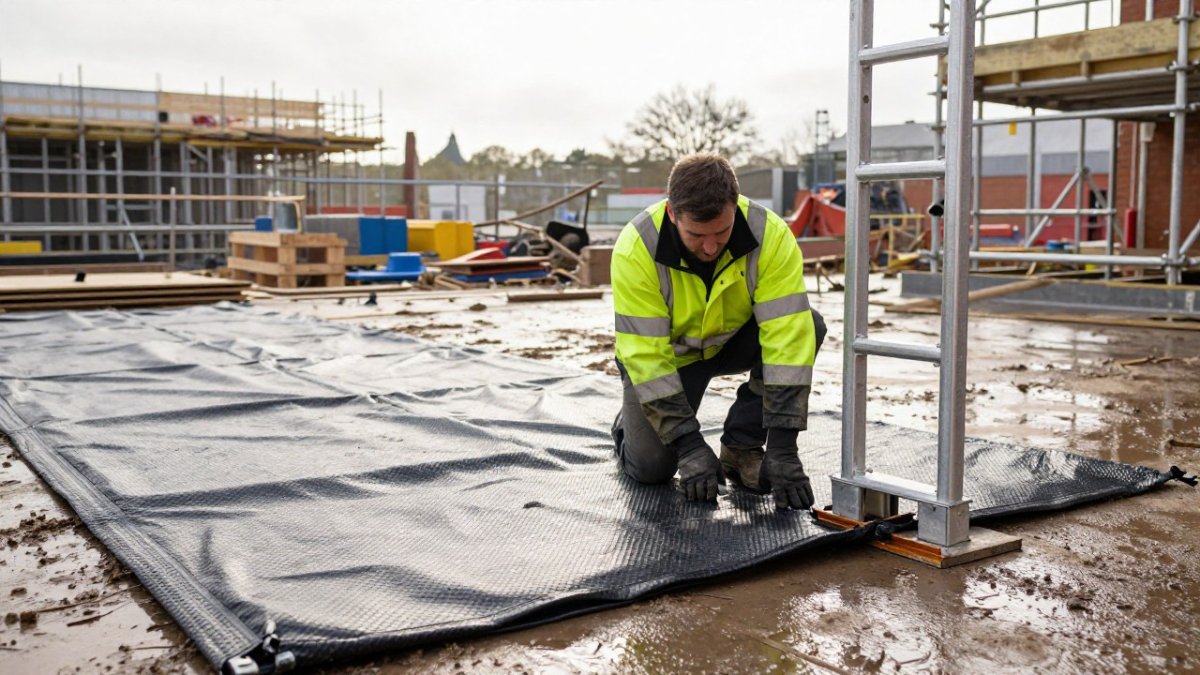
Use adjustable legs to level the base, fit outriggers or stabilisers to widen the footprint where the manufacturer allows, and always apply the wheel brakes. On soft ground, follow the manufacturer's guidance on spreading the load.
If your site has slopes, grass or gravel, our guide on using a scaffold tower on uneven ground covers adjustable legs, levelling and safe setup in depth.
Load Capacity: Adding Up Workers, Tools and Materials
Safe working load is the total weight a platform is rated to carry, including people, tools and materials together. Most mobile towers are rated for light-duty use, so the sum adds up faster than people expect. The gap most buyers fall into is treating the platform rating as a per-person limit rather than a total for everything on the deck.
A Worked Load Calculation
Take a typical two-person job: fitting a fascia board at height. Add up the weight of the workers, their tools and the materials carried onto the platform. Then compare that total with the platform's rated load, not with the number of people. The calculation is the same every time: workers plus tools plus materials, compared against the platform rating in the manufacturer's specification.
Platform Rating Versus Component Ratings
The platform's safe working load governs the job, but individual components may carry their own ratings. Always check that the whole assembly, not just the deck, is rated for your calculated load.
Match the duty rating to the heaviest realistic load, then choose a tower that clears it.
Recalculate the total load before adding a worker to a platform, because the platform limit applies to the deck as a whole.
Scaffold Tower Safe Setup and the Checks Before You Climb
Safe setup follows a fixed sequence every time: level the base, apply the brakes, fit stabilisers, then build up in the correct order with guardrails and toe boards in place as you go. Never climb a partly built tower.
A competent person should inspect the tower before first use and after any alteration, and you should recheck it after moving it or a change in weather. The Work at Height Regulations 2005 place clear duties on anyone working at height, and towers are no exception.
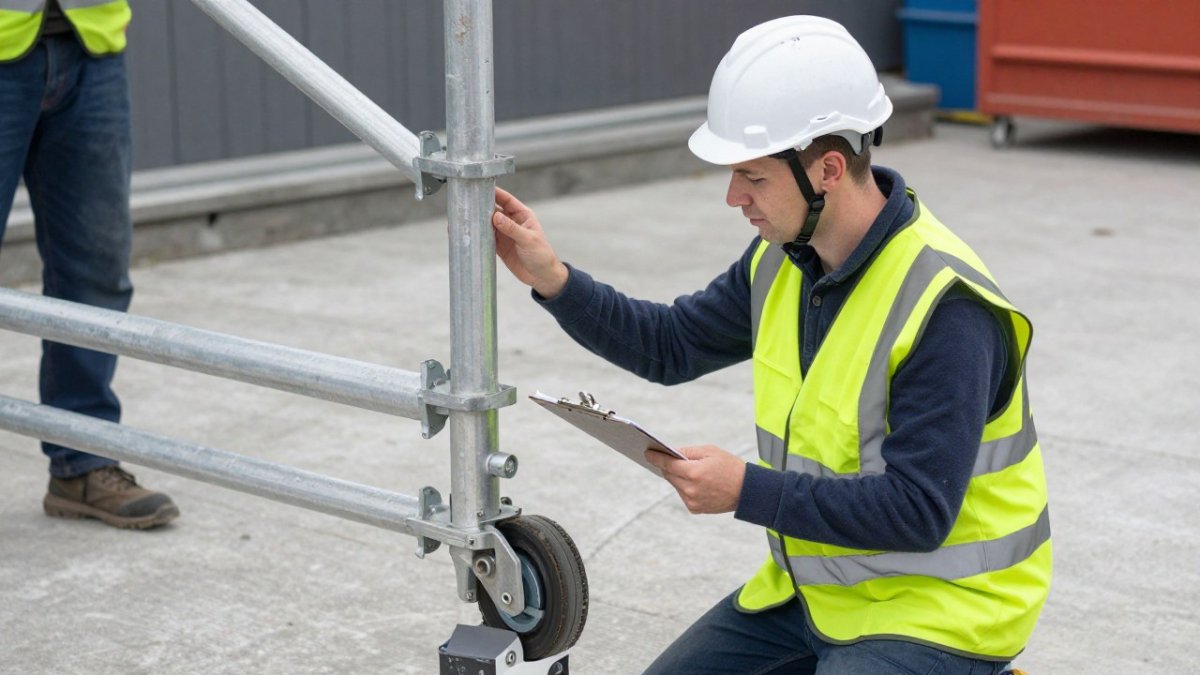
PASMA guidance is the industry reference for mobile tower assembly, and our guide to working at height regulations explains your legal duties in plain terms.
Match the Tower to Your Project Before You Order
Before you order, run the whole checklist once more: task, working height, dimensions, indoor or outdoor use, ground conditions and load. If any one of those fails, the tower is wrong, however good the price.
At Leader Pro Scaffold Towers, our industrial aluminium towers are built to BS EN 1004 and supplied manufacturer-direct, with expert advice on hand to help you size the right tower. Browse the industrial scaffold tower range to match your project requirements.
Sizing a tower correctly is the difference between a safe, efficient job and a wasted order. Leader Pro Scaffold Towers can help you get it right first time, with BS EN 1004-certified aluminium towers, manufacturer-direct pricing and fast next-day delivery. Get started with Leader Pro Scaffold Towers and order the tower that fits your project.