 Ultimate guide
7 Common Causes of Scaffolding Collapse Accidents
Last Updated: 25 October 2026
Quick Summary
The most common causes of scaffolding collapse are poor assembly, overloading, high winds acting on sheeting, skipped inspections, damaged or mismatched components, unsuitable ground, and unauthorised alterations. Every scaffolding collapse on this list begins with a preventable lapse in assembly, loading or inspection. Build the tower correctly, load it within its rating and check it before every use.
- Towers must be erected by competent people following the manufacturer's instructions, not assembled from memory on site.
- Load must be spread evenly, with the rated capacity treated as a hard ceiling rather than a target.
- Lower the tower or take the sheeting down if wind is rising.
- The pre-use check covers braces, castors, stabilisers, platform boards, guardrails, ties and visible damage.
- No one alters a tower except a competent person, and any change means it is re-checked before use.
Table of Contents
- Why Scaffolding Collapse Accidents Keep Happening
- Cause 1: Poor Assembly and Non-Compliant Erection
- Cause 2: Scaffold Overloading Risks Most Site Teams Miss
- Cause 3: Scaffolding in High Winds and the Danger of Unsecured Sheeting
- Cause 4: Skipping the Scaffold Inspection Checklist
- Cause 5: Damaged, Mismatched and Non-Certified Components
- Cause 6: Unsuitable Ground and Missing Foundations
- Cause 7: Unauthorised Alterations and Missing Ties
- Preventing Scaffold Collapse: Where to Start
- Frequently Asked Questions
Why Scaffolding Collapse Accidents Keep Happening
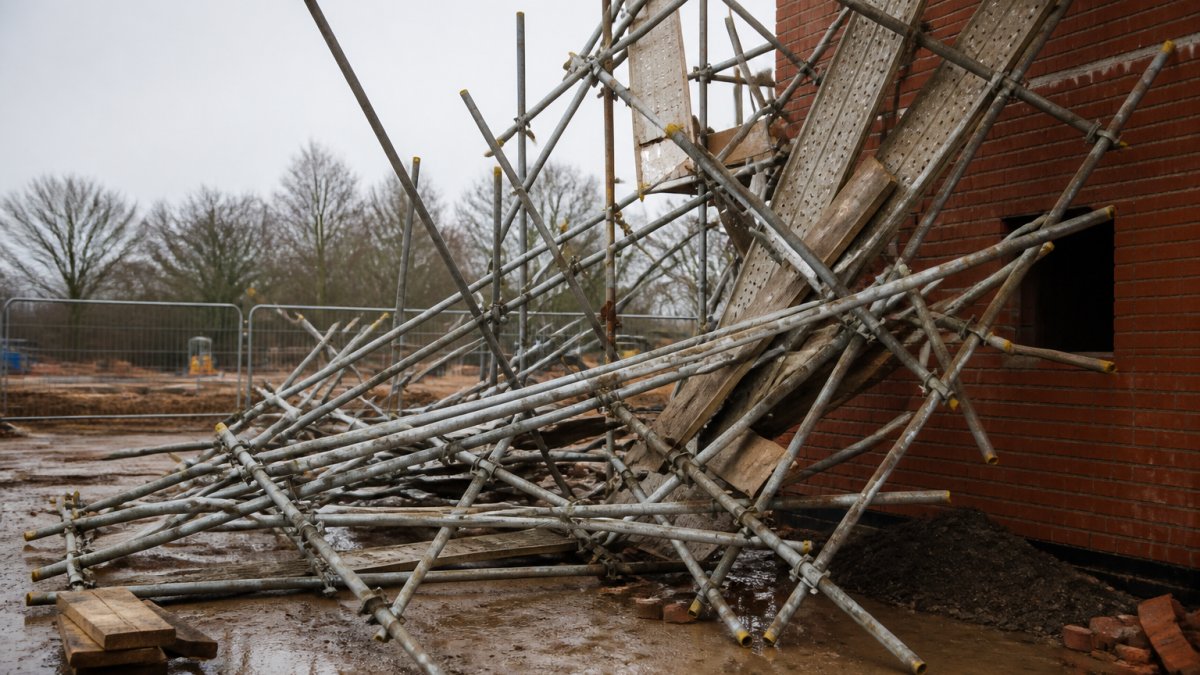
Scaffolding collapse accidents rarely trace back to a single catastrophic failure. They build from small, ordinary decisions: a brace left off, a castor left unlocked, a tower loaded with more than it was rated for. At Leader Pro Scaffold Towers, we supply aluminium access towers to contractors, facilities teams and hire companies, and the same handful of causes recur across almost every incident. Understanding those causes is the difference between a tower that stands all week and one that goes over with someone on it.
A scaffold collapse is the structural failure of a tower or scaffold platform, whether partial or total, and it almost always begins with a preventable lapse in assembly, loading or inspection. Below, we break down the seven common causes of scaffolding collapse accidents, how each one develops in practice, and what to check before anyone climbs.
The pattern is consistent enough to be predictable. That predictability is good news: every cause on this list is preventable.
Cause 1: Poor Assembly and Non-Compliant Erection
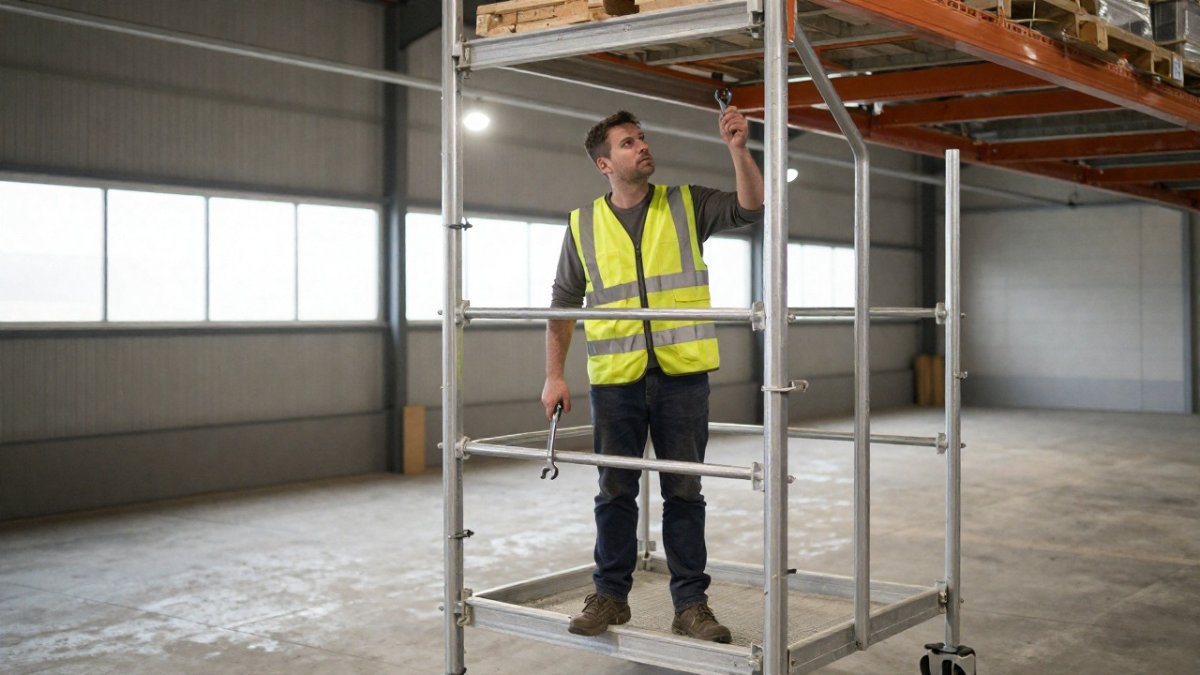
The most frequent cause of tower failure is simple: the tower was never built correctly in the first place. Missing braces, unlocked castors, wrong stabilisers and improvised access all weaken a structure before a single person climbs it.
Assembly errors compound. A tower erected without its full set of diagonal braces loses rigidity fast, and a platform fitted at the wrong height changes how load transfers through the frame. The Health and Safety Executive guidance on tower scaffolds is clear that towers must be erected by competent people following the manufacturer's instructions, not assembled from memory on site.
Our own guide to the most common scaffold tower assembly mistakes covers each of these failures in detail.
Cause 2: Scaffold Overloading Risks Most Site Teams Miss
Scaffold overloading risks are the quietest cause on this list because nothing looks wrong until it is. A tower rated for a set working load becomes dangerous the moment materials, tools and people exceed that limit, and the failure often comes without warning.
The mistake is treating the platform as a shelf. Bricks stacked in one corner, a heavy tool chest parked at the top, three tradespeople crowded onto a two-person platform: each adds load the design never allowed for. Load must be spread evenly, and the rated capacity must be respected as a hard ceiling, not a target.
A common error is counting only the people and forgetting the materials. In practice, the load that tips a tower is usually the one nobody weighed.
Cause 3: Scaffolding in High Winds and the Danger of Unsecured Sheeting
Scaffolding in high winds fails when the structure becomes a sail. An unloaded tower with sheeting, netting or signage attached catches the wind like a canvas, and the force on the frame multiplies far beyond what an open tower experiences.
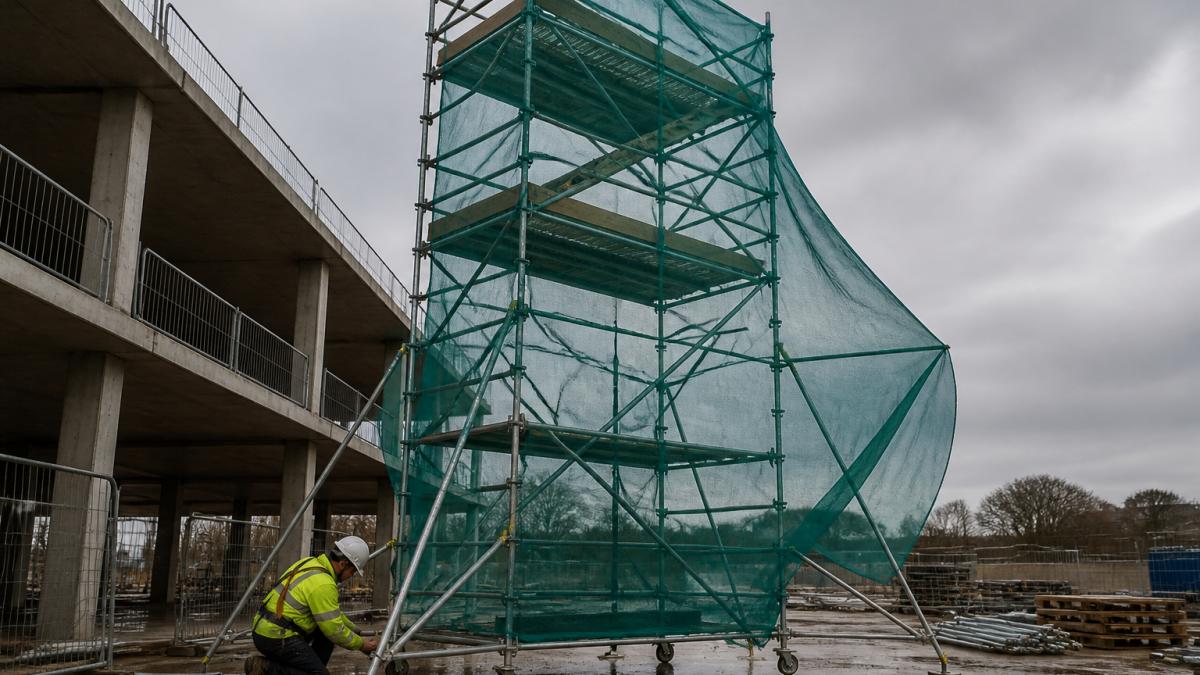
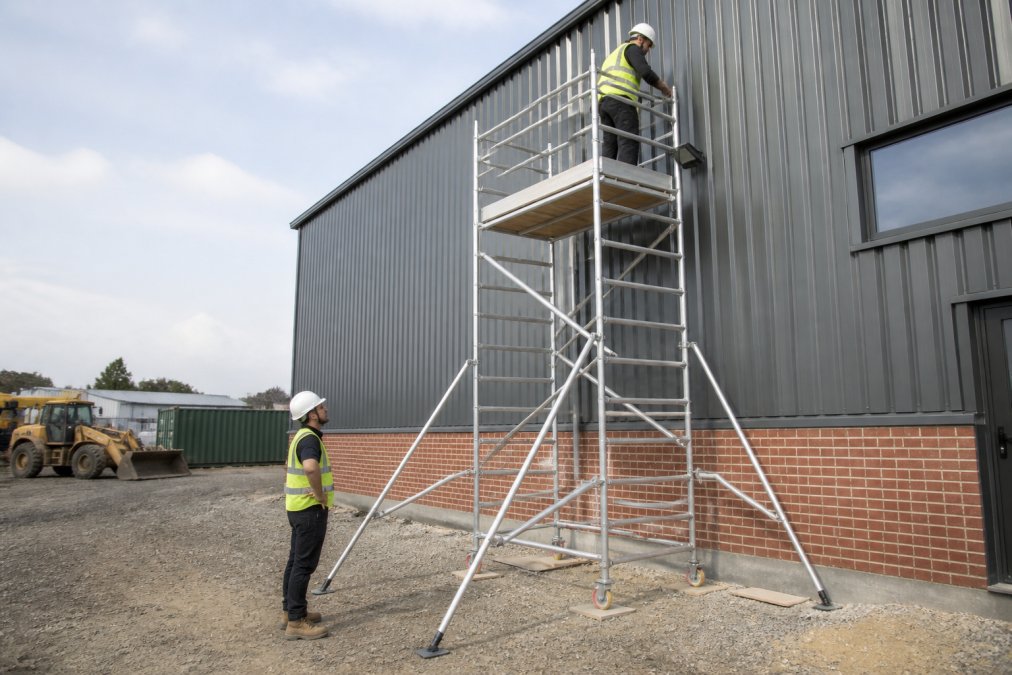
Two things go wrong. First, sheeting is fixed without accounting for wind load, so gusts push the tower past its stability limit. Second, the tower is left up overnight or in rising wind without being tied off or lowered. Outdoor towers have defined height limits precisely because wind acts on them differently from indoor towers. Our guide to how high a scaffold tower can safely go explains the height limits and wind conditions that decide whether a tower should be up at all.
Watch out: leaving a sheeted tower standing in forecast gusts is one of the fastest routes to a collapse. If wind is rising, lower the tower or take the sheeting down.
Cause 4: Skipping the Scaffold Inspection Checklist
A scaffold inspection checklist exists because towers change between erection and use. Components work loose, ties shift, and yesterday's safe tower is not automatically today's. Skipping the check is a direct route to the failures on this list going unnoticed.
A workable pre-use check covers the essentials:
- All braces fitted and locked
- Castors locked and brakes engaged
- Stabilisers or outriggers correctly positioned
- Platform boards fully seated with no gaps
- Guardrails and toe boards in place
- Ties secure and undisturbed
- No visible damage to tubes, frames or fittings
The check takes minutes. The failures it catches take seconds to become serious.
Cause 5: Damaged, Mismatched and Non-Certified Components
Towers fail when their parts are not what the design assumes. A bent tube, a cracked casting, a brace from a different system forced into place, or a non-certified component all introduce weakness the structure was never built to tolerate.
Mismatched parts are the insidious version. Systems look similar but are not interchangeable, and forcing a component from one tower into another compromises the whole frame. Non-certified equipment carries no assurance it meets the design standard at all. Buying towers built to BS EN1004 gives you a structure whose components are designed to work together, which is why we supply certified aluminium towers rather than mixed parts.
The fix is unglamorous: inspect components before every build, retire damaged parts, and never mix systems.
Cause 6: Unsuitable Ground and Missing Foundations
A tower is only as stable as what it stands on. Soft ground, slopes, drains, kerbs and uneven surfaces all let a leg settle or sink, and a tower that was level at erection can be leaning by lunchtime.
Level ground is the starting requirement. Where the surface cannot be made level, adjustable legs bring the tower back to true, and stabilisers widen the base to resist tipping. Adjustable legs level a tower on uneven ground, and large telescopic stabilisers add the footprint that keeps it stable on difficult surfaces. Neither is optional on ground that is not flat and firm.
Cause 7: Unauthorised Alterations and Missing Ties
The final cause is the one that undoes good work: someone changes the tower after it was built and checked. A guardrail removed for access, a tie taken out to reach a wall, an extra platform added, braces left off to make room. Each alteration quietly removes the stability the original design relied on.
Missing ties matter most on taller or sheeted towers. Ties anchor the structure to the building and resist the forces that would otherwise tip it. Remove one and the tower loses that resistance exactly where it is needed.
The rule is straightforward: no one alters a tower except a competent person, and any change means the tower is re-checked before use.
Preventing Scaffold Collapse: Where to Start
Scaffold collapse prevention comes down to discipline across the whole life of the tower, not a single inspection. Build it correctly, load it within its rating, respect wind and height limits, check it before every use, keep components sound, set it on proper ground, and leave alterations to competent people.
| Cause | Warning Sign | Preventative Action |
|---|---|---|
| Poor assembly | Missing braces, unlocked castors | Follow the manufacturer's instructions |
| Overloading | Materials stacked in one corner | Respect the rated working load |
| High winds | Sheeting catching gusts | Lower or tie off in rising wind |
| Skipped inspections | Loose fittings, shifted ties | Run the pre-use checklist |
| Damaged components | Bent tubes, mismatched parts | Inspect and retire, never mix systems |
| Bad ground | Legs sinking or leaning | Level with adjustable legs and stabilisers |
| Unauthorised alterations | Missing ties or guardrails | Re-check after any change |
The causes are ordinary. So are the fixes. That is what makes them worth acting on.
Frequently Asked Questions
What are the most common causes of scaffolding collapse?
Most scaffolding collapse incidents trace back to a small set of failures: poor assembly, overloading, high winds acting on sheeting, damaged or mismatched components, unsuitable ground, missing ties and unauthorised alterations. In practice these overlap. A tower built on soft ground with the base plates not properly seated will start to move, and that movement is what triggers the collapse. Under the Work at Height Regulations 2005, the duty holder must ensure the structure is stable, assembled by competent people and inspected at the required intervals.
How does overloading cause a scaffold to collapse?
Every scaffold has a designed load limit, and exceeding it puts stress on the standards, ledgers and couplers beyond what they were built for. Common culprits are stacking bricks or blocks on the platform, storing mortar boards, and several trades working on the same lift at once. Loads should be distributed evenly rather than dumped in one bay. If you need to know the safe working load for your tower, check the manufacturer's data plate and the BS EN 1004 classification before anyone steps on it.
How often should scaffolding be inspected?
A scaffold inspection checklist should be worked through before first use, then at intervals not exceeding seven days, and after any event that could affect stability such as high winds, impact or alteration. The results need recording. On a mobile access tower, a pre-use check by the user before every shift is sensible even where a formal weekly inspection is in place. Anything flagged as a defect should take the tower out of service until it is put right.
Can strong winds cause scaffolding to collapse?
Yes, and wind is one of the most underestimated factors. An unclad tower sheds wind reasonably well, but add debris netting, sheeting or signage and the surface area turns the structure into a sail. Gusts can lift or overturn a tower that was stable in calm conditions. Stop work and secure or dismantle the tower when wind speeds approach the limits in the manufacturer's instructions, and never leave a tower sheeted overnight without checking the ties and ballast.
Every one of these failures is preventable with the right equipment and the discipline to use it properly. Leader Pro Scaffold Towers supplies BS EN1004-certified aluminium towers with manufacturer-direct pricing, next-day delivery and a full range of spare parts, so a damaged component never means weeks of downtime. Our team offers expert product advice before you buy and support after. Get started with Leader Pro Scaffold Towers and build every tower on a certified, stable footing.