 Ultimate guide
Work at Height Training for Logistics Staff: UK Requirements
Quick Summary
Under the Work at Height Regulations 2005, employers must ensure that work at height is planned, supervised and carried out by people who have completed suitable work at height training. Training should match each person's role and the equipment they use, because awareness training alone does not make someone competent to use a mobile tower or fall-arrest harness.
- Employers must plan work at height, avoid it where reasonably practicable, and organise and supervise it.
- Training should follow the job itself, not the job title, using a role-by-role matrix.
- Awareness training does not make someone competent to use equipment such as mobile towers or harnesses.
- Check every mobile tower for a correctly positioned horizontal brace before use.
- Keep records showing the course, date, assessor and equipment covered for each person.
Table of Contents
- What the Work at Height Regulations Require of Logistics Employers
- Carrying Out a Logistics Work at Height Risk Assessment
- Which Logistics Roles Need Which Training: A Role-by-Role Matrix
- Mobile Access Tower Training: Competence Beyond the Basic Course
- Choosing Between Eliminating, Preventing and Minimising Falls
- Course Length, Refreshers and Keeping Training Records
- Booking Your Team's Training and Equipment Checks
- Frequently Asked Questions
What the Work at Height Regulations Require of Logistics Employers
Last Updated: 19 November 2026
Working at height is one of the leading causes of serious injury in UK logistics, and the rules that govern it, including the duties around work at height training, are set out in the Work at Height Regulations 2005 (The law). This guide explains what the law expects of employers and staff, and what that means for training in a logistics setting.
The Work at Height Regulations apply to any work at height where a person could fall a distance likely to cause personal injury, whether that is climbing into a trailer, reaching racking or working on a loading bay edge. HSE guidance on the Work at Height Regulations 2005
Employer duties for planning and supervision
Employers must plan work at height properly, avoid it where reasonably practicable, and ensure that work is organised, supervised and carried out by people who have completed suitable work at height training. Planning means choosing the right equipment for the task. Supervision means someone is checking that the plan is being followed on the day.
A common mistake is treating a ladder as the default for every short task. Where a mobile tower or a platform would give a safer working position, the regulations expect that choice to be considered and documented.
Employee responsibilities and the hierarchy of controls
Employees have duties too. They must follow the safe system of work, use equipment as instructed, report defects and tell their supervisor if they feel unsafe or untrained for a task.
The hierarchy of controls ranks how to deal with the risk. Avoid work at height where you can, prevent falls with guardrails or edge protection, and only then minimise the consequences with fall-arrest systems or PPE. Training should reflect that order, because a harness is the last line of defence, not the first.
Carrying Out a Logistics Work at Height Risk Assessment
A risk assessment identifies who could fall, from what, how far and what controls are needed. For logistics operations it should cover every routine task, not only the obvious ones, because routine tasks are where most people drop their guard.

Start by listing each task that involves height: loading and unloading trailers, stock picking from racking, sheeting loads, checking roof lights and clearing blockages. For each one, record the working position, the equipment used, how often the task happens and who performs it.
Hazards specific to loading bays, trailers and racking
Loading bays present unguarded edges and the risk of a trailer moving or dropping away from the dock. Trailer roofs are unstable and often wet or icy, and sheeting or strapping from them is a frequent source of falls. Racking adds the hazard of climbing, reaching beyond safe limits, and overloaded or damaged uprights.
Assessment should note the surface condition, the presence of edge protection and the anchor points available. Where a trailer must be accessed, the assessment should state whether the vehicle is secured and whether the access route is clear.
Which Logistics Roles Need Which Training: A Role-by-Role Matrix
Training should follow the job, not the job title. The matrix below summarises a sensible starting point. Adjust it to what your staff actually do on site.
| Role | Typical work at height | Training priority |
|---|---|---|
| Warehouse operative (picking) | Reaching racking, short ladder use | Ladder safety, racking limits |
| Loading bay supervisor | Dock edges, trailer access | Work at height awareness, edge hazards, supervision |
| Trailer loader / driver | Trailer roofs, sheeting, straps | Roof access, fall prevention, fall-arrest where used |
| Maintenance technician | Roof lights, lighting, overhead systems | Mobile tower competence, inspection checks |
| Agency and temporary staff | Any of the above | Site induction, supervised tasks only until assessed |
The distinction that matters most is between awareness training and equipment-specific competence. Awareness training gives someone the knowledge to recognise a work at height hazard, understand the hierarchy of controls and know when to stop and ask.
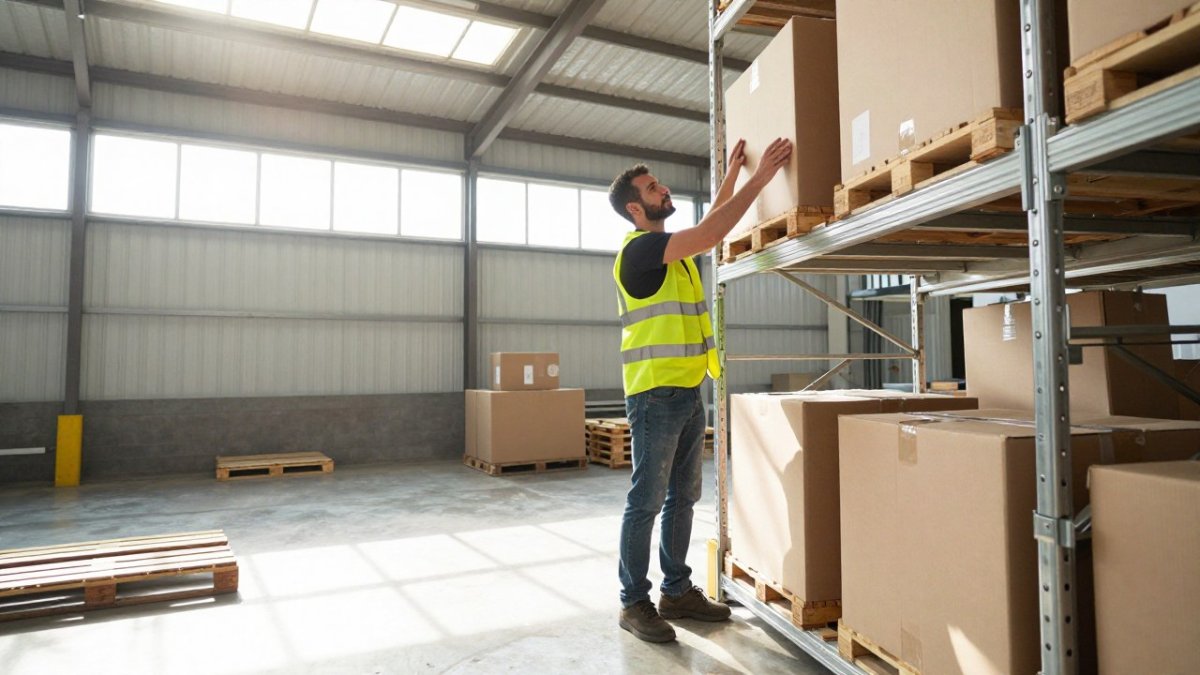
For warehouse operatives, the practical focus is racking limits and ladder use.
Loading bay supervisors need awareness training plus a clear understanding of their supervision duty.
Trailer loaders and drivers are the group most often exposed to trailer roofs, sheeting and strapping.
Agency, temporary and contractor workers need the same standard of information and supervision as permanent staff. Do not assume a previous employer's training transfers to your site without checking.
HSE guidance on competence and training for work at height
Mobile Access Tower Training: Competence Beyond the Basic Course
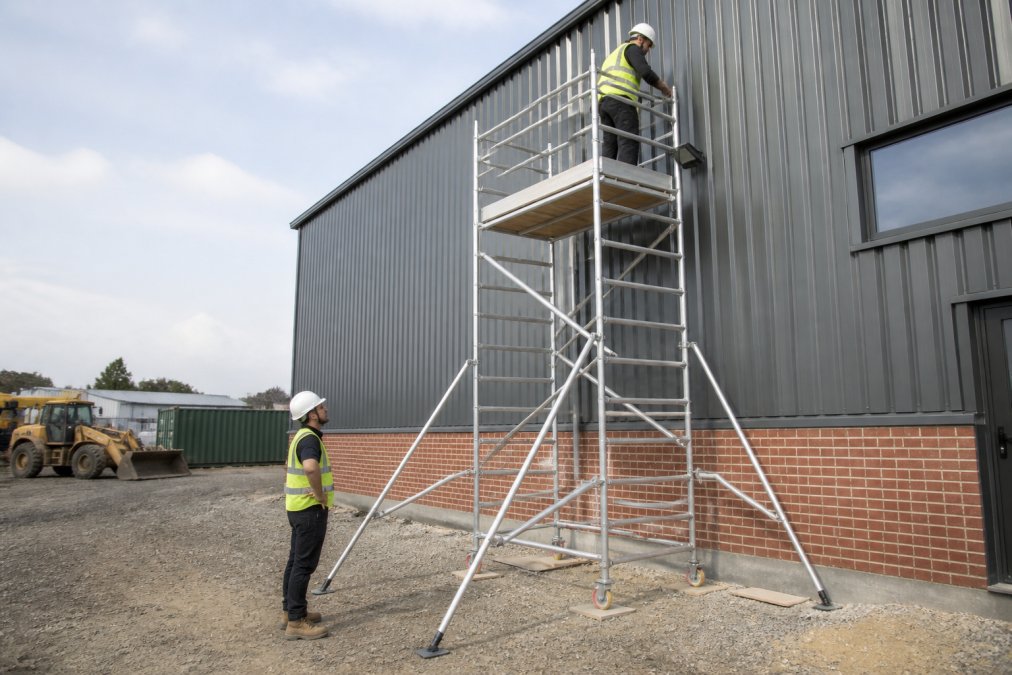
A basic course teaches someone how to use a mobile tower in principle. Competence means they can set it up correctly on the floor they are working on, check it before use and recognise when it is not safe to continue.
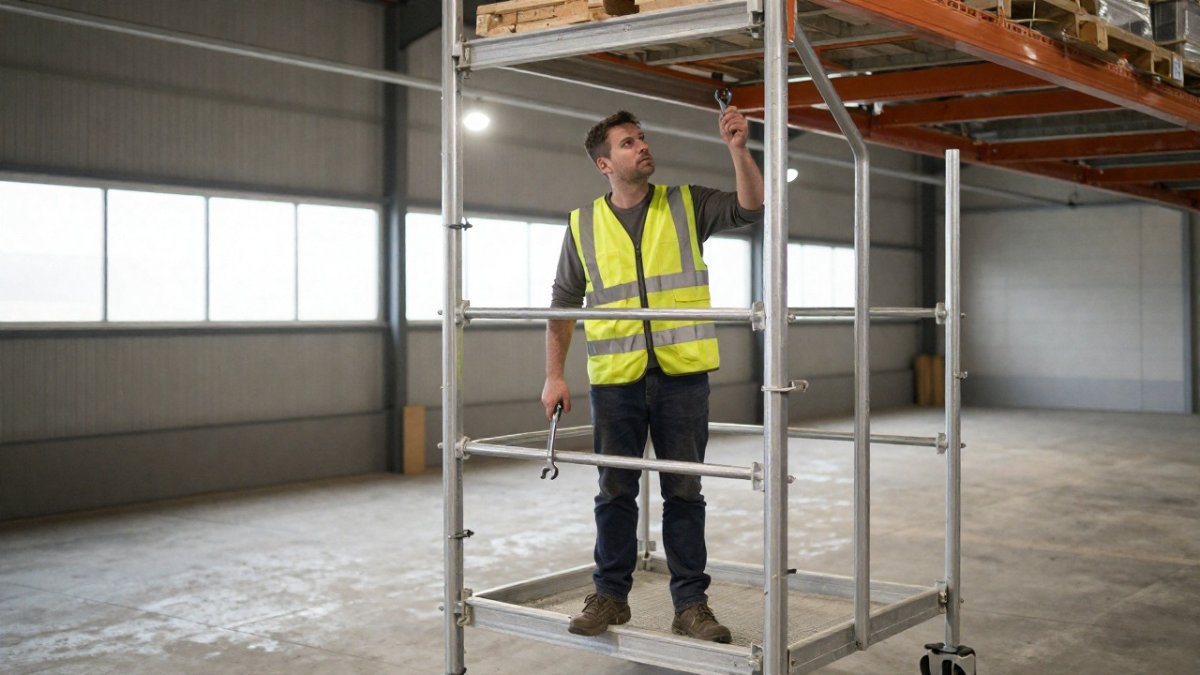
Set-up checks include levelling the base, locking the castors, confirming the platform is clear of loose items and checking for a horizontal brace in the correct position. Our guide to horizontal braces explains what they do, where they fit and how to spot one that is missing. A horizontal brace is a frame member that stops the tower racking sideways, and a missing brace is one of the most common reasons a tower becomes unstable. Staff should be able to identify it and know that a tower without one should not be used.
Ladders, stepladders and when a tower is the right choice
Ladders suit short, low-risk tasks where three points of contact can be maintained. For longer tasks, heavy materials or work requiring both hands, a tower gives a more stable working position. The choice should be recorded in the risk assessment rather than left to individual judgement.
Choosing Between Eliminating, Preventing and Minimising Falls
Where possible, eliminate the need to work at height. Lower-level alternatives, such as pre-assembled kits or ground-based cleaning equipment, remove the risk altogether.
Where work at height cannot be avoided, prevent falls with guardrails, edge protection or a properly rated working platform. Only where prevention is not reasonably practicable should you rely on fall-arrest systems, and those require a rescue plan. A suspended worker can suffer harm within minutes, so rescue must be planned before the work starts, not improvised afterwards.
Course Length, Refreshers and Keeping Training Records
Course length depends on the equipment and the training provider, so confirm the duration and content with the provider before booking.
Refresher training and reassessment serve different purposes. Refresher training updates knowledge and reinforces good practice; reassessment checks that the person can still demonstrate competence.
Retraining is needed after any incident, change of equipment or change of task. If someone moves from a stepladder to a mobile tower, their ladder training does not cover the new equipment; they need practical training and assessment on the tower.
Keep a record for each person showing the course taken, the date, the assessor and the equipment covered. Records are your evidence of competence if an inspection or claim follows.
Watch out: a certificate on file is not proof of competence. If the record does not show what the person was assessed on and when, it will not demonstrate that they were competent for the task they were actually doing.
Booking Your Team's Training and Equipment Checks
Match training to the roles in your matrix, schedule refreshers before they lapse, and inspect equipment before each use. Leader Pro Scaffold Towers stocks aluminium scaffold towers suited to logistics maintenance teams, along with spare parts so that a damaged component does not leave a team waiting. Our team can also advise on which tower suits your site, including how high a mobile tower can safely go and how to set up and inspect one.
Frequently Asked Questions
Who needs work at height training in a logistics workplace?
Anyone who may work at height in the course of their job needs suitable training under the Work at Height Regulations 2005. In logistics that usually includes warehouse operatives who climb racking or use stepladders, drivers and loaders who work on trailer roofs or tail-lifts, and staff who operate or move mobile access towers. Supervisors who plan or oversee this work also need enough knowledge to make safe decisions. Agency and temporary workers are covered too, so the hiring business must confirm they are competent before they start. The level of training should match the task, and an employer should record who has been trained for which equipment.
Is work at height training a legal requirement for logistics staff?
The Work at Height Regulations 2005 do not name a specific certificate, but they require employers to ensure that people working at height are competent, or are supervised by someone who is. Training is the usual way to show that competence. The Health and Safety Executive, which enforces the regulations, expects employers to be able to demonstrate how their staff were trained and assessed. A recognised course can support that evidence, but it does not replace a site-specific assessment of whether each person can carry out the task safely.
How often should work at height training be refreshed?
There is no fixed legal refresher interval in the Work at Height Regulations, so employers set one based on risk, workload and any changes to equipment or procedures. Many organisations review competence annually, and sooner after an incident, a near miss, a new piece of equipment or a change of role. A refresher should include practical reassessment as well as theory. Keep records of the date, content and outcome of each session so that you can show when competence was last confirmed.
Do logistics staff need separate training to use mobile access towers?
Yes, in most cases. A general work at height course does not automatically cover the erection, inspection, movement and dismantling of a mobile access tower, which has its own manufacturer instructions and set-up rules. Operators should be trained on the specific tower type they will use, including stabilisers, guardrails, platform loading and safe movement on level ground. Many UK employers use recognised tower training, and the process should be checked against the manufacturer's instructions and the Work at Height Regulations.
What should work at height training cover for warehouse and transport staff?
Training should explain the legal duties, how to identify fall hazards on site, and how to choose the safest method of access. For warehouse and transport staff this means loading bays, trailer roofs, racking, pallet stacks and vehicle access points. It should also cover the correct use of ladders, stepladders and towers, inspection before use, fall-arrest or restraint equipment where it is needed, and what to do if someone falls. Practical assessment matters as much as classroom learning, so trainees should demonstrate the tasks they will actually carry out.
What should a logistics work at height risk assessment include?
A suitable assessment identifies each task that involves working at height, the fall hazards present, and the people exposed to them. It should record the controls in order of the hierarchy: avoid work at height where possible, use equipment that prevents falls, and only then use measures that minimise the consequences of a fall. Include loading bay edges, trailer roofs, mezzanines and unstable surfaces, and state who is competent to carry out each task. Review the assessment when the layout, equipment or workload changes, and share the findings with the staff involved.
How long does a work at height training course take?
Course length varies by provider and by the depth of practical content. Short awareness sessions may last a few hours, while courses that include practical handling of ladders or towers often run for a full day. Ask providers to confirm what is taught, how competence is assessed and whether the course covers the equipment your staff use. Length alone does not show competence, so check that the course includes a practical assessment and that you can reassess trainees on site.