 How-to
7 Fall Prevention Steps for Commercial Exterior Repairs
Last Updated: 24 October 2026
Quick Summary
Fall prevention during commercial building exterior repairs starts with a written working at height risk assessment completed before anyone leaves the ground. It must cover the task and height, the ground below, suitable certified access equipment, weather limits and who is competent to erect and use the equipment.
- Ladders should be a last resort, used only for short-duration tasks.
- Check that a scaffold tower is certified to BS EN1004 before use.
- Inspect towers before first use, before each shift and at formal intervals.
- Set a wind speed limit in the assessment and stop work when gusts approach it.
- Everyone who erects, alters or uses a tower usually needs a PASMA qualification.
Table of Contents
- Fall Prevention Starts With a Working at Height Risk Assessment
- Step 1: Choose the Right Access Equipment for the Repair
- Step 2: Get Scaffold Tower Safety Right Before Anyone Climbs
- Step 3: Set Up a Work-at-Height Equipment Inspection Routine
- Step 4: Plan for Weather Risks When Working at Height
- Step 5: Train the Team and Enforce Fall Protection on Site
- Common Mistakes That Undermine Fall Prevention
- Kit Out Your Next Exterior Repair With a Compliant Tower
- Frequently Asked Questions
Fall Prevention Starts With a Working at Height Risk Assessment
Fall prevention during commercial building exterior repairs begins with a written risk assessment completed before anyone leaves the ground.
A working at height risk assessment is a documented review of every task performed above ground level, the height involved, the surface below, and the controls that make the job safe. It is a legal duty, not a formality. The Health and Safety Executive's guidance on working at height sets out the hierarchy employers must follow: avoid work at height where possible, prevent falls where it cannot be avoided, and reduce the distance and consequences of a fall where prevention is not feasible.
What the Assessment Must Cover
Keep the document practical. A useful assessment answers five questions:
- What is the task, and at what height will it be carried out?
- What is the ground like below, and who else could be affected?
- Which access equipment suits the job, and is it certified?
- What weather conditions would stop the work?
- Who is competent to erect, use and dismantle the equipment?
Write it down, share it with the crew, and review it when conditions change. A generic template copied from another job protects nobody.
Step 1: Choose the Right Access Equipment for the Repair
Equipment choice decides how much fall risk you carry. For most exterior repairs on commercial buildings, an aluminium scaffold tower gives a stable working platform with guardrails at the right height. Ladders should be a last resort for short-duration tasks only.
Match the tower to the job, not the other way round. Check the maximum platform height, the duty rating, and whether the tower is certified to BS EN1004. If your team handles electrical work near overhead services, a non-conductive GRP tower is the safer option.
Two practical checks before you commit:
- Confirm the tower reaches the working area without exceeding its rated height. Our guide on how high a scaffold tower can safely go explains the limits for outdoor use.
- Compare platform sizes and duty ratings across the industrial scaffold tower range if the repair involves heavy tools or multiple workers.
Step 2: Get Scaffold Tower Safety Right Before Anyone Climbs
Scaffold tower safety comes down to assembly discipline. Our guide to the most common scaffold tower assembly mistakes lists what to check before anyone climbs. Most tower incidents trace back to a missing brace, an unlocked castor, or stabilisers left in the van. None of those are exotic failures. They are rushed ones.
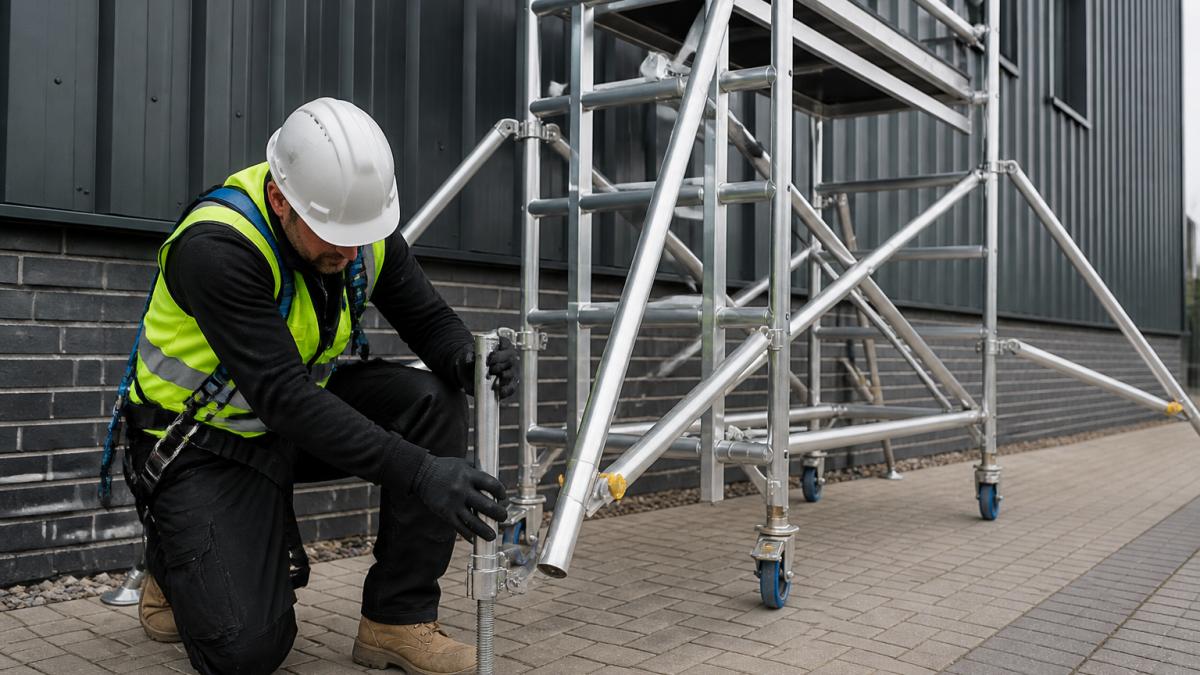
Work through this sequence every time:
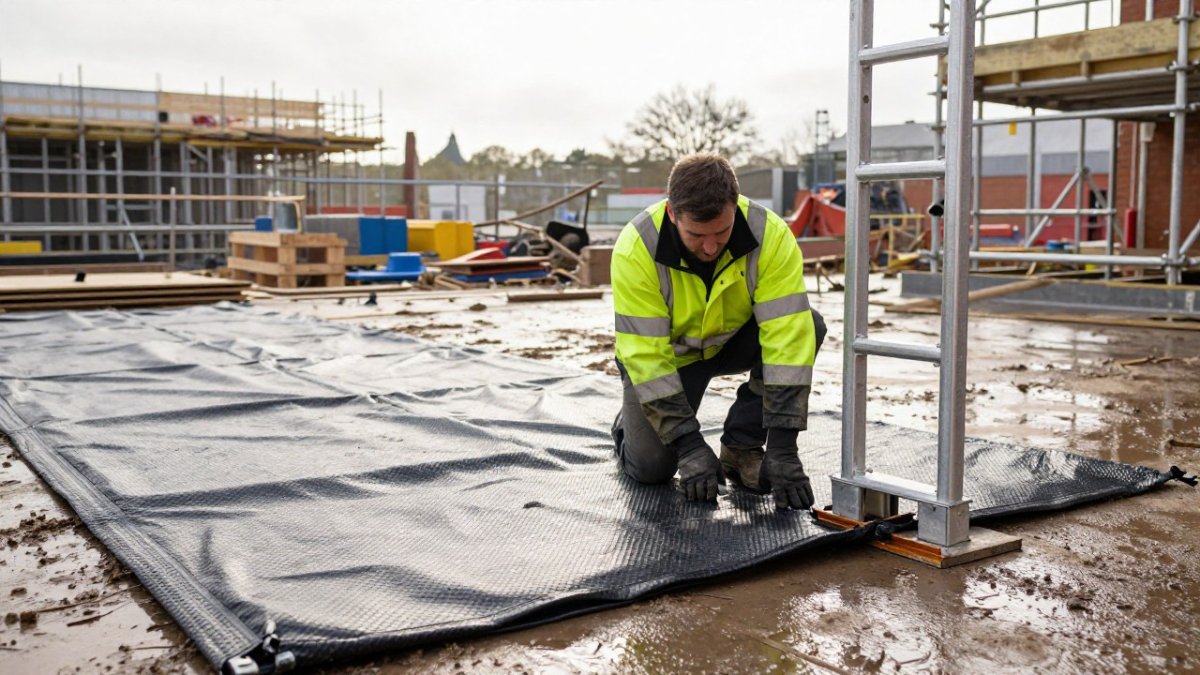
- Build on firm, level ground and use base plates or castors rated for the load.
- Fit stabilisers or outriggers as specified for the tower height.
- Lock every castor before climbing.
- Install guardrails, mid-rails and toe boards at every platform level.
- Never climb a partially built tower to add the next section.
Our guide on when outriggers are required explains how stability changes with height.
Step 3: Set Up a Work-at-Height Equipment Inspection Routine
Work-at-height equipment inspection is a routine, not a one-off. Every tower needs checks at three points: before first use, before each shift, and at formal intervals by a competent person. Record each one.
Pre-Use Checks vs Formal Inspections
Pre-use checks take minutes and catch the obvious: cracked welds, bent braces, missing pins, damaged guardrails, worn castors. The person erecting the tower does these.
Formal inspections go further. A competent person examines the whole structure, documents the findings, and signs it off. Keep the records on site. If an inspector or client asks for evidence, you should be able to produce it without a phone call.
Tag any component that fails a check and remove it from service. A tower with a suspect brace is not a tower.
Step 4: Plan for Weather Risks When Working at Height
Weather risks when working at height stop more jobs than any other factor, and they are the easiest to plan for. Wind is the main one. A tower acts like a sail, and gusts at platform height are stronger than at ground level.
Set a wind speed limit in your assessment and stick to it. Stop work and descend if gusts approach the limit. Rain makes platforms and rungs slippery, and lightning makes any metal structure a hazard.
Build these into the daily briefing:
- Check the forecast before mobilising, not after.
- Secure or dismantle towers overnight if high winds are expected.
- Never sheet or wrap a tower unless the manufacturer permits it for that wind loading.
Step 5: Train the Team and Enforce Fall Protection on Site
Training is where fall prevention either holds or collapses. Everyone who erects, alters, dismantles or uses a tower needs the competence to do it safely. For tower work, that usually means a recognised PASMA qualification. Our guide on what PASMA is explains what the training covers.
Fall protection on site means more than a harness. It means guardrails fitted correctly, a rescue plan if someone does fall, and a supervisor who stops the job when shortcuts appear. The Work at Height Regulations place duties on employers and those in control of the work, and enforcement starts with visible competence.
Common Mistakes That Undermine Fall Prevention
The same handful of mistakes show up again and again. Here is what to watch for, and what each one costs you.
| Mistake | Why it happens | The fix |
|---|---|---|
| Tower built on soft or sloping ground | Rushing to start | Use base plates and check level first |
| Stabilisers left off | Assumed optional | Fit them per the height chart, every time |
| Castors not locked | Overlooked in the rush | Make it the last step before climbing |
| No inspection records | Seen as paperwork | Log pre-use and formal checks on site |
| Working past the wind limit | Deadline pressure | Set the limit in the assessment and enforce it |
A common mistake is treating the risk assessment as a document for the client rather than a tool for the crew. The crews that work safest are the ones who read it.
Kit Out Your Next Exterior Repair With a Compliant Tower
Safe exterior repairs start with equipment you can trust and a team trained to use it. That combination is what we supply at Leader Pro Scaffold Towers: BS EN1004-certified aluminium towers built for professional use, manufacturer-direct pricing, and next-day delivery so a job never waits on kit.
Get started with Leader Pro Scaffold Towers and put a compliant, stable platform under your next exterior repair.
Frequently Asked Questions
How can falls be prevented during commercial building exterior repairs?
Start with a working at height risk assessment that identifies every task, the height involved and the surface below. Choose access equipment that suits the job, such as a BS EN1004-certified scaffold tower for façade work, and make sure anyone using it is trained and competent. Build in pre-use checks and formal inspections, plan around weather, and enforce guardrails and fall protection. Fall prevention works when these controls are planned before work starts, not added once someone is already at height.
What should a work-at-height risk assessment include?
It should record the task, the height and duration, who will do the work, and the ground conditions beneath the work area. List the access equipment chosen and why, plus the fall protection measures in place. Include emergency arrangements for getting an injured worker down, and note any weather limits. Review it whenever the job, the site or the team changes. Keep it on site so operatives and visiting supervisors can check it, and update it if the scope of the repair shifts.
How often should access equipment be inspected before use?
Scaffold towers and other work-at-height equipment need a visual check by a competent person before every use, covering braces, guardrails, platforms, castors and stabilisers. Formal inspections should follow at intervals set by your risk assessment, and always after any alteration, damage or high winds. Record every inspection with the date, findings and the name of the person who carried it out. Damaged components should be taken out of service immediately before the tower goes back up.
How can weather conditions affect exterior repair work at height?
Wind is the main risk: it loads the tower, catches large façade panels and makes platforms unstable, so work should stop when gusts exceed the limits in your assessment or the manufacturer's instructions. Rain makes platforms and ladder rungs slippery, and ice or snow creates an immediate slip hazard. Lightning near tall structures is a stop-work condition. Check the forecast before mobilising, secure or dismantle towers ahead of forecast gales, and record any weather-related stoppage in the site diary.