 How-to
How to Choose the Right MEWP for Construction Work
Table of Contents
- Start With a Site Assessment and Task Requirements
- Scissor Lift vs Boom Lift: Matching the MEWP Type to the Job
- Checking MEWP Ground Conditions, Slope and Stability
- Platform Capacity, Power Source and Site Logistics
- A Working-Height and Access Measurement Worksheet
- MEWP Selection Checklist Before You Hire or Buy
- Booking Your MEWP Hire or Purchase Through Leader Pro
- Frequently Asked Questions
Start With a Site Assessment and Task Requirements
Last Updated: November 2, 2026

Learning how to choose the right MEWP for construction work starts before you look at a single machine.
Walk the site first. Before you measure, learn the difference between platform height and working height so you record the right figures.
!Site supervisor and operative walking a building site with a tape measure and clipboard, looking up at a section of the facade being assessed for access
Working Height and Platform Height
Working height and platform height are not the same thing. Platform height is how high the floor of the work platform sits. Working height adds the reach of the operative, so it shows the highest point the worker can reach.
- Measure the highest point the task requires
- Add the operative's reach to that figure
- Choose a machine whose working height exceeds this total with margin to spare
A common mistake is matching platform height to the ceiling height. That leaves no room for the person to work safely at the top.
Horizontal Outreach and Access Around Obstacles
Horizontal outreach is how far the platform can extend sideways from the machine's base. It matters when you need to work over a skip, a fence or a wall. Measure the distance from the closest safe parking point to the furthest point of work, then compare it with the machine's stated outreach.
Scissor Lift vs Boom Lift: Matching the MEWP Type to the Job
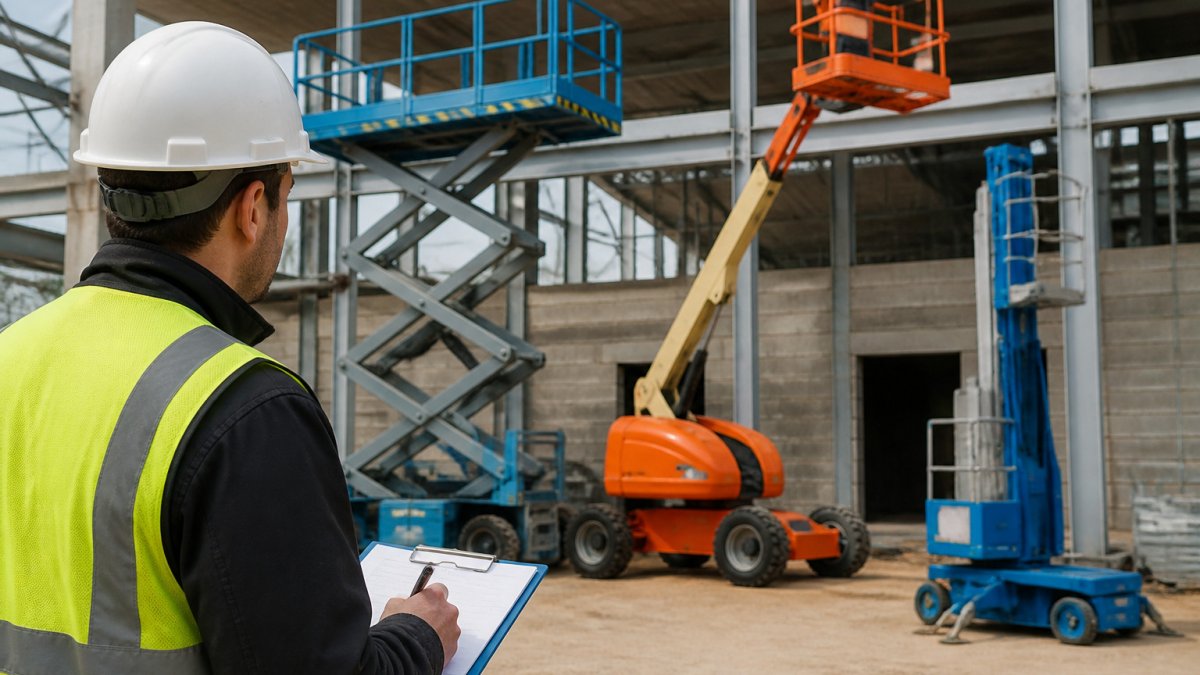
Scissor lifts rise straight up and suit flat, firm surfaces where the task sits directly above the machine. Boom lifts raise and extend an arm, so they reach over obstacles and work away from the base. Picking the wrong type is one of the most frequent and costly selection errors, so match the machine to the task rather than to the headline working height.
MEWP Types and Their Typical Uses
- Scissor lifts: vertical access for ceilings, electrical fit-out, sprinkler installation, cladding over open floors and internal maintenance. They offer a large platform and high capacity but cannot reach over an obstruction.
- Boom lifts (articulating and telescopic): reaching over walls, around structures, onto sloping work faces and to points offset from the base. Articulating booms bend at the knuckle for up-and-over access; telescopic booms give straight-line reach and height.
- Vertical mast lifts: narrow spaces and tight internal access, such as lift shafts, atria and retail units, where a scissor lift will not fit.
- Trailer-mounted and vehicle-mounted booms: rapid deployment across multiple sites or where a self-propelled machine cannot be transported economically.
Task-Led Comparison for Common Construction Jobs
| Task | Usual first choice | Why |
|---|---|---|
| Ceiling and soffit work in an open floor plate | Scissor lift | Large platform, high capacity, vertical rise |
| Cladding or glazing over a finished façade | Boom lift | Outreach clears the façade and keeps the base away from the wall |
| Steel erection and bolting at height | Boom lift | Reach to offset connection points |
| Internal fit-out in a tight retail unit | Vertical mast lift | Compact footprint and low floor loading |
| Work over a skip, fence or plant room | Boom lift | Horizontal outreach over the obstruction |
| Multiple short-duration tasks across a site | Trailer-mounted boom | Fast set-up and easy towing between locations |
Indoor Versus Outdoor Use
Indoor machines need compact dimensions, low emissions and non-marking tyres. Outdoor machines need greater stability, weather resistance and rough-terrain capability. Confirm which environment your task falls into before you compare specifications, because a machine rated for indoor use may not be rated for wind exposure outdoors, and an outdoor rough-terrain machine may be too wide for an internal doorway.
Power Source, Emissions and Noise Constraints
Power source is now a selection criterion in its own right, not an afterthought.
- Electric (battery) machines: suit indoor work and sites with emission or noise restrictions. Check the battery's duty cycle against the shift length, because a machine that runs out mid-shift creates downtime that outweighs any hire saving.
- Hybrid machines: combine a small engine with battery power, allowing indoor operation on battery and outdoor operation with the engine, which suits sites that move between internal and external work.
- Engine-powered (diesel or petrol) machines: suit rough terrain and remote sites where charging is impractical, but check local low-emission zone rules and any site-specific emission limits before booking.
- Noise: electric machines are markedly quieter, which matters for work near occupied buildings, hospitals or residential areas where permitted working hours may be restricted.
Watch out: a battery machine specified for a short task can be the wrong choice for a full shift of continuous work, so confirm the duty cycle and charging arrangements before you commit.
Moving from Requirements to a Shortlist
Use your site assessment to narrow the field in this order: first, does the task need vertical rise only or outreach over an obstacle; second, does the environment demand electric power or allow engine power; third, do the ground conditions and access route suit the machine's dimensions and point loads. That sequence usually reduces the choice to two or three models, which you can then compare on platform capacity, hire cost and availability.
Checking MEWP Ground Conditions, Slope and Stability
Ground conditions decide whether a machine is safe to use at all. Check the safe maximum height and how stabilisers affect it before you settle on a model. Soft ground, uneven surfaces or slopes can tip a loaded platform, and the consequences are far worse than a delayed programme. Check the ground bearing capacity and the maximum slope rating in the manufacturer's documentation before you select a machine.
Ground Bearing Capacity and Point Loading
Ground bearing capacity is the load the surface can carry per square metre. It is not the same as the machine's gross weight divided by its footprint, because a MEWP transfers its load through outriggers, wheels or tracks onto small contact patches, which create point loads well above the average pressure.
- Ask the hire company for the machine's maximum wheel or outrigger load, usually quoted in kilonewtons (kN) or kilograms per contact point
- Compare that figure with the ground bearing capacity of the surface, which for a made-up concrete slab may be sufficient, but for compacted fill, tarmac in warm weather or a suspended floor may not be
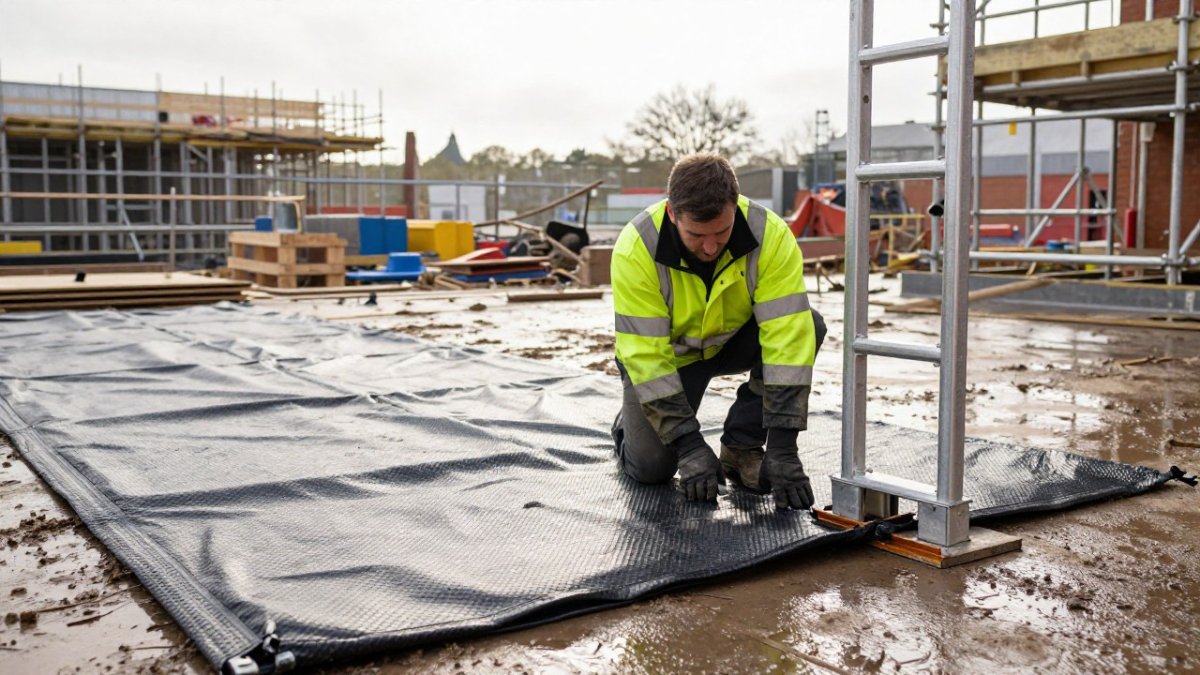
- Where the surface is doubtful, use spreader boards or ground protection and confirm the machine's limits in writing
Watch out: a machine that is stable on a concrete apron can punch through a tarmac car park or a suspended ground-floor slab, so never assume a hard-looking surface is a load-bearing one.
Slope, Terrain and Rough-Terrain Ratings
Rough-terrain machines are built for uneven, unpaved sites, but they still have limits. Manufacturer documentation states a maximum slope rating for travel and a separate, usually lower, rating for operation with the platform raised. Those figures are not interchangeable.
- Measure the actual slope with a digital inclinometer rather than judging it by eye; a slope that looks gentle can exceed a machine's operating limit
- Check both the side-to-side and front-to-back slope, because a machine may tolerate one direction better than the other
- Confirm the machine's tyres or tracks suit the surface; pneumatic tyres suit firm uneven ground, while tracked machines spread load better on soft ground but can damage finished surfaces
- Keep the platform lowered while travelling on any slope, and follow the manufacturer's travel procedure
Indoor Floors and Suspended Slabs
Indoor work introduces a different ground problem: the floor may be a suspended slab with a published imposed load limit, often expressed in kilonewtons per square metre. A loaded scissor lift concentrates its weight on four small wheels, so the local pressure can exceed the slab's design load even when the total weight seems modest. Where the slab rating is unknown, ask the building's structural engineer or the facilities team before positioning the machine, and use load-spreading pads under the wheels as a minimum precaution.
Verifying Ground Conditions Before the Machine Arrives
Record the ground findings on the same site walk as your height and access measurements. Note the surface type, the measured slope, any drains, manholes or basements that could collapse under a wheel, and the location of any suspended slabs. Share those notes with the hire company so they can recommend a machine whose point loads and slope ratings suit the site, rather than discovering the mismatch on delivery day.
Platform Capacity, Power Source and Site Logistics
The platform carries people, tools and materials, and the total must stay within the safe working load. Add up the weight of each operative, their kit and the materials before you choose a model. See which tower suits repeated low-level access and storage for maintenance teams.
- Check the platform's safe working load against the real total
- Choose electric machines for indoor work to limit emissions and noise
- Confirm the delivery route, the lift access and where the machine will be stored
A Working-Height and Access Measurement Worksheet
When you work through how to choose the right MEWP for construction tasks, use this worksheet to record the figures you need before you hire or buy:
| Measurement | Your Figure | Notes |
|---|---|---|
| Highest point of work | ____ m | Add operative reach (about 2 m) |
| Required working height | ____ m | Compare with machine working height |
| Horizontal outreach needed | ____ m | Distance from base to furthest point |
| Ground surface and slope | ____ | Firm, soft, rough or sloped |
| Access width and door height | ____ m | Check the machine fits through |
| Platform load (people, tools, materials) | ____ kg | Stay within safe working load |
MEWP Selection Checklist Before You Hire or Buy
Before you commit, confirm each point:
- Working height covers the highest task point plus operative reach
- Horizontal outreach clears all obstacles
- Machine type matches the task (scissor or boom)
- Ground bearing capacity and slope rating suit the site
- Platform load capacity covers people, tools and materials
Operator competence matters as much as the machine. Review your legal duties under the Work at Height Regulations before you finalise the selection. Make sure every operator is trained and familiar with the controls before the first lift.
Booking Your MEWP Hire or Purchase Through Leader Pro
Once you have your measurements and machine type, you are ready to compare options. Visit the Leader Pro Scaffold Towers website for current prices, or contact our team for a quote, since costs depend on quantity, dates and delivery. You can also view the guardrail-equipped tower range that matches your working height.
Frequently Asked Questions
How do I choose the right MEWP for a construction project?
Start with the task, not the machine. Note the highest point you need to reach, the horizontal distance to the work, the floor loading and the ground conditions, then add the weight of the operative, tools and materials. Those figures narrow the choice to a MEWP type and size. Check the manufacturer's rated platform capacity and working height against your numbers, and confirm that the machine suits indoor or outdoor use. Pricing depends on hire length, delivery and availability, so request a current quote from Leader Pro Scaffold Towers before you commit.
What is the difference between a scissor lift and a boom lift?
A scissor lift raises its platform straight up through a crossed-arm mechanism, which gives a stable working platform with good capacity but limited horizontal outreach. It suits flat, firm floors and indoor or open-site work where the task sits directly above the machine. A boom lift uses an articulating or telescopic arm, so it can reach over obstacles and work at an angle to the base. It is the better choice for outreach around walls or structures, but it needs more careful ground and stability checks.
How do I calculate the working height I need from a MEWP?
Measure the height of the work surface above the ground, then add the operative's reach and an allowance for the platform's guard rails and the operative's standing height. Compare the total with the machine's maximum platform height, not its maximum working height, which is usually higher. Allow a margin for uneven ground and any obstructions overhead. Record these figures on a simple worksheet so the hire or purchase decision can be checked against them before delivery.
Can a MEWP be used on uneven ground?
Only if the machine is rated for the terrain and the ground can carry its loads. Check the manufacturer's maximum slope rating, the ground bearing capacity and the presence of soft spots, voids or drainage channels. Use load-spreading boards where the surface is weak, and never work on a slope beyond the rated limit. Where conditions are doubtful, have the site assessed before the machine arrives and agree on a safe access route for delivery.