 How-to
How to Spot Counterfeit Scaffold Tower Safety Tags
Last Updated: 1 November 2026
Quick Summary
You spot counterfeit scaffold tower safety tags by checking for a unique serial number, a named and signed inspector, a next-due date, and a tamper-evident fixing with a hologram or security mark. Fake tags usually show blurry or handwritten print, missing inspector details, or a next-due date that has already passed. Always cross-check the tag against the tower's asset number and handover certificate.
- A genuine tag must show a unique serial number, inspection date and next-due date.
- Fake tags often have blurry or handwritten print and no security mark.
- A tag claiming stabilisers when none are fitted is a clear warning sign.
- Take any tower with a fake or missing tag out of use immediately.
- Ask the supplier for a handover certificate that matches the tag.
Table of Contents
- Why Counterfeit Scaffold Tower Safety Tags Put Crews at Risk
- What a Genuine Scaffold Tower Safety Tag Should Show
- Visual Clues: Genuine vs Counterfeit Tags Side by Side
- Cross-Checking a Tag Against the Scaffold Tower Inspection Checklist
- Scaffold Tower Inspection Frequency and What It Means for Tag Validity
- The Scaffold Tower Handover Certificate: The Tag's Paper Trail
- Keeping Scaffold Tower Inspection Records That Expose Fakes
- What to Do When a Tag Looks Fake or Is Missing
- Frequently Asked Questions
Why Counterfeit Scaffold Tower Safety Tags Put Crews at Risk
A safety tag is the first thing you should check before anyone climbs a scaffold tower. Yet fake tags are easy to buy and easy to miss, and a counterfeit tag tells you nothing about whether the tower is safe. This guide explains how to spot counterfeit scaffold tower safety tags before they put your team in danger.
The risk is not abstract. A tag is a claim that someone inspected the tower and found it fit for use. When that claim is false, the tower may have cracked welds, missing braces, or worn locking pins, and nobody has checked. The Health and Safety Executive guidance on work at height is clear that employers must ensure equipment is inspected and maintained. A fake tag breaks that chain of responsibility.
The problem is growing because tags are cheap to copy. A printed card and a laminate pouch cost pennies. Nothing stops a dishonest supplier from issuing tags with no inspection behind them.
- A fake tag hides real defects in the tower
- It creates false confidence before a climb
- It leaves you exposed if an incident is investigated
- It can void insurance cover if records do not match
The good news: counterfeit tags are usually obvious once you know what to look for.
What a Genuine Scaffold Tower Safety Tag Should Show
A genuine safety tag is a durable, tamper-evident record of a specific inspection on a specific date. It is not a generic sticker. It should be attached to the tower, legible, and impossible to swap without leaving a mark.
Mandatory fields on a compliant tag
Every authentic tag should carry the same core information. If any of these are missing, treat the tag as suspect:
- A unique tag or serial number
- The tower's identification or asset number
- The date of the last inspection
- The date the next inspection is due
- The name and signature of the competent inspector
- The result: pass, fail, or conditional
- The standard the tower is built to, such as BS EN 1004 (BS EN 1004)
- The issuing company's name and contact details
A tag without an inspector's name is a red flag. So is one with no next-due date. Both suggest nobody is tracking the tower's condition.
Physical security features to check
Genuine tags are built to resist copying and tampering. Look for:
- A hologram or printed security mark
- A laminate or pouch that cannot be peeled and re-sealed
- A fixing method that shows damage if removed
- Consistent print quality, not smudged or handwritten
- A QR code or reference that links to a real record
If the tag looks like it came off a home printer, it probably did.
Visual Clues: Genuine vs Counterfeit Tags Side by Side
The fastest way to judge a tag is to compare it with a known genuine one. Print quality, fixing method, and data consistency give fakes away almost every time.
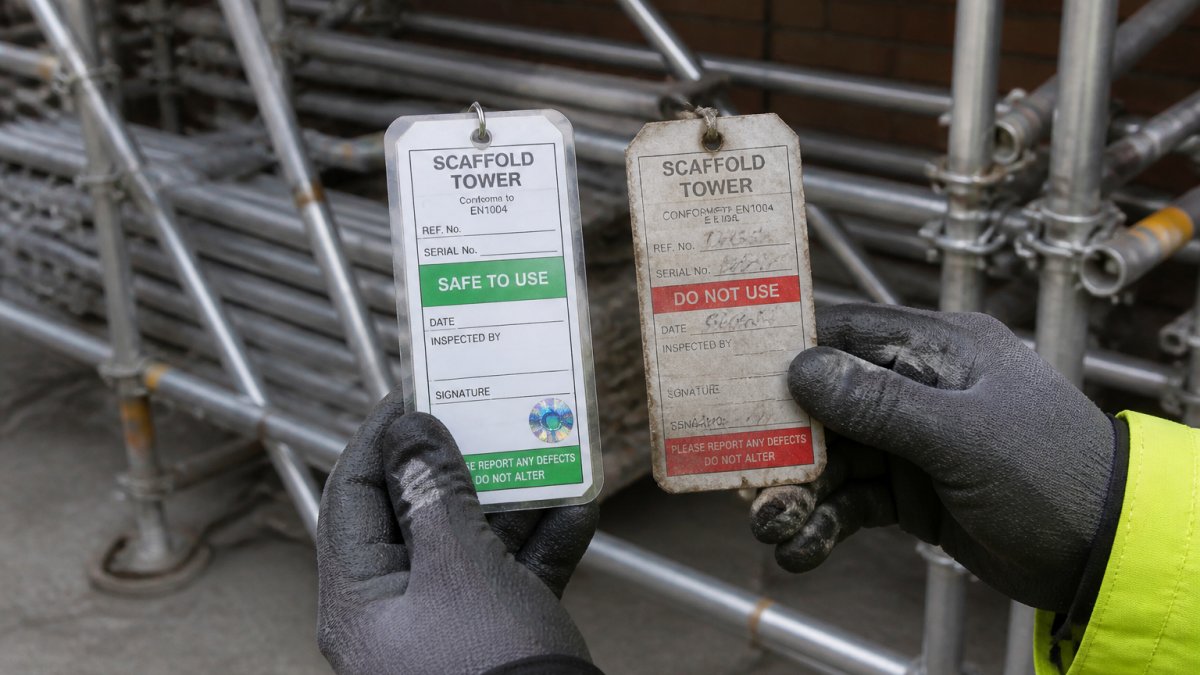
Here is how the two usually differ:
| Feature | Genuine tag | Counterfeit tag |
|---|---|---|
| Print quality | Sharp, consistent | Faded, blurry, or handwritten |
| Security mark | Hologram or printed seal | None, or a plain sticker |
| Fixing method | Tamper-evident | Loose cable tie or tape |
| Inspector details | Named and signed | Blank or generic |
| Next-due date | Clearly stated | Missing or already passed |
| Serial number | Unique and traceable | Repeated or absent |
A common mistake is to trust a tag because it looks official. Fakes are designed to look official. The details are where they fall apart.
Cross-Checking a Tag Against the Scaffold Tower Inspection Checklist
A tag only proves something if it matches the tower it is attached to. Cross-check the tag against the physical structure using a scaffold tower inspection checklist. If the tag says one thing and the tower shows another, stop work.
Run through these checks:
- Does the tag's asset number match the tower's markings?
- Is the stated height and configuration plausible for this tower?
- Are stabilisers and outriggers fitted as the tag describes?
- Do the braces, pins, and locking clips match the tag's pass result?
- Is the tag fixed where it cannot be swapped between towers?
Outriggers are a frequent omission on fake tags. A tag that claims a stable setup while the tower has no stabilisers fitted is a clear warning. Our guide on when scaffold tower outriggers are required explains the setups that need them.
Watch out: never accept a tag that lists a tower height or setup the physical tower cannot match. That mismatch is the single clearest sign of a fake.
Scaffold Tower Inspection Frequency and What It Means for Tag Validity
Scaffold tower inspection frequency is set by the risk and the conditions, not by a fixed calendar. A tag that has gone past its next-due date is invalid, however genuine it looks. Towers are typically inspected before first use, after any alteration, and at regular intervals while in use.
The Work at Height Regulations 2005 set out the duties that drive inspection schedules. A tag with no next-due date cannot support that duty.
So a valid tag has a short shelf life. If the next-due date has passed, the tag is worthless. If the date is missing, treat it as expired. Our article on how high a scaffold tower can safely go also shows why the stated height and setup on a tag must match reality.
The Scaffold Tower Handover Certificate: The Tag's Paper Trail
A scaffold tower handover certificate is the document that backs up the tag. The tag is the summary; the certificate is the proof. If a tag exists but no certificate does, the tag has no paper trail and should be questioned.
A handover certificate should record:
- The tower's identification and location
- The date of handover and the inspection date
- The name of the competent person who inspected it
- The standard the tower meets
- Any limitations on use
- A signature from the person receiving the tower
Ask for the certificate whenever a tower arrives on site. If the supplier cannot produce one that matches the tag, the tag is not trustworthy. This is where counterfeit tags usually unravel: the paperwork never matches.
Keeping Scaffold Tower Inspection Records That Expose Fakes
Scaffold tower inspection records are your best defence against fakes. If your own records are thorough, a counterfeit tag stands out immediately because it will not line up with your log.
Keep a simple, consistent record for every tower:
- Asset number and location
- Inspection date and inspector name
- Result and any defects found
- Next inspection due date
- Photo of the tag at each inspection
Compare every new tag against your log. A serial number that does not appear, an inspector you cannot trace, or a date that clashes with your records all point to a fake. For the wider rules behind compliant tagging, see our safety and standards guides.
What to Do When a Tag Looks Fake or Is Missing
If a tag looks fake or is missing, take the tower out of use immediately. Do not climb it, and do not let anyone else climb it. Quarantine it, label it as out of service, and report it to your supervisor.
Then follow these steps:
- Photograph the tag and the tower for your records.
- Check for a handover certificate that matches.
- Ask the supplier to confirm the tag's origin in writing.
- Have a competent person re-inspect the tower before any reuse.
- Replace any tower or component you cannot verify.
If the tower itself is suspect, replace it with equipment you can trust. For the legal duties behind tag checks, read our guide to the work at height regulations.
Frequently Asked Questions
What information should a scaffold tower safety tag show?
A compliant tag should state the tower's unique serial or asset number, the BS EN1004 standard it meets, the date of the last inspection, the name and signature of the competent inspector, the next inspection due date, and the maximum safe working load. It should also carry the manufacturer's name and any hologram or security feature. If any of these fields are missing, handwritten over, or inconsistent with the tower's frame stamp, treat the tag as suspect and quarantine the tower until it is verified.
How often should a scaffold tower be inspected and does that affect tag validity?
Under the Work at Height Regulations 2005, towers should be inspected before first use, after any event likely to affect stability, and at intervals not exceeding seven days while in use. A tag showing a last inspection date that is no longer within the interval set by your risk assessment is out of date regardless of how genuine it looks. Pair the tag date with your scaffold tower inspection records and the handover certificate to confirm the inspection actually took place.
What should you do if a scaffold tower tag looks fake or is missing?
Stop use immediately and tag the tower as out of service yourself. Do not let anyone access the platform until a competent person has inspected it and issued a fresh scaffold tower handover certificate. Photograph the suspect tag, record the serial number, and report it to your supplier and site manager. If the tower was bought as BS EN1004 certified, ask the supplier for the certificate of conformity and the original inspection paperwork before the tower goes back into service.
Can you use a scaffold tower while its inspection status is unclear?
No. If the tag is missing, damaged, or you cannot match it to a scaffold tower inspection checklist and current records, the tower must be treated as unsafe. The law requires a suitable and sufficient risk assessment before work at height, and an unverified tower fails that test. Isolate it, log it in your scaffold tower inspection records as out of service, and only release it once a competent person has re-inspected and re-tagged it.
Counterfeit tags thrive where records are loose and checks are skipped. Tighten both, and fakes lose their power. Leader Pro Scaffold Towers supplies BS EN 1004 aluminium towers with clear documentation, manufacturer-direct pricing, fast next-day delivery, and a full range of spare parts. Get started with Leader Pro Scaffold Towers and give every climb a tag you can actually trust.