 How-to
How Do You Test a Scaffold Tower for Stability?
Last Updated: 29 October 2026
Quick Summary
You test scaffold tower stability with three checks: a visual pre-use inspection of tubes, joints, pins, decks and guardrails; a physical push test at the top corner to confirm the tower settles rather than keeps moving; and a ground and bracing check covering base plates, stabilisers and level footing.
- Run the pre-use check every time the tower is built or moved, and tag out any fault.
- Use the same inspection checklist on assembly, after any move and at the start of each shift.
- Diagonal braces tie the frame together while stabilisers widen the base footprint.
- On slopes, level with adjustable legs and never with blocks of wood.
- Inspect after bad weather or any impact, and more often for tall towers and gusty conditions.
Table of Contents
- Scaffold Tower Stability Testing Methods That Actually Work
- Scaffold Tower Pre-Use Checks Before Anyone Climbs
- The Scaffold Tower Inspection Checklist for Stability
- Scaffold Tower Bracing and Stabilisers: What Holds It Upright
- Testing Stability on Slopes, Soft Ground and Paving
- Scaffold Tower Inspection Frequency: How Often Is Enough
- Ordering a Tower That Passes Every Stability Check
- Frequently Asked Questions
Scaffold Tower Stability Testing Methods That Actually Work
Scaffold tower stability testing methods are the checks and physical tests you carry out before and during use to confirm a tower will not tip, shift or collapse. Most tower failures trace back to a skipped check, not a faulty tower. A tower that is level, braced and footed correctly will stand firm. One that isn't can go over with a person on the platform.
So what does a proper stability test look like? It comes down to three things: a visual pre-use check, a physical push test, and a check of the ground and bracing. Below, we walk through each one step by step, plus the checklist and inspection routine that keep a tower safe through a full shift.
Scaffold Tower Pre-Use Checks Before Anyone Climbs
Before anyone climbs, the person assembling the tower must complete a pre-use check. This is a visual and hands-on inspection, done every time the tower is built or moved.
Work through these in order:
- Check every tube, frame and joint for bends, cracks or corrosion
- Confirm all locking pins and clips are fully seated
- Check the platform decks sit flat and hook on securely
- Look for missing guardrails, toe boards or braces
- Confirm the tower is on firm, level ground
- Check stabilisers or outriggers are fitted and locked off
If anything fails, tag the tower out. Do not patch a fault with tape or a loose pin. A common mistake is rushing the pre-use check because the tower "looked fine yesterday." Towers get moved, knocked and loaded between jobs. Yesterday's check tells you nothing about today.
The Scaffold Tower Inspection Checklist for Stability
A scaffold tower inspection checklist turns a vague "does it look alright?" into a repeatable pass or fail. Use the same list every time so nothing gets missed.
| Check | What to Look For | Pass Criteria |
|---|---|---|
| Ground conditions | Firm, level, drained surface | No soft spots or slopes |
| Base plates and feet | Flat contact, no sinking | Fully bearing on ground |
| Bracing | Diagonals fitted and locked | All braces in place |
| Stabilisers | Fitted, locked, correct height | No movement when pushed |
| Legs and adjusters | Level, pinned, not over-extended | Tower sits plumb |
| Guardrails and toe boards | All fitted at each level | No gaps or missing parts |
| Platform decks | Hooked on, flat, no damage | Fully seated |
| Locking pins | Seated in every joint | No loose or missing pins |
Run this checklist on assembly, after any move, and at the start of each shift. It takes a few minutes and catches the faults that matter.
Scaffold Tower Bracing and Stabilisers: What Holds It Upright
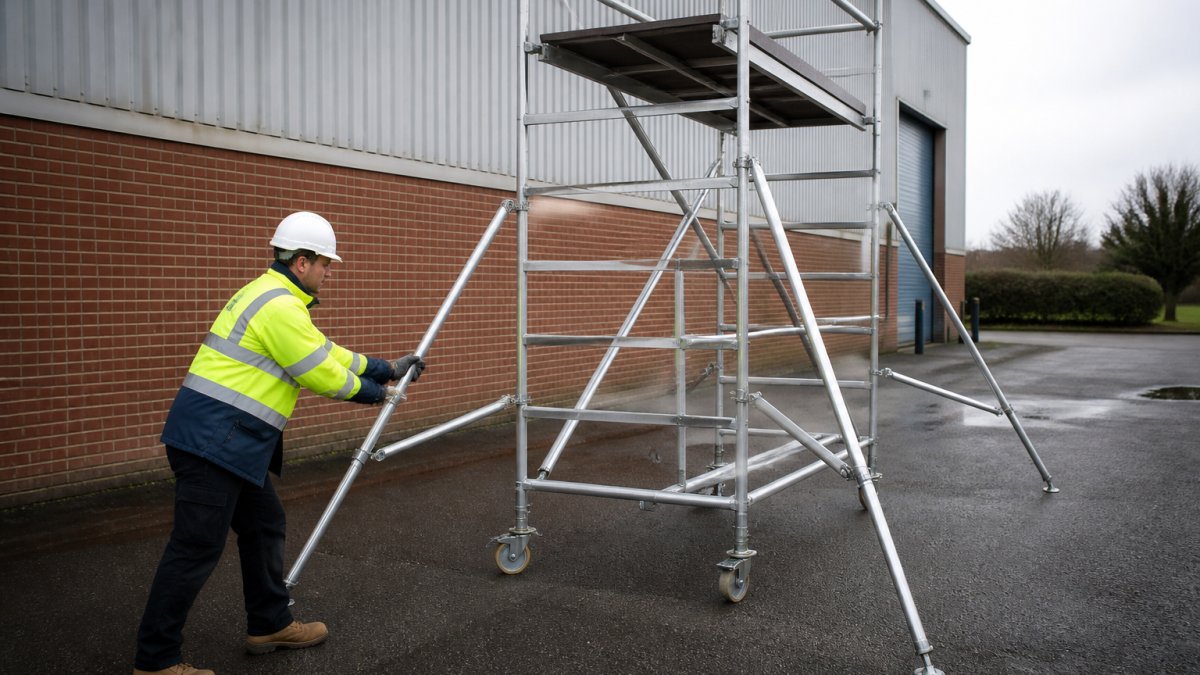
Bracing and stabilisers are what stop a tower swaying or tipping. You can buy the standard stabilisers that keep the tower upright and pass the stability check. Diagonal braces tie the frame together, while stabilisers widen the base footprint so the tower resists sideways force.
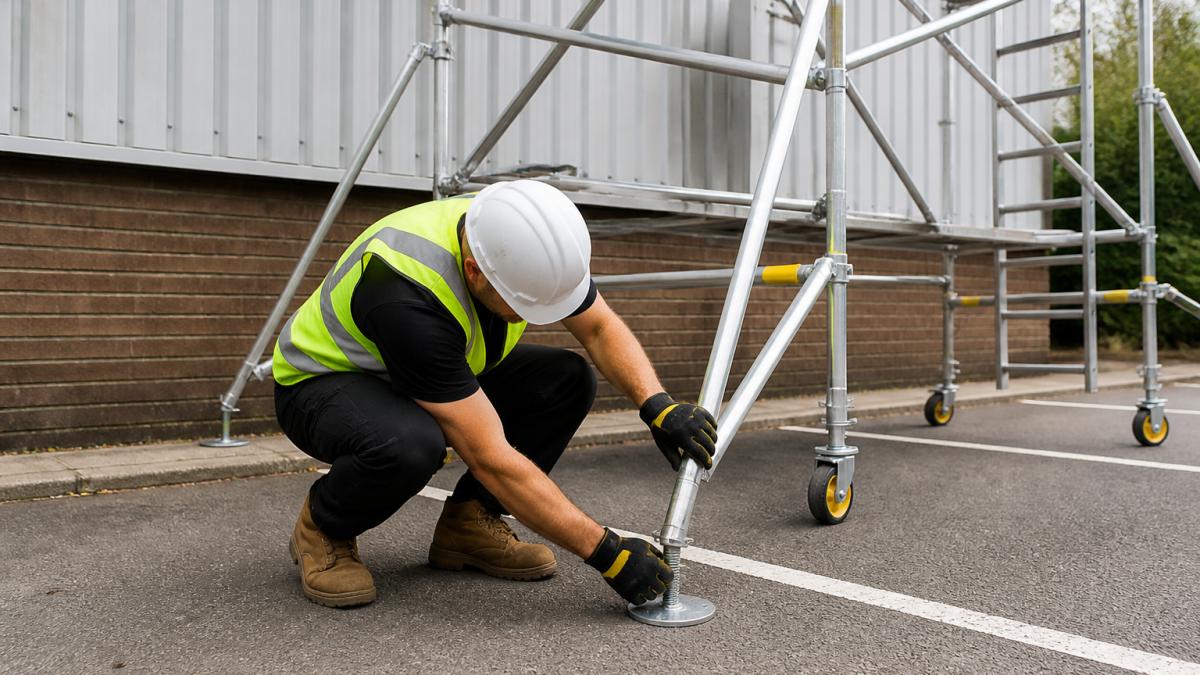
Two things go wrong most often. First, braces get left off on one face, which lets the tower rack sideways. Second, stabilisers are fitted but not locked, so they do nothing under load.
If you are unsure when outriggers and stabilisers are actually required, see our guide on when scaffold tower outriggers are required.
Testing Stability on Slopes, Soft Ground and Paving
Slopes, soft ground and paving are where stability tests earn their keep. A tower that passes on flat concrete can fail on a cambered driveway.
Here is how to test each surface:
- Slopes: level the tower with adjustable legs, never with blocks of wood. Check the tower is plumb with a spirit level on two faces.
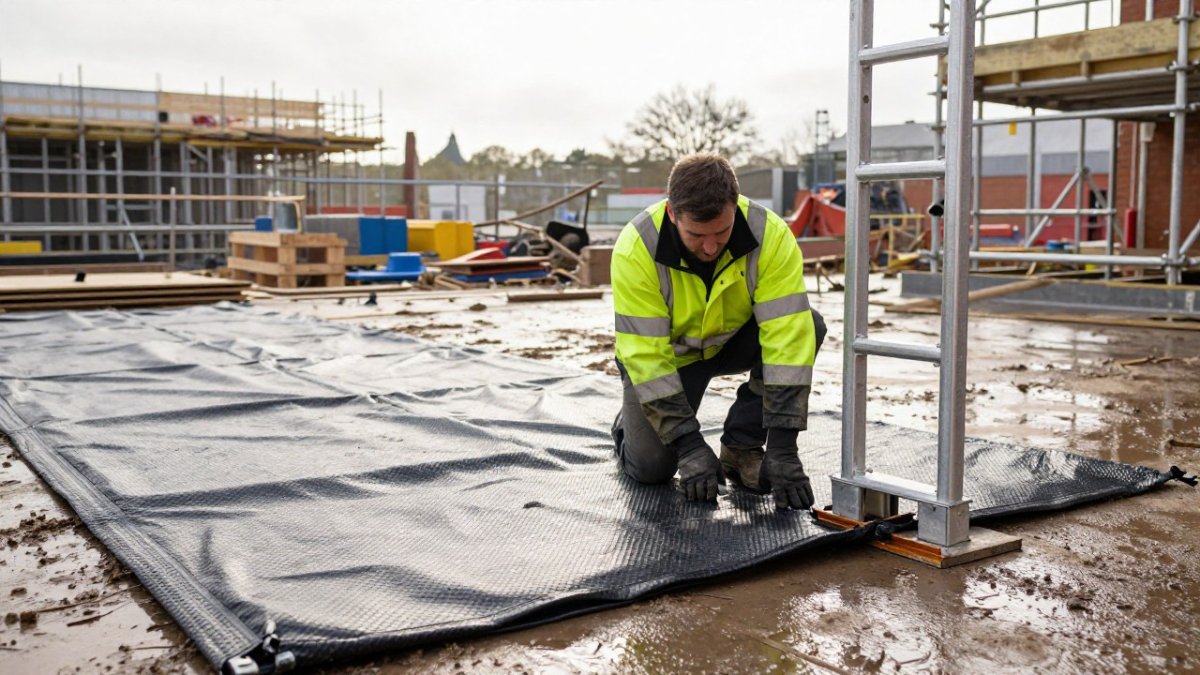
- Soft ground: spread the load with base boards under each foot, and check for sinking after the first climb.
- Paving: watch for rocking on uneven slabs. If a foot rocks, adjust the leg until all four bear evenly.
The physical push test is simple. With the tower unoccupied, push gently against the top of one corner. A stable tower shifts slightly and settles. If it keeps moving or a foot lifts, stop and fix the base before use. For uneven ground, adjustable scaffold tower legs let you level each corner.
Scaffold Tower Inspection Frequency: How Often Is Enough
How often you inspect depends on use, not the calendar. As a rule, inspect on assembly, after any move or alteration, at the start of each shift, and after bad weather or any impact.
High-use towers on a busy site may need a check between shifts. A tower left standing for weeks still needs a fresh check before the next climb, because wind and ground movement change things.
Height and wind matter here. Taller towers and gusty conditions mean more frequent checks. Our guide on how high a scaffold tower can safely go covers the height limits, wind conditions and stabiliser requirements that decide how often you should be checking. For the regulatory side, the Health and Safety Executive sets out the duties for working at height.
Ordering a Tower That Passes Every Stability Check
A tower that passes every stability check starts with the right tower. Buy certified equipment and the checks become routine. Buy cheap and unstable kit and you fight the same faults on every job.
Leader Pro towers are BS EN1004 quality standard towers, and we offer a comprehensive range of spare parts.
Buying direct from the manufacturer keeps pricing competitive and support close at hand. For current prices, visit the Leader Pro Scaffold Towers pricing page or request a quote.
Frequently Asked Questions
How do you check whether a scaffold tower is stable?
Start with the ground: it must be firm, level and free of soft spots, with every base plate or castor bearing weight. Check all four legs are fully extended and locked, then confirm the horizontal and diagonal braces are fitted and tight. Push the tower gently at mid-height to feel for movement or rocking. A tower that shifts, leans or wobbles fails the check and must not be used until it is corrected.
How often should a scaffold tower be inspected?
Carry out scaffold tower pre-use checks before every shift. Inspect again after any alteration, after bad weather such as high winds, and after any incident or accidental impact. The scaffold tower inspection frequency should also increase where the tower sits on uneven ground or in busy areas where it could be struck by plant or vehicles.
Do scaffold towers need to be tied to a building?
Most mobile access towers do not need tying in, provided they are assembled to the manufacturer's instructions with the correct stabilisers and outriggers fitted. Tying to a structure becomes relevant for taller or static towers, and only where the manufacturer's manual specifies it. Never improvise a tie using rope or scaffolding tube. If your tower needs restraint, follow the assembly guide for your model or speak to the supplier for advice.
What ground conditions can make a scaffold tower unstable?
Soft turf, freshly dug ground, gravel, cambered paving and sloping surfaces are the main culprits. Use load-spreading boards under the feet on soft ground, and never pack up a leg with loose bricks or blocks. Check for drains, manhole covers and cellar hatches that could give way under load. If the surface cannot be made level, use adjustable legs within their marked limits, or move the tower to firmer footing.
Stability testing only works when the tower itself is built to hold up. At Leader Pro Scaffold Towers, we supply BS EN1004-certified aluminium towers with the bracing, stabilisers and spare parts to keep every check a pass. Our manufacturer-direct pricing and next-day delivery mean you are not waiting to get back to work. Get started with Leader Pro Scaffold Towers and put a stable, compliant tower under every job.